

I’ve come to Ueno for the first time in a while!
This week, I am presenting the exhibition that began on October 24th at the National Museum of Western Art,
“Tate Turner Exhibition: Painting the Sublime, A Dialogue with Contemporary Art.”
Please be sure to watch the YouTube video as well!
Blue skies, calm seas, and beautiful mountain ranges.
However, there is a painter who significantly changed the common perception of such landscape paintings.
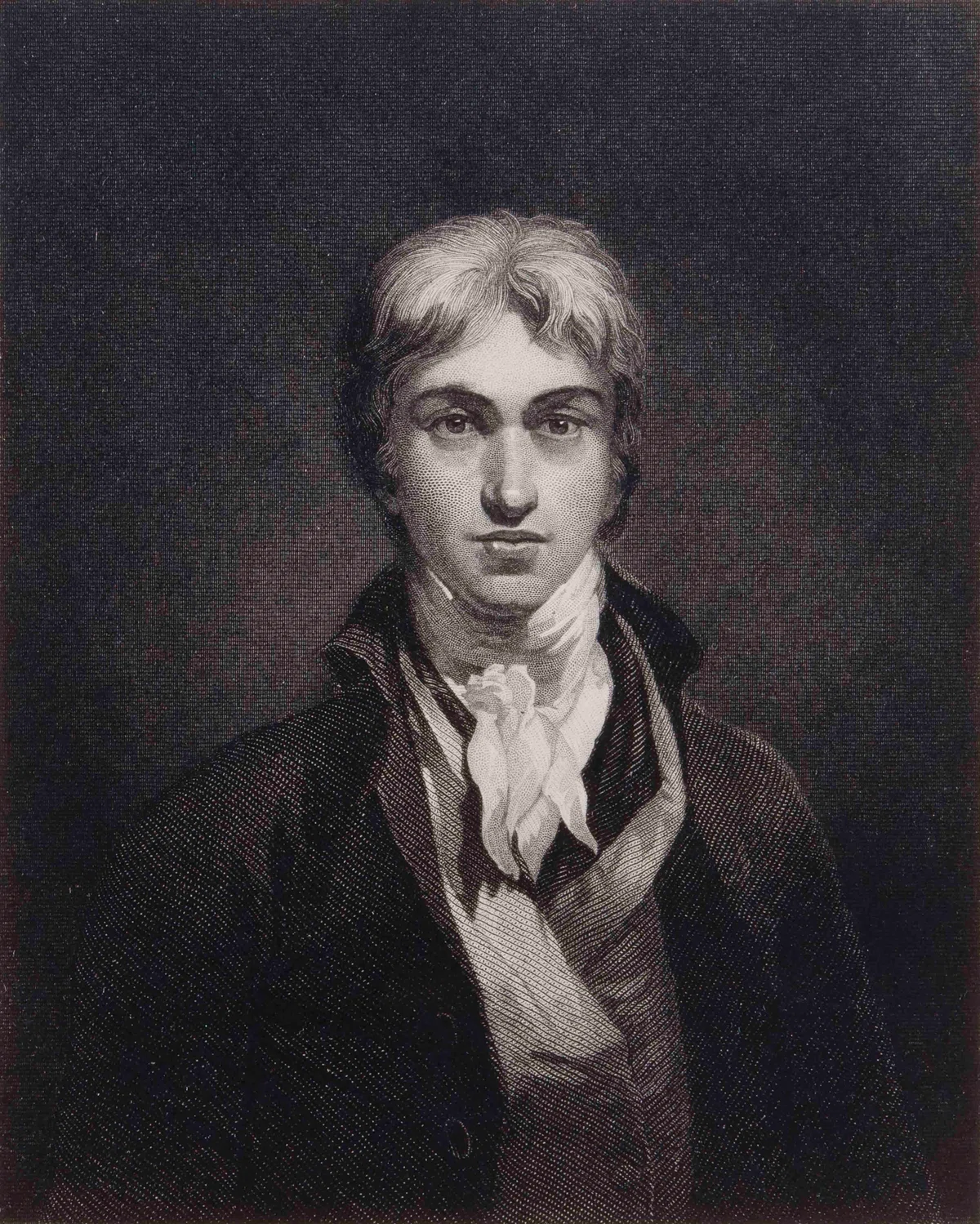
He is the British master, Joseph Mallord William Turner.
This time, over 80 works, including oil paintings and watercolors, have been gathered from the world’s largest Turner collection, which the Tate in London boasts.
Moreover, this is not just a simple retrospective of Turner.
It is a unique exhibition where Turner’s works are displayed alongside contemporary art,
allowing visitors to enjoy a dialogue between artists that spans nearly 200 years.
First, what kind of painter was Turner?
Born in London in 1775, Turner demonstrated his talent from his teens and became a full member of the Royal Academy, the highest authority in the British art world, at the young age of 26.
He is known as the “Painter of Light” and is recognized as a representative painter of British Romanticism.
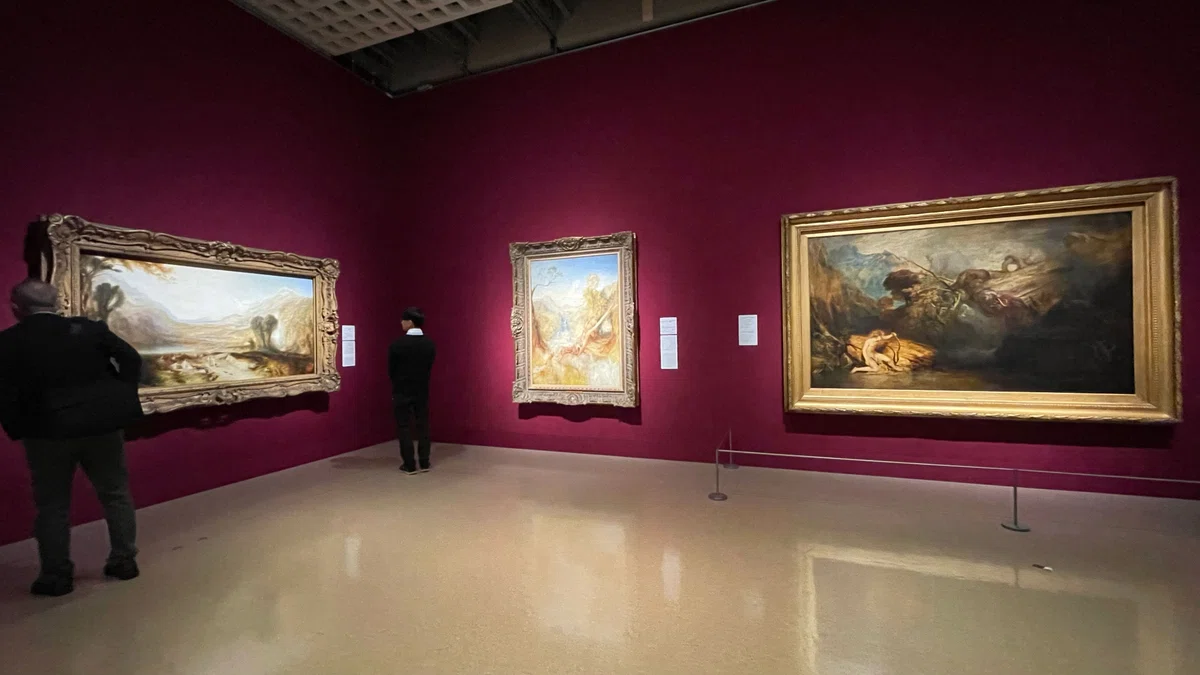
However, what Turner painted was not merely beautiful scenery.
Raging seas, massive mountains, howling storms, and light that seems to dissolve into the atmosphere.
He sought to depict not only the beauty of nature but also the overwhelming energy of nature,
which is beyond human control.
Here, the keyword for this exhibition, the word “sublime,” makes its appearance.
It may sound a bit difficult, but simply put, it refers to an emotion that goes beyond the sense of beauty,
accompanied by awe or astonishment.
Storms, thunder, and blizzards.
They are frightening, yet you cannot take your eyes off them.
This feeling toward the overwhelming power of nature is what is meant by “sublime.”
The 18th-century philosopher Edmund Burke believed that massive or terrifying things
could evoke such emotions.
Turner sought to express that sublimity through his paintings.
Now, the exhibition begins in a somewhat unusual space.
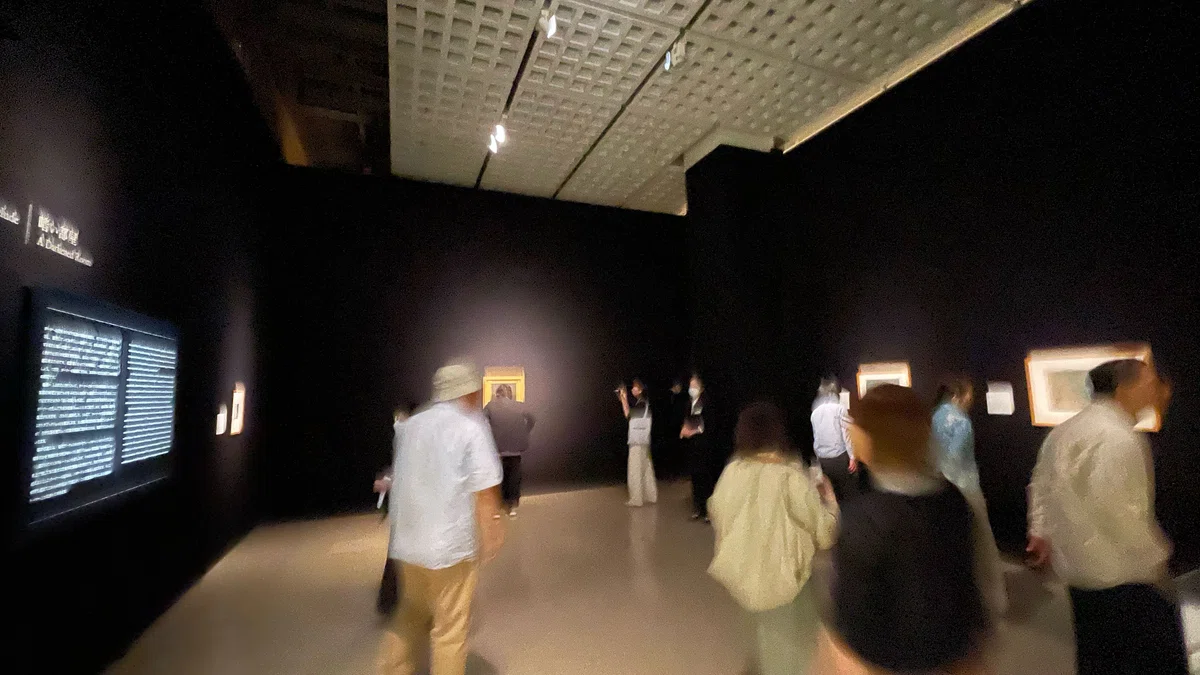
That is the “dark room.”
In fact, there is an interesting anecdote about Turner.
Turner opened a gallery near his home to exhibit and sell his own works.
It is said that he would first make visitors wait for a while in a dimly lit room.
Why was that?
By showing them bright paintings once their eyes had adjusted to the darkness,
the brilliance of the light would be felt even more vividly.
Turner was considering not just the works themselves, but the visual experience of the viewer.
In this exhibition as well, in reference to this anecdote, the display begins in a dark room.
The work introduced is “Moonlight, a Study at Millbank.”
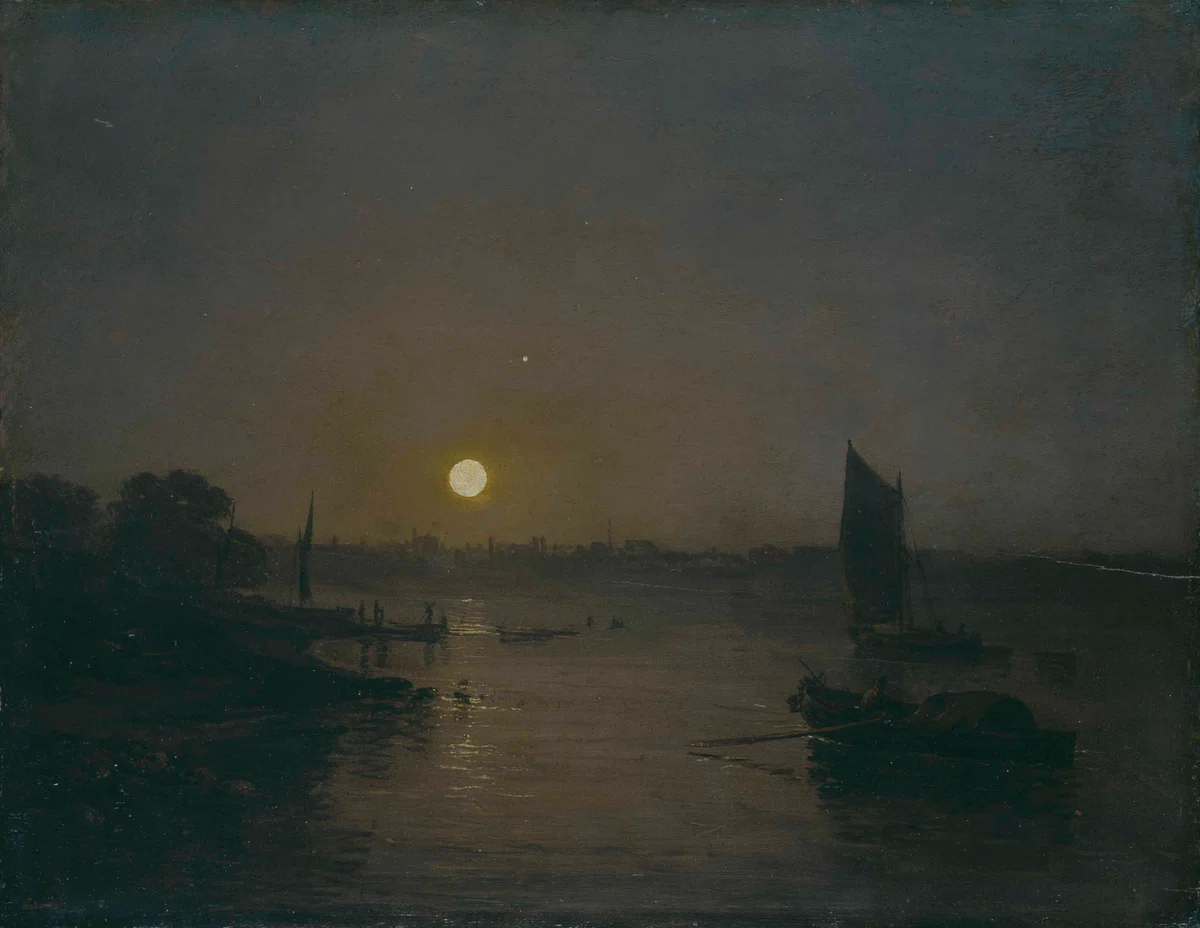
Announced in 1797, this is a work where moonlight illuminates the water’s surface.
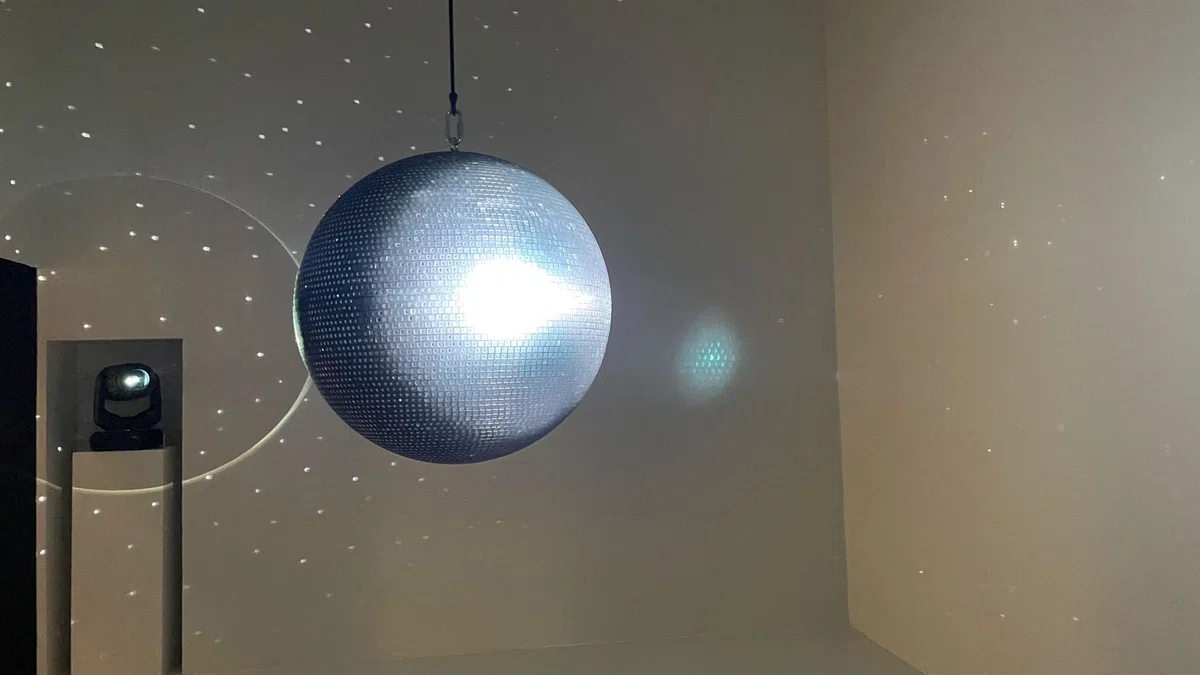
And then, there is ‘Totality’ by contemporary artist Katie Paterson.
It is an installation where countless particles of light dance, based on recorded images of a solar eclipse.
A painting of moonlight from over 200 years ago meets a contemporary work of light.
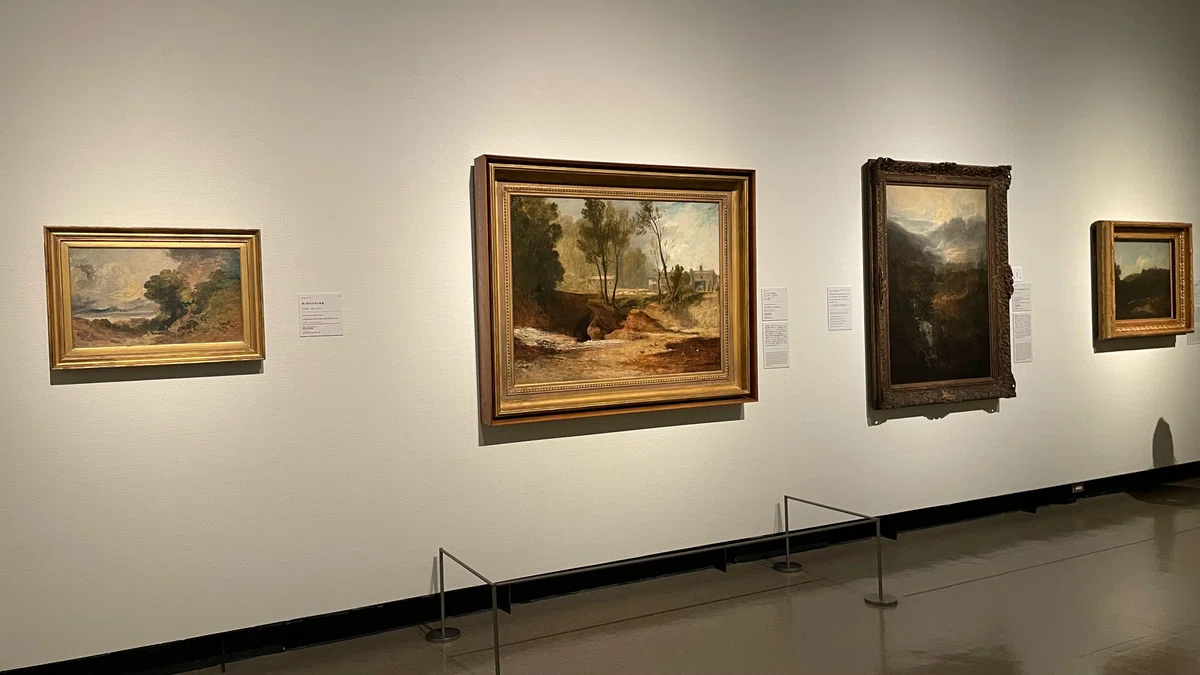
Next, we have the landscapes of England that Turner discovered while walking.
Turner was, above all, a painter who traveled.
He traveled to various places on foot, sketching mountains, lakes, and coastlines as he walked.
He would then bring back the sketches he made on his travels, adding his memories and imagination,
to finish them into large-scale works.
In other words, Turner’s landscape paintings are not direct copies of the scenery before his eyes.
They are works painted by layering the atmosphere, light, and emotions he felt onto the landscapes he actually saw.
Here, works such as ‘Morning amongst the Coniston Fells, Cumberland,’ announced in 1798,
are introduced.
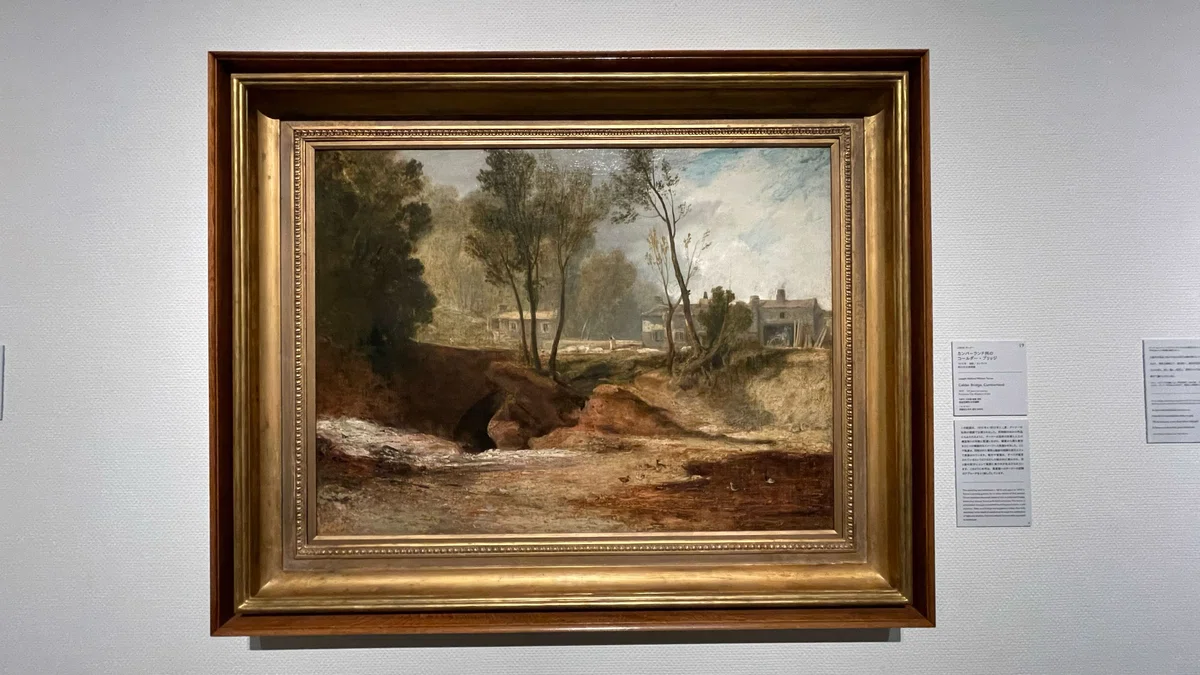
And, works by contemporary artist Richard Long also appear.
Long is an artist who turned the very act of walking through nature into art.
Turner and Long.
The two walked through the land of Dartmoor in England in different eras.
Comparing the works of these two artists, who both engaged with nature by walking, is one of the highlights of this exhibition.
And so, Turner’s travels took him beyond the borders of England.
In 1802, in his late twenties, Turner crossed over to the European continent for the first time,
visiting France and Switzerland.
It was there that he encountered the massive mountains of the Alps.
Turner visited the Alps six times throughout his life.
One of the representative works from this period is ‘The Avalanche in the Grisons,’ unveiled in 1810.
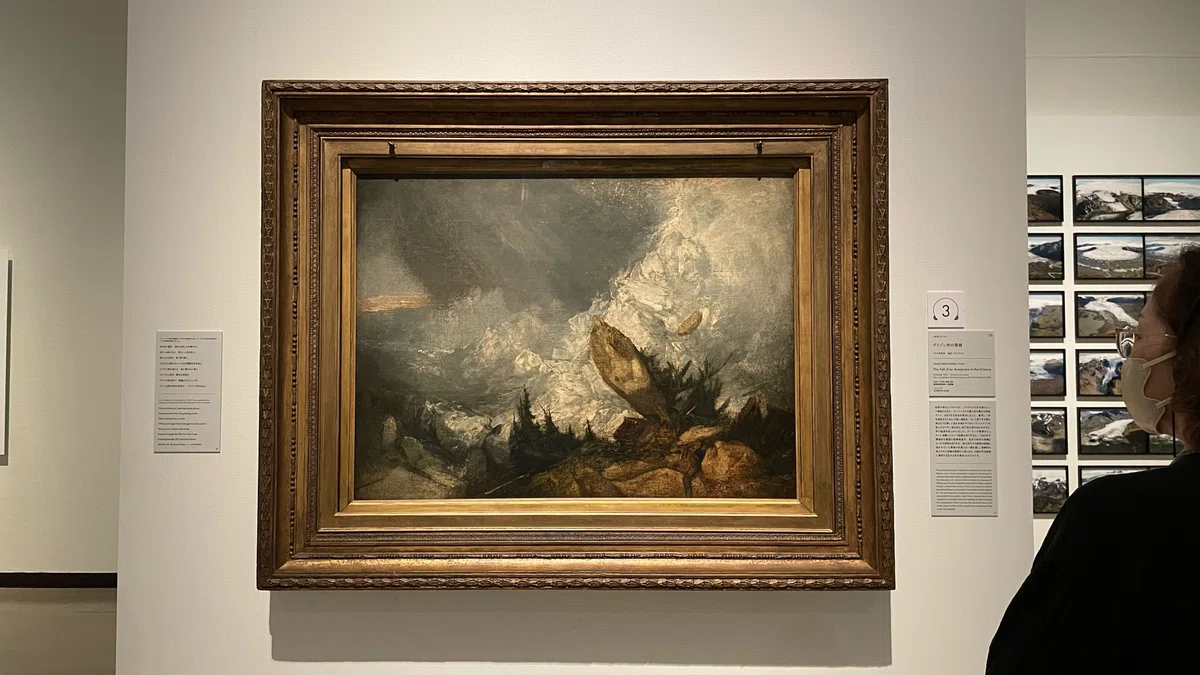
This work depicts the terrifying power of nature, with massive rocks and snow collapsing.
There are no human figures here.
What is depicted is the overwhelming energy of nature itself.
And in dialogue with this work is Olafur Eliasson’s ‘The glacier melt series 1999/2019’.
These are photographic works showing the same glacier in 1999 and 2019.
It is clear that in just 20 years, the glacier has retreated significantly.
What Turner depicted was the power of nature that overwhelms humanity.
On the other hand, what the contemporary artist Eliasson shows is the fragility of nature, which is changing due to human activity.
While both focus on the theme of nature,
it is interesting to see how the perspective has changed significantly over time.
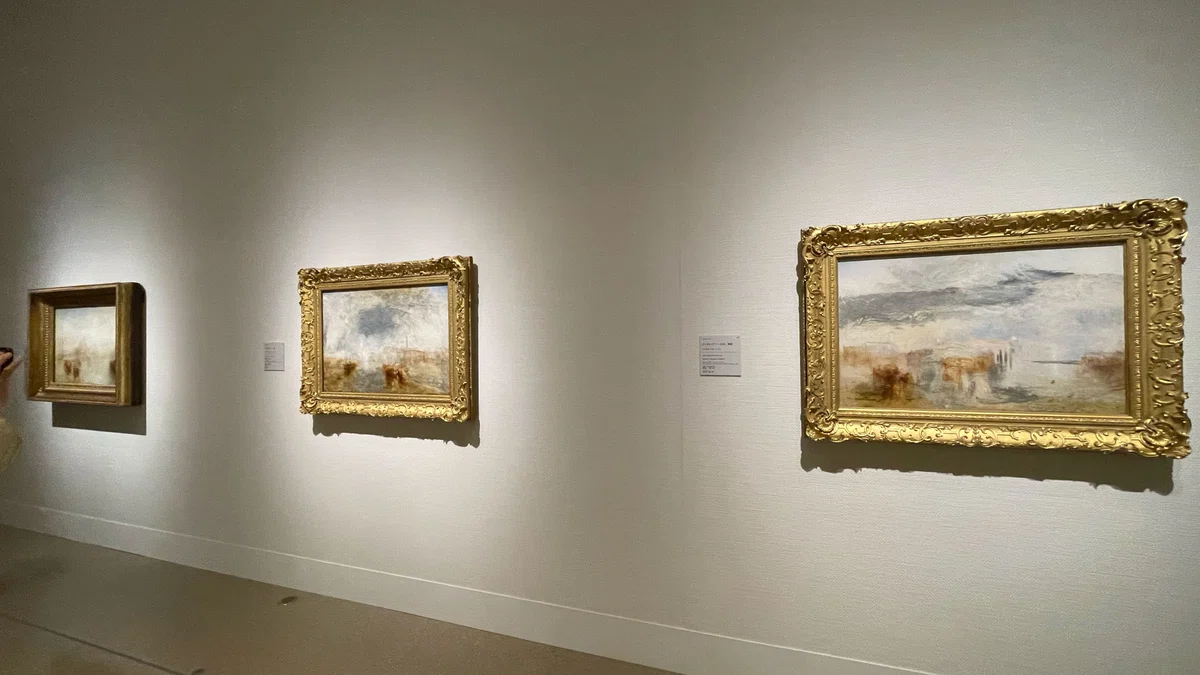
Next is the city of water, Venice.
Turner visited Venice three times in his life: in 1819, 1833, and 1840.
What captivated Turner in this city was the ever-changing landscape created by water and light.
For example, ‘Venice: The Dogana and Santa Maria della Salute’.
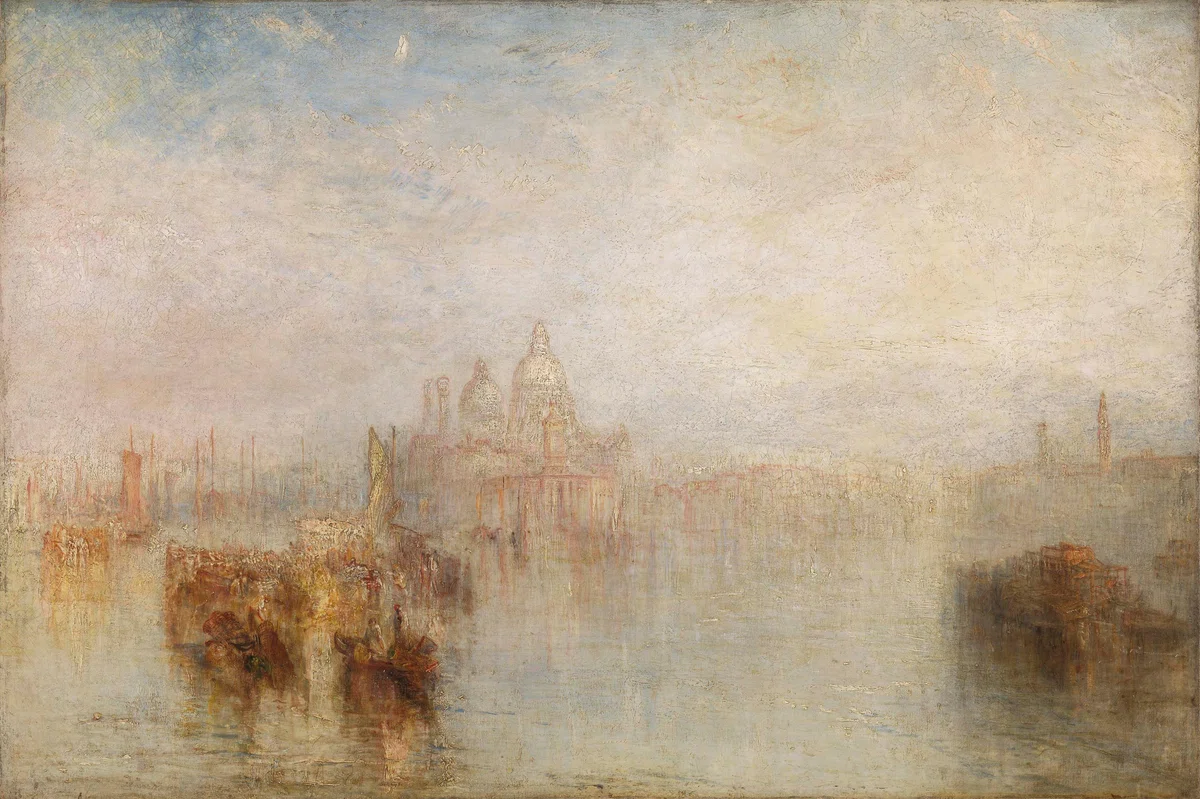
This work was unveiled in 1844.
The outlines of the buildings and ships are painted as if they are dissolving into the mist and light.
Rather than clearly depicting details, he prioritized the impression of the atmosphere and light of the scene.
Such expressions are highly regarded as having paved the way for the later Impressionist movement.
Incidentally, Turner’s name also appears in Japanese literature.
It is in Natsume Soseki’s novel ‘Botchan’.
In this novel, published by Soseki in 1906, there is a reference to Turner.
‘Botchan’: ‘Red Shirt’ says, ‘Look at that pine tree; the trunk is straight and the top opens like an umbrella, it looks like something out of a Turner painting.’
In other words, Turner’s name was already known in Japan during the Meiji era.
This exhibition also introduces the work of Chuji Kurihara, a Japanese painter influenced by Turner.
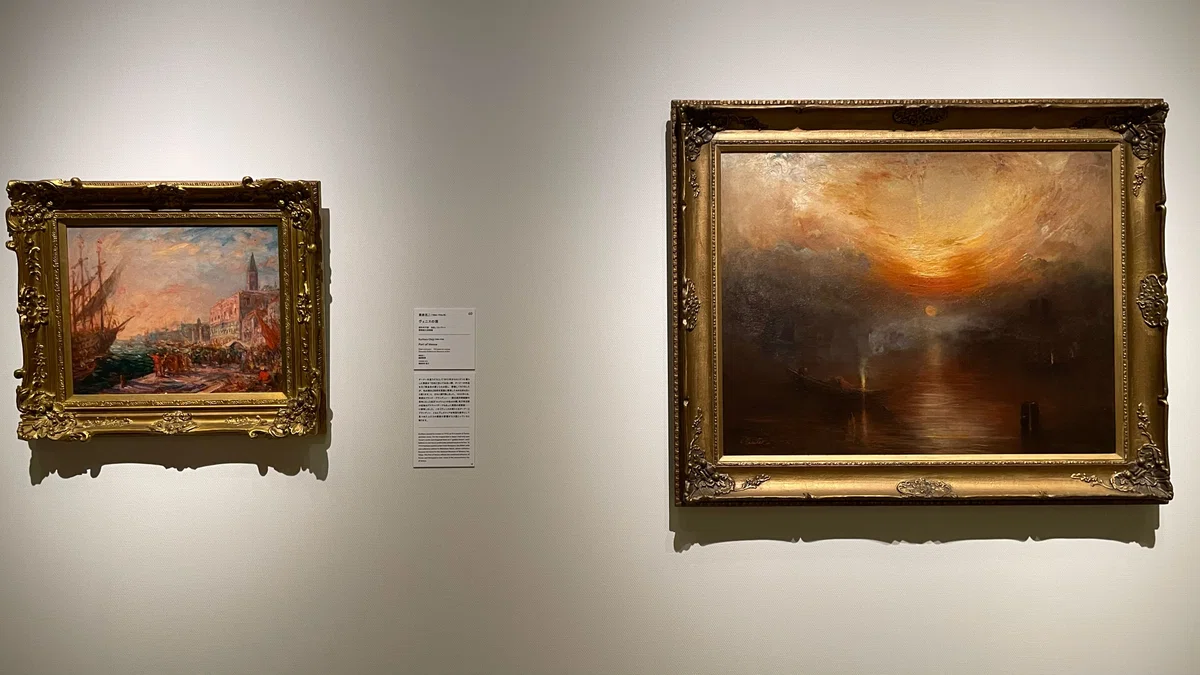
Furthermore, an important theme that Turner continued to paint throughout his life was the sea.
In fact, it is said that more than half of the works Turner left behind depict the sea.
It is not just calm seas.
Storms, shipwrecks, naval battles, and whaling ships.
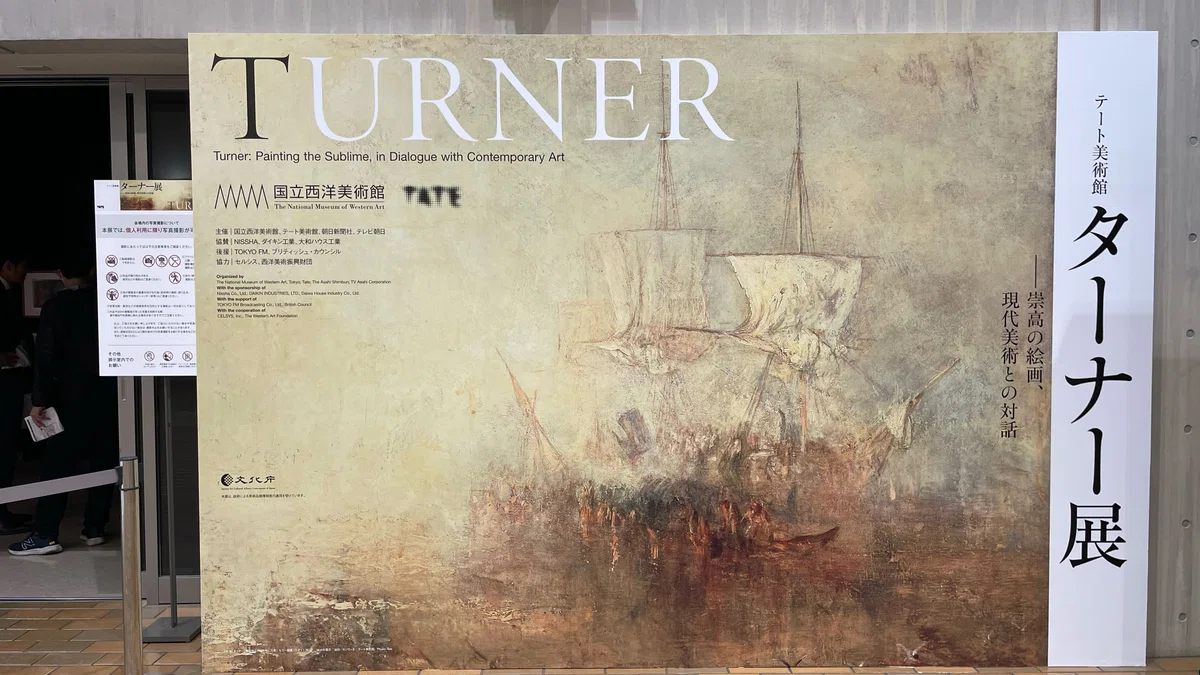
The main visual for this exhibition is ‘Hurrah! for the Whaler Erebus! Another Fish!’ released in 1846.
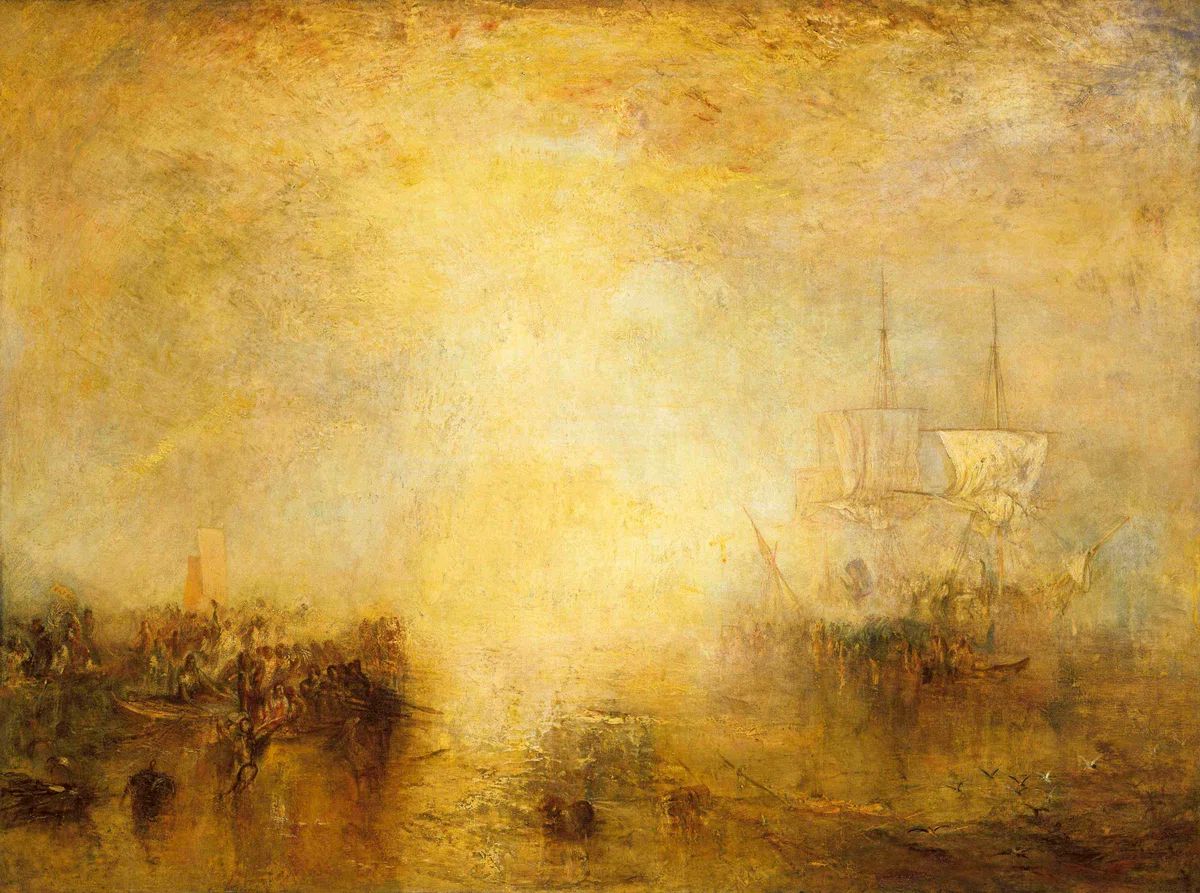
Light and atmosphere spread across the canvas to such an extent that the boundary between sea and sky becomes indistinguishable.
Both ships and people seem as if they are about to dissolve into the light.
And, if you look closely, you can see what appears to be the head and jaw of a whale.
A giant whale and the humans attempting to capture it.
It is a work where the power of nature and human ambition intersect.
Furthermore, I would like to draw attention to the exhibition regarding Turner’s ‘The Slave Ship’.
This work is set against the backdrop of the Zong massacre that occurred in 1781.
It is a tragic incident in which the crew of a slave ship threw many slaves into the sea for the purpose of collecting insurance money.
Turner was also turning his gaze toward such social issues.
In this exhibition, along with the print of ‘The Slave Ship’, a video work by the contemporary art collective The Otolith Group is introduced.
It is a work that connects the history of the slave trade with the economic structures of modern society.
It becomes clear that Turner’s paintings are not merely beautiful landscapes,
but also serve as a catalyst for thinking about history and society.
And in the final part of the exhibition, Turner’s later works appear.
As Turner aged, he moved toward increasingly bold expressions.
Forms became ambiguous, and light and color spread across the entire canvas.
For example, ‘Rough Sea with Dolphins’ and ‘Three Seascapes’.
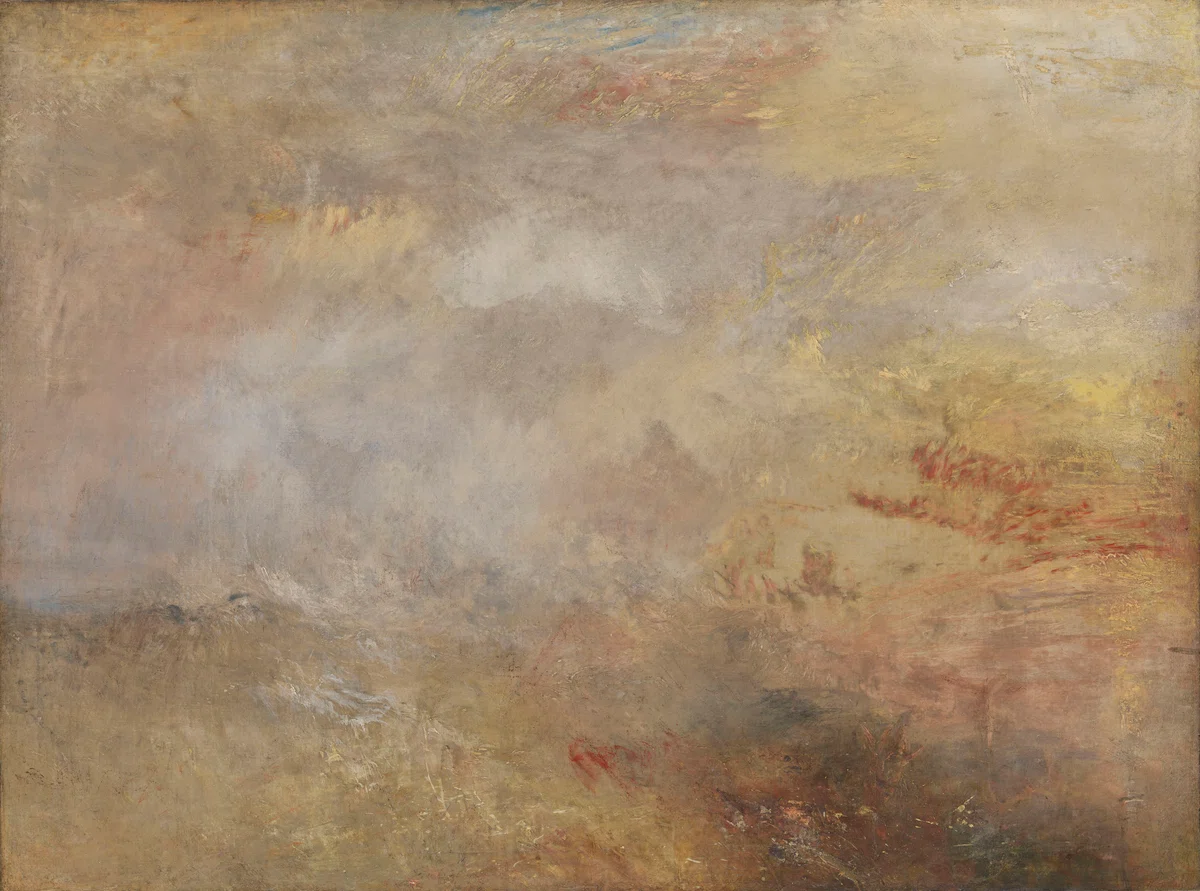
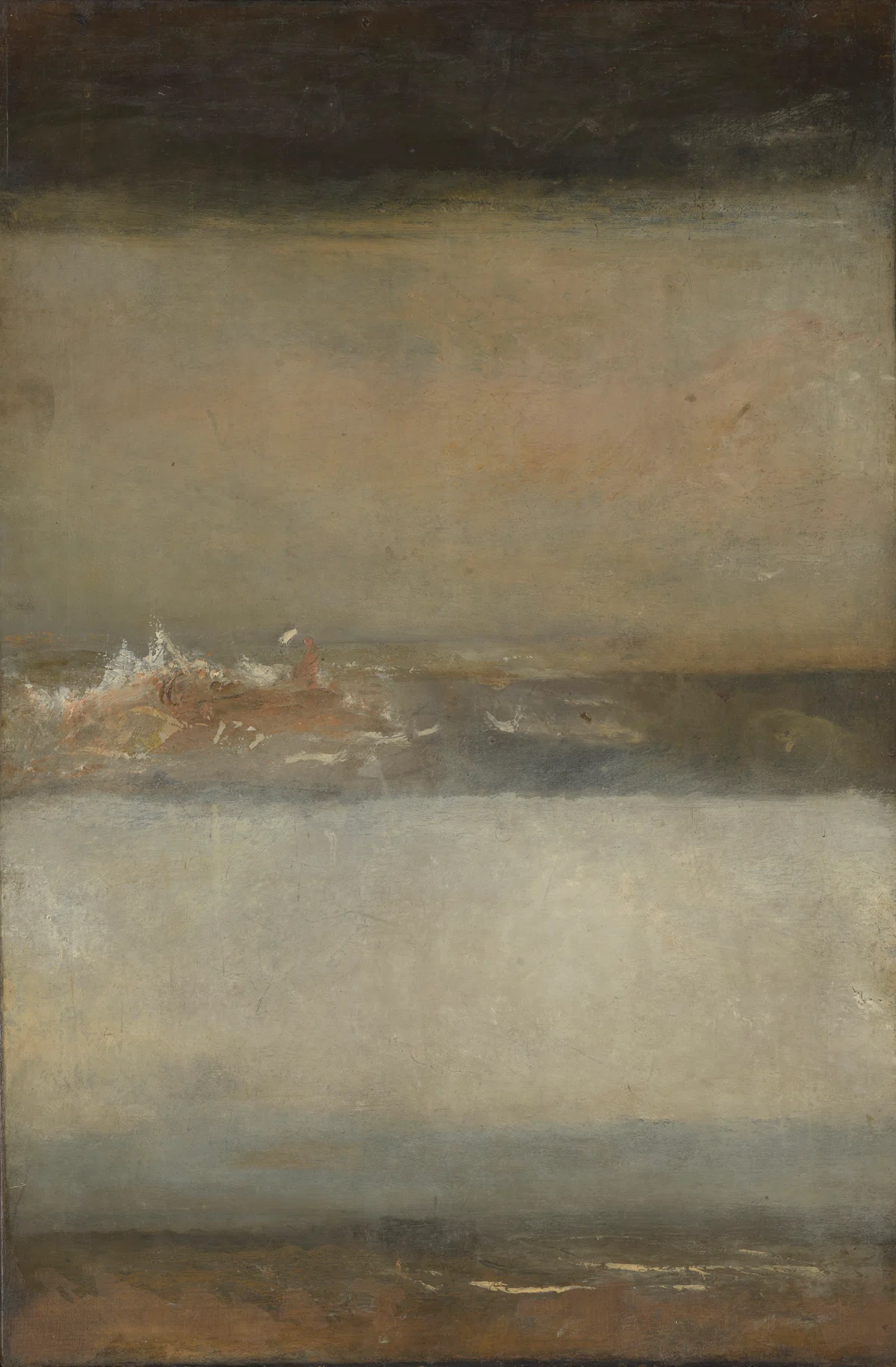
The expression has become so abstract that at first glance, it is difficult to tell what is being depicted.
For people at the time, these paintings might have looked quite strange.
However, today, this experimental expression is highly regarded as one of Turner’s greatest appeals.
What is interesting about this exhibition is that it does not introduce Turner merely as a great landscape painter of the past.
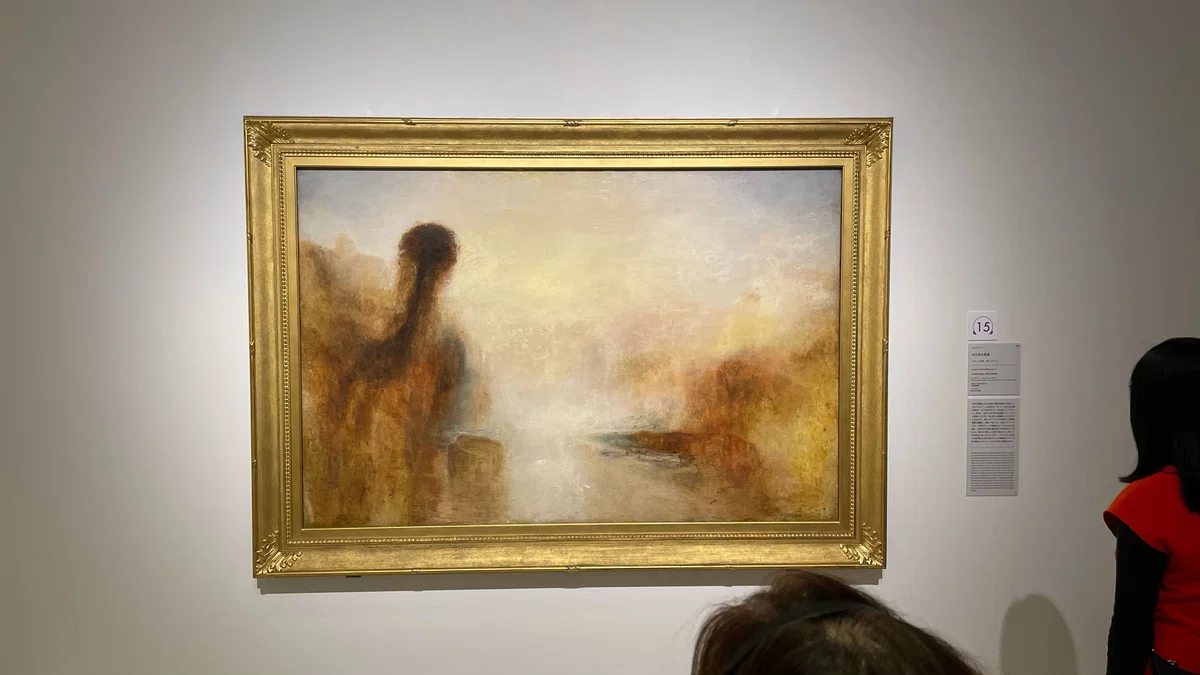
The beauty and terror of nature.
The relationship between humans and the environment.
Issues of history and society.
And the potential of painting to experience light and color themselves.
The themes Turner pursued have been inherited by contemporary artists as well.
Turner was called the ‘Painter of Light’.
However, that light was not simply for illuminating landscapes.
Through light, he made people feel the power of nature, stirred the emotions of the viewer,
and sometimes even changed the way the world is perceived.
Perhaps that is where Turner’s innovation lay.
This exhibition brings together Turner’s paintings and contemporary art.
How do we feel today about the world that a painter from 200 years ago looked upon?
Please come to the venue and experience that world of light and color for yourself.
Art is hope!
W’UP★October 24 – February 21 Tate’s Turner Exhibition: Painting the Sublime, A Dialogue with Contemporary Art, National Museum of Western Art (Ueno Park, Taito Ward)
https://tokyo-live-exhibits.com/pum_tktt_nationalseiyo-artmuseum/
Art information web media Tokyo Live & Exhibits
https://tokyo-live-exhibits.com/
Aohito-kun (Contemporary Artist Kanji Sekine) Homepage
https://super-blue.com
Facebook https://www.facebook.com/tokyoliveexhihits/
Twitter https://twitter.com/ExhibitsLive
Tumblr https://tokyoliveexhibits.tumblr.com/
Instagram https://www.instagram.com/tokyoliveexhibits/
Youtube (Aohito-kun’s Weekly Art Information) @aohitokun
English Website
https://japan-live-exhibits.com/
Music by Pixabay
#ExhibitionReview #TurnerExhibition #Aohitokun #Aohitokun #Japaneseculture #NationalMuseumofWesternArt #WesternPainting #ShibuyaWard #TokyoLiveExhibits #exhibition #exhibition #artmuseum
