

[Main text approx. 1,400 characters / 10 photos | Estimated reading time: approx. 3 minutes]
Intro
A mother tiger and her cub are fluffy.
At the “British Museum Japanese Art Collection: A Hundred Flowers Blooming – Edo Paintings Across the Sea” currently being held at the Osaka Nakanoshima Museum of Art, that was the first thing I thought when I saw Maruyama Okyo’s “Tiger Crossing the River” folding screen.
A mother tiger is carrying her cub across a river. A mother who goes back and forth across the river many times for her child. It must be hard, but she is devoted. Moreover, the way she carries the cub is cute. It doesn’t look like she is biting down hard, but rather holding it softly and snugly.
Perhaps it is because the river is painted on a gold screen. Even though it is a difficult journey, it looks like a somewhat warm family scene.
The tiger’s fur is also truly fluffy. I imagine there are muscles and bones underneath. If I were allowed to touch it, would I feel something firm beneath the fluff?
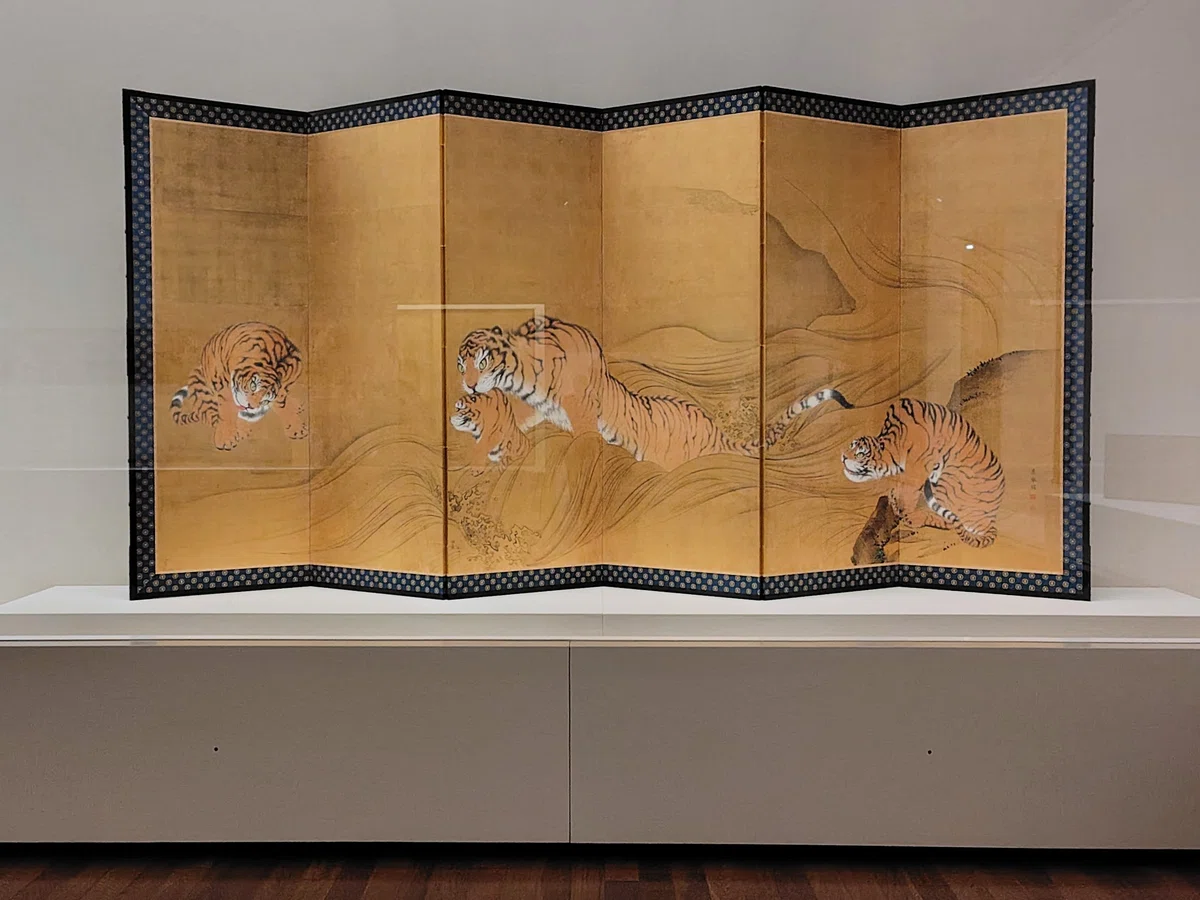
Maruyama Okyo, “Tiger Crossing the River” folding screen, 1781–1782, The British Museum
After encountering Okyo’s tiger, I walked around looking at works by Hokusai, Hiroshige, Kuniyoshi, and Utamaro.
There are many paintings I have seen somewhere before. However, when I see the real thing at the museum, it feels different. It is like the feeling of meeting a classmate I haven’t seen in a long time, only to find they have become a returnee from abroad.
1 | A breeze blew from a painting I thought I knew.
I was surprised by Katsushika Hokusai’s “Fine Wind, Clear Morning” from the Thirty-six Views of Mount Fuji.
Actually, I have a puzzle of this painting hanging on my wall at home. I should be looking at it every day, but when I face the real thing in front of me, I realize how wonderful it is.
Red, blue, green. A simple and powerful color scheme using basic colors. Yet, from the state of the snow remaining on the summit of Mount Fuji, it even conveys the sign that summer is ending and autumn is coming. For someone like me who loves autumn, that alone makes me happy.
And these clouds. At the end of summer, I sometimes see clouds like this. Perhaps the sky Hokusai was looking at and the sky today are the same.
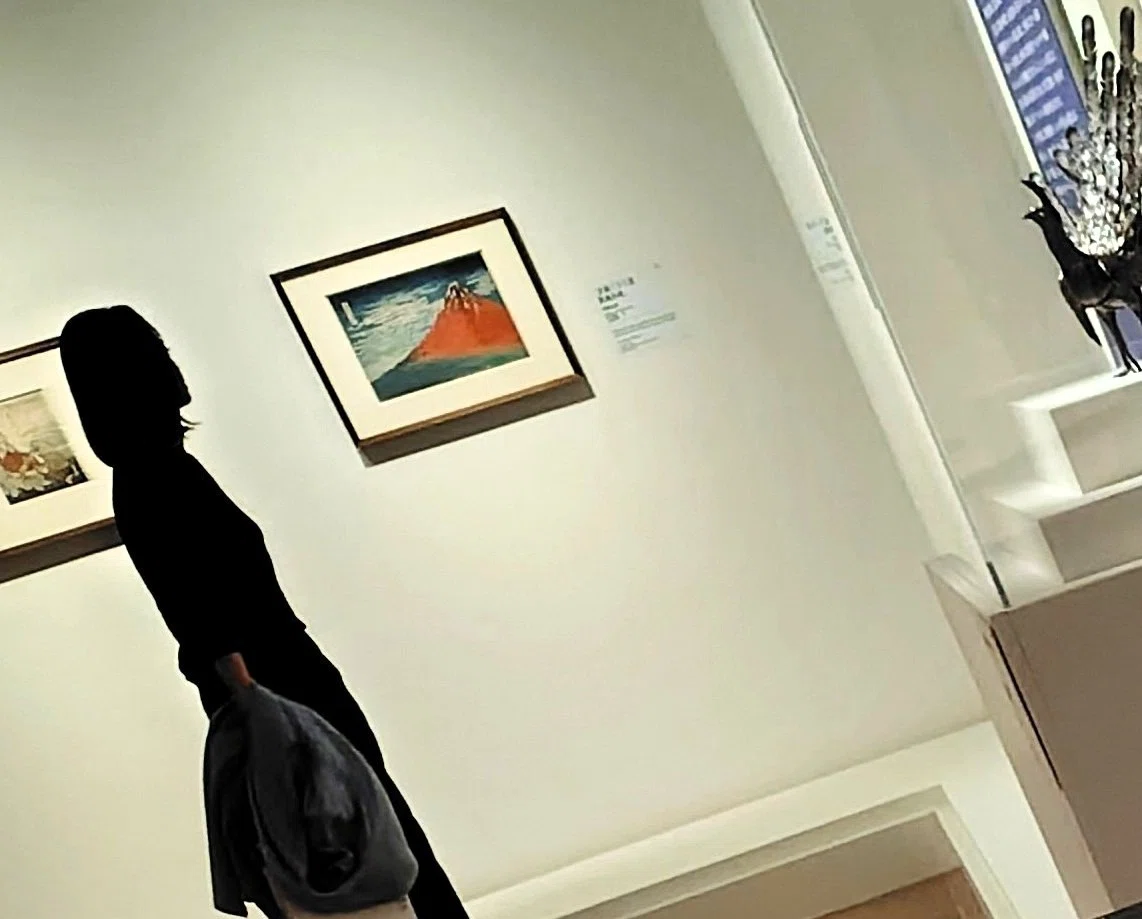
Katsushika Hokusai, “Fine Wind, Clear Morning” from the Thirty-six Views of Mount Fuji, c. 1830–1833, The British Museum
Utagawa Hiroshige was also actually a familiar presence. I still have the cards that come as a bonus with ochazuke, and I haven’t thrown them away.
Even the paintings I had seen on cards are exciting when viewed at this size.
I was particularly captivated by “The Fifty-three Stations of the Tōkaidō: Hakone, View of the Lake” and “The Fifty-three Stations of the Tōkaidō: Shōno, White Rain.” These two were side by side.
The mountain path in Hakone looks steep. The colors of the mountainside are vivid, and you can see a faint white Mount Fuji in the distance. It makes me want to say to the person next to me, “Hey, that’s Mount Fuji, right?” I feel like I am climbing it too.
And just when I thought that, now it’s raining.
In “The Fifty-three Stations of the Tōkaidō: Shōno, White Rain,” travelers are rushing because of a sudden downpour. I can almost hear the rustling of the bamboo grove behind them.
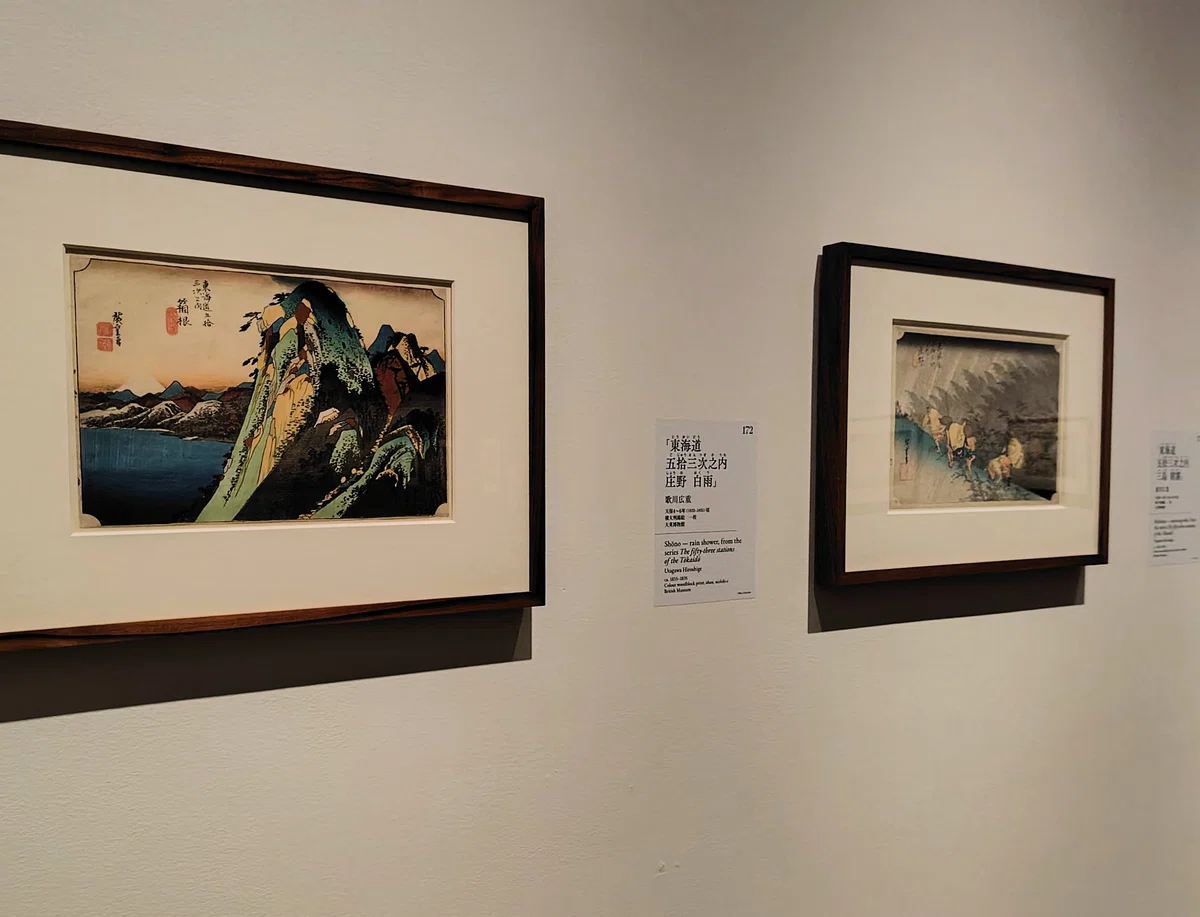
(From left) Utagawa Hiroshige, “The Fifty-three Stations of the Tōkaidō: Hakone, View of the Lake,” c. 1833–1835, The British Museum / Utagawa Hiroshige, “The Fifty-three Stations of the Tōkaidō: Shōno, White Rain,” c. 1833–1835, The British Museum
I want to move forward somehow before it starts raining heavily. Travelers rushing while shielding themselves from the rain with tattered umbrellas. That is me.
While looking at the two side-by-side pieces in succession, in my head, rain started falling after the steep mountain path. It is a tough journey. But overcoming this is also the real thrill of travel… My delusions won’t stop.
2 | I ended up picking up the mother and cub tigers.
In the middle of such appreciation, there was a photo spot. Those mother and cub tigers.
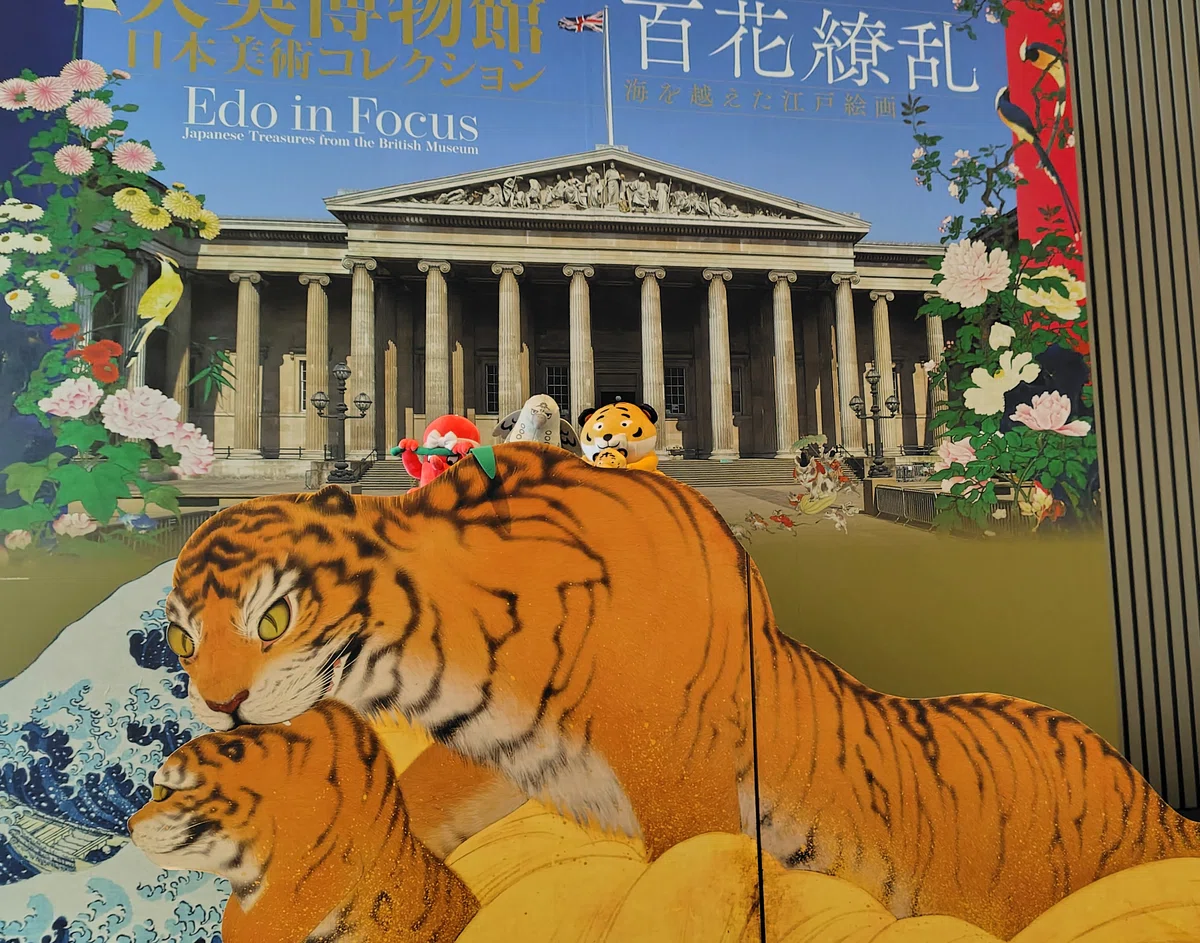
I rarely touch stuffed animals in my daily life.
Yet, before I knew it, I had picked up the mother and cub tigers and was even taking pictures. The fluffy sensation touching my fingertips. It is heavier than I thought.
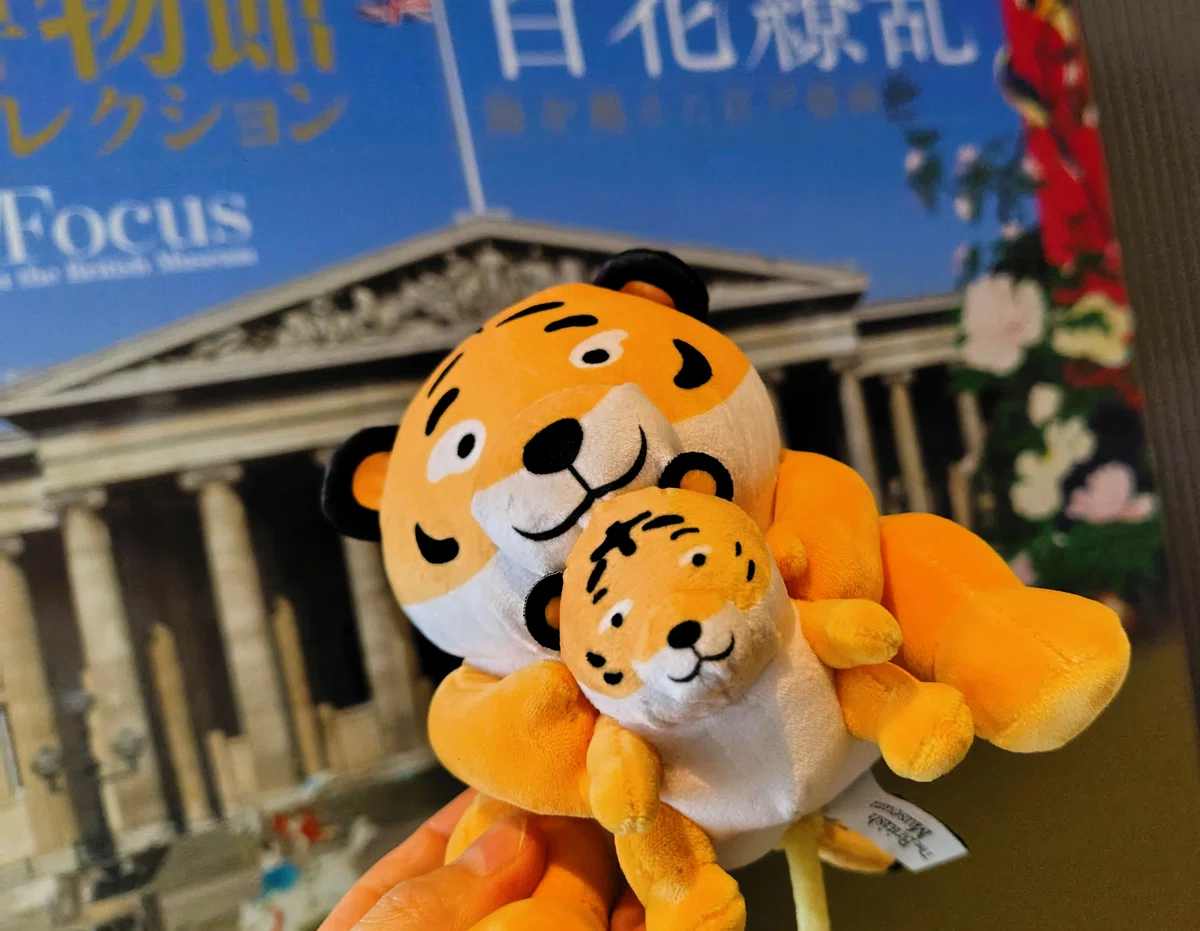
The stuffed animals are on sale at the special shop. The photo shows the “Tiger Crossing the River” folding screen stuffed animal (4,400 yen including tax)
So, so cute.
Is “nuikatsu” (stuffed animal activity) this heart-pounding?
3 | Voices can be heard from within the painting.
Utagawa Kuniyoshi’s “Takiyasha the Witch and the Skeleton Specter.” I knew about it because it was a hot topic in the “Ichiban Kuji” lottery, but this is my first time seeing the real thing.
This is amazing. It is like sitting in a good seat at a theater, watching a scene from a play. That actor must definitely have a cool voice.
If I were to make it into a movie, I would want to ask Guillermo del Toro to direct and Ramin Djawadi to do the music. The images are already starting in my head.
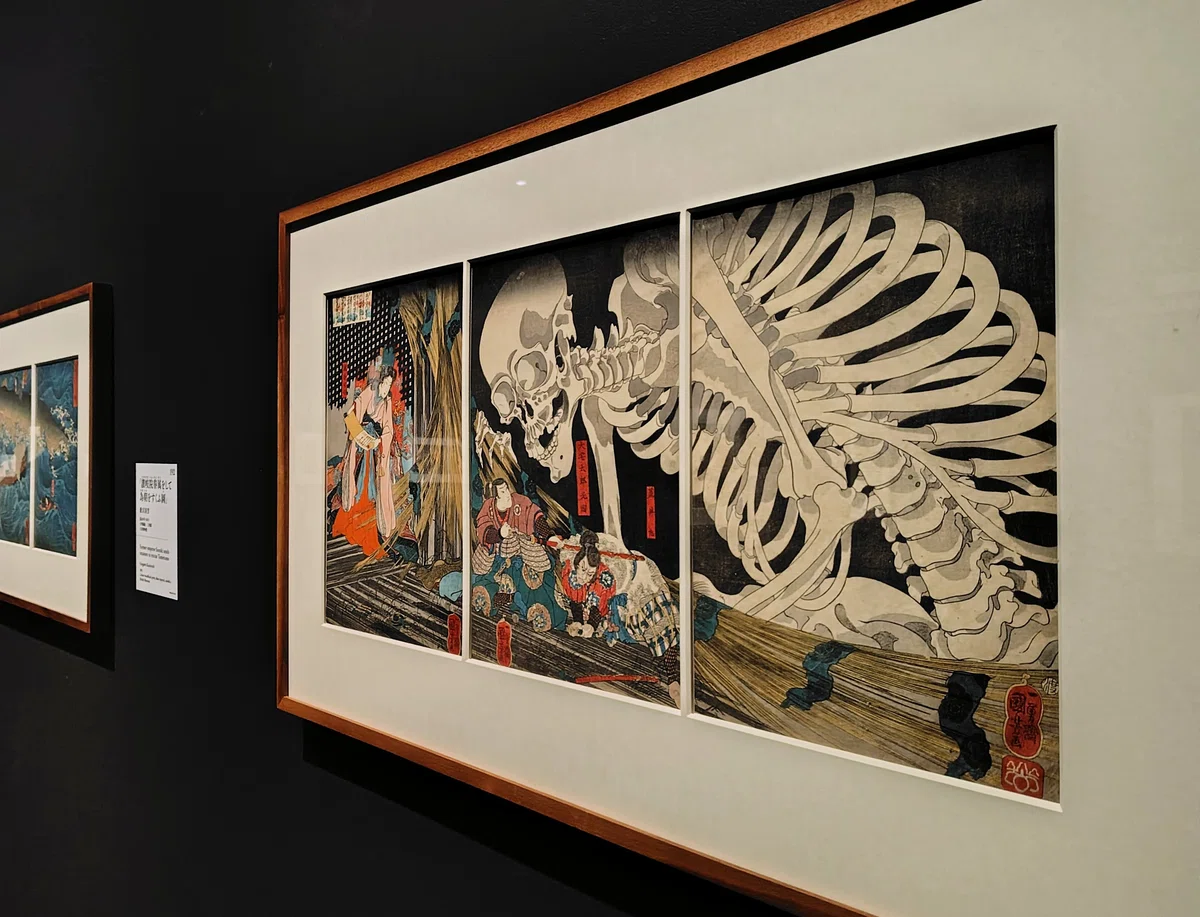
Utagawa Kuniyoshi, “Takiyasha the Witch and the Skeleton Specter,” 1845–1846, The British Museum
And then, Kitagawa Utamaro’s “Courtesan Reading a Letter.”
I don’t know who the letter is from. But, they seem somehow happy. Is it a love letter? Are they enjoying the thrill of the chase?
What caught my attention was the angle of the neck. It overlaps with the image of modern people looking at their smartphones. Even though they are from over 200 years ago, isn’t it a very familiar gesture?
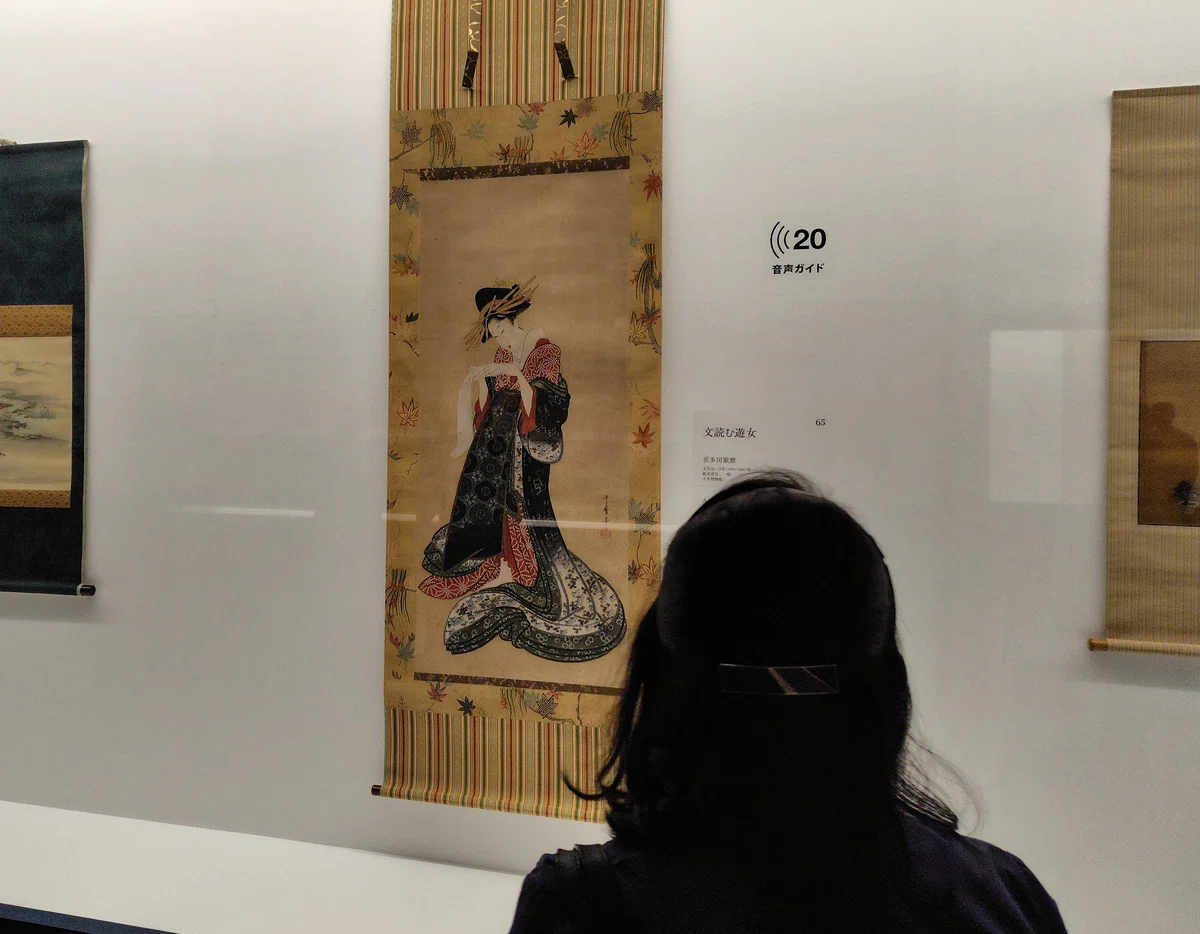
Kitagawa Utamaro, “Courtesan Reading a Letter,” circa 1804–1806, The British Museum
Bonus | You can take the tiger parent and child home with you.
Before leaving the museum, I headed to the special shop. This exhibition also has a wide range of merchandise.
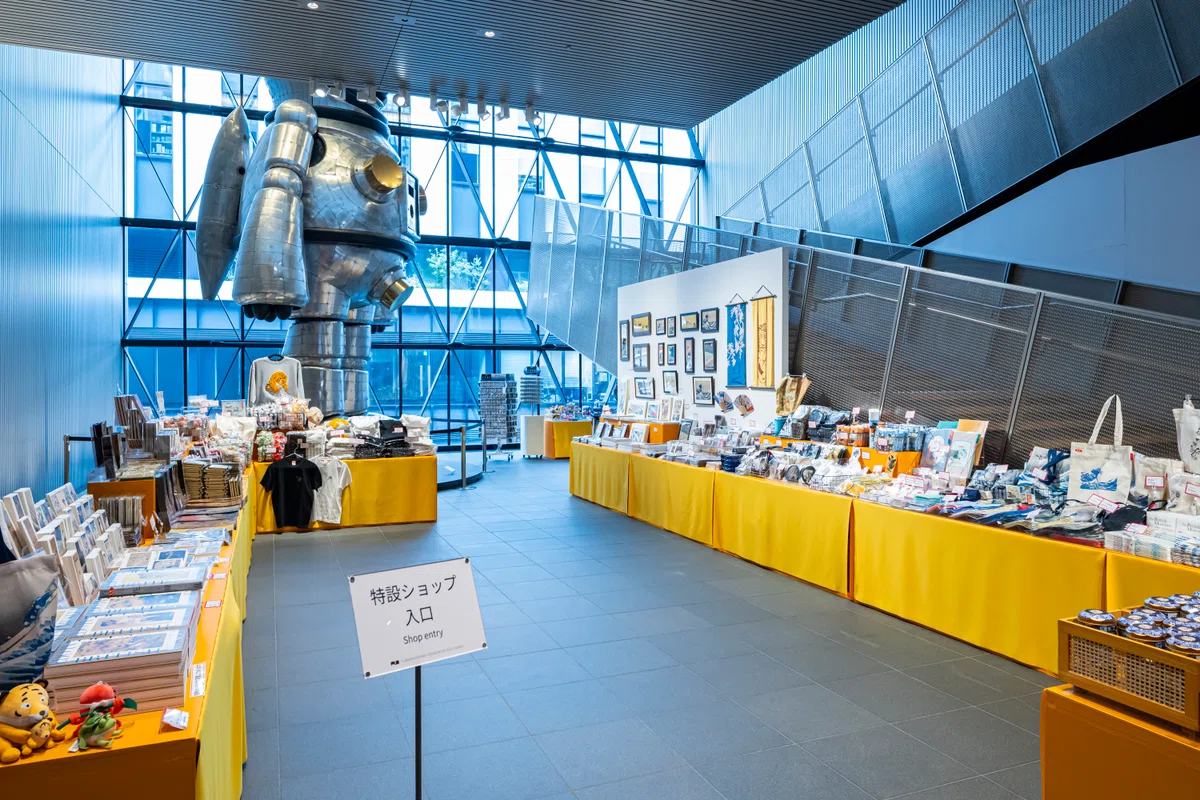
Those tiger parent and child are sold as plush toys. There is also an [Osaka Exclusive] pass case. Furthermore, the official catalog also has a version featuring Okyo’s tiger on the cover.
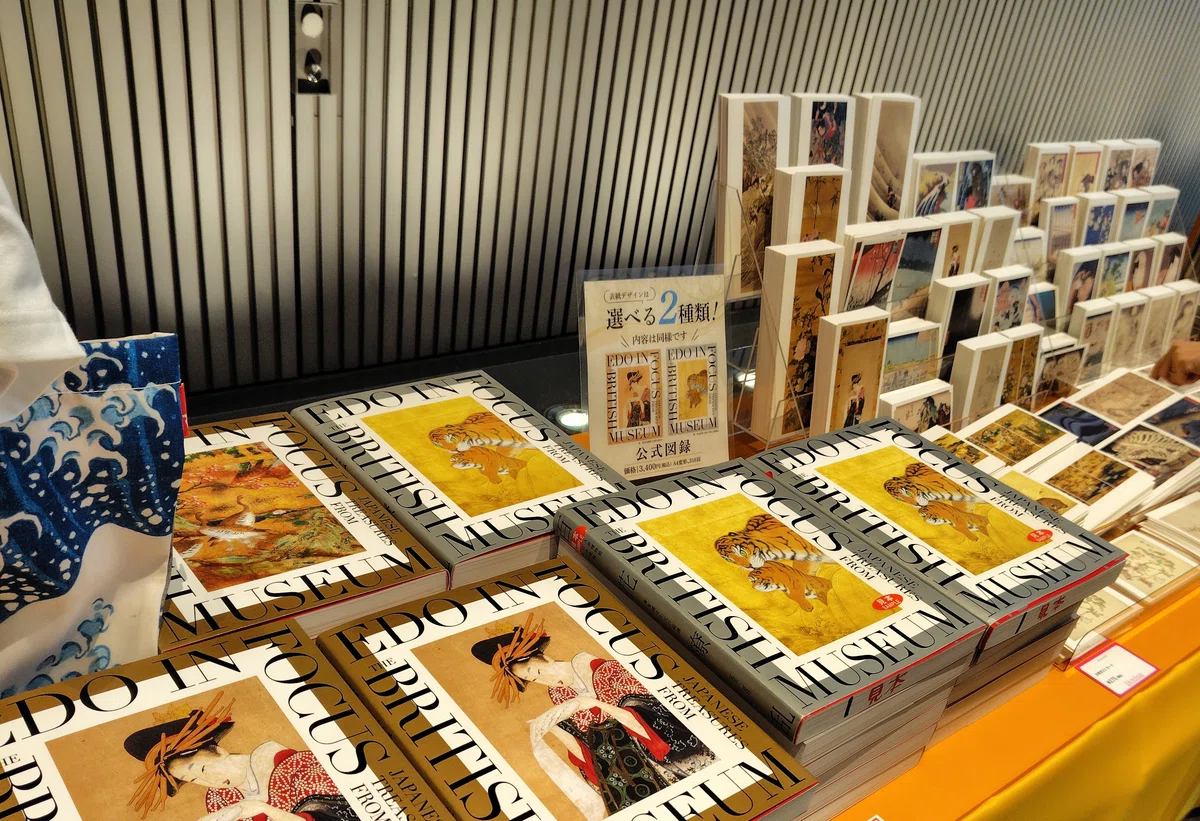
“The British Museum Japanese Art Collection: A Hundred Flowers Blooming – Edo Paintings Across the Sea” Official Catalog 3,400 yen (tax included)
The fluffy sensation still lingers on my fingertips.
It seems I have been completely won over by the tiger parent and child.
Exhibition Information
The British Museum Japanese Art Collection: A Hundred Flowers Blooming – Edo Paintings Across the Sea
Dates: October 31, 2026 (Sat) – January 31, 2027 (Sun)
Venue: Nakanoshima Museum of Art, Osaka, 4th Floor Exhibition Room
Opening Hours: 10:00 – 17:00 (until 20:00 on Fridays)
*Last admission is 30 minutes before closing
Closed: Mondays, November 24 (Tue), December 31 (Thu), January 1 (Fri/Holiday), January 12 (Tue)
*Open on November 23 (Mon/Holiday) and January 11 (Mon/Holiday)
Admission: General 2,300 yen / High School & University Students 1,400 yen / Elementary & Junior High Students 500 yen (tax included)
Official Website: https://daiei-ten2026.exhibit.jp/
Next Issue Preview
Next time, I will report on the “CURATION⇄FAIR Kyoto” art fair held in Nishijin, Kyoto.
(Updated every Wednesday)
*Please refrain from reprinting or secondary use of the posted images.
*This article was written based on coverage and photography from the press preview.
Reporting, Text, and Photos: Gen Irie (#IRIE_ART_LOG)
