

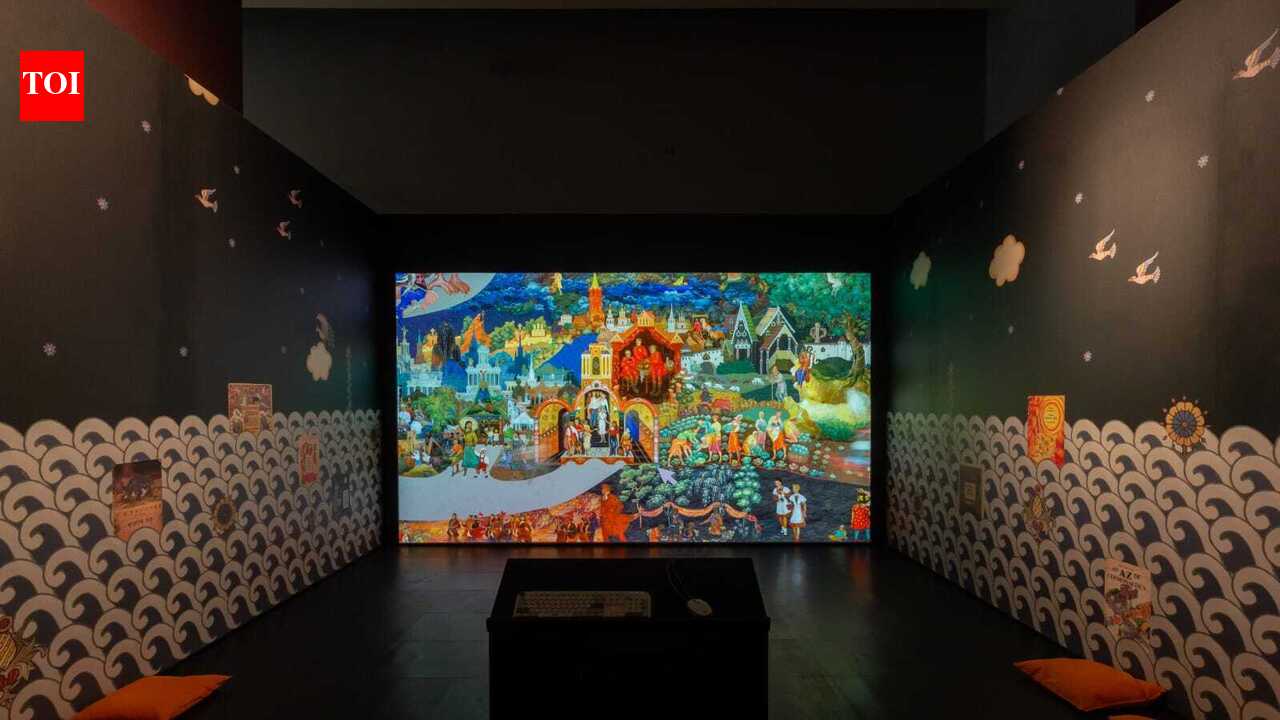
“Sediments of Becoming arrived at the Hermitage at a moment of acute global fracture,” says eminent curator Tunty Chauhan, “ not as a response to the present, but as a reminder of all that endures beneath it.“A pair of antique manuscript books act as the opening epitaph of relics in this engaging exhibition. Gallery Threshold, in collaboration with the State Hermitage Museum, St Petersburg, presented ‘Sediments of Becoming: Fossilised Present, Summoned Pasts’, the first dedicated contemporary Indian art exhibition in the institution’s 260-year history.Jointly curated by Marina Schulz and Tunty Chauhan, unveiled against terracotta-toned walls, this exhibition of Indian and Russian art is a feast for tired eyes.
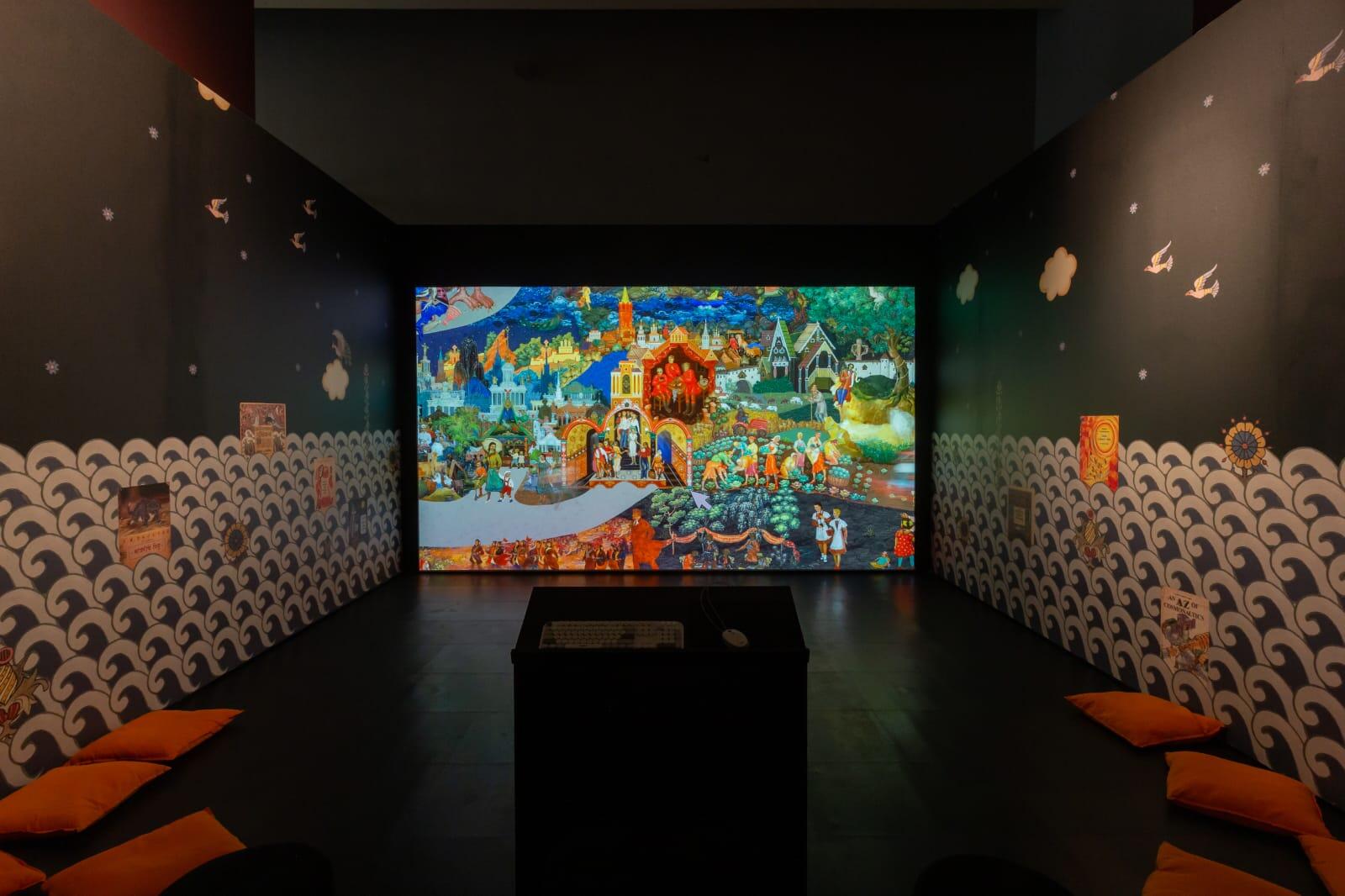
Chauhan, a collector and connoisseur in her own journey, says the exhibition conceives of artistic practice as a form of cultural archaeology, approaching culture as a layered terrain in which memory, identity, and history are continuously produced, contested, and reinterpreted. The exhibition brings together eleven significant Indian artists working across painting, sculpture, installation, and performance.Conceived as an artistic practice formed of cultural archaeology, Chauhan asked each of the eleven participating artists — Afrah Shafiq, Anindita Bhattacharya, Debashish Mukherjee, Gargi Raina, Lakshmi Madhavan, Manjunath Kamath, Maya Krishna Rao, Pushpamala N., Ravinder Reddy, Sumakshi Singh, and V. Ramesh one foundational question: Which buried stratum of memory does your work seek to excavate, and what responsibility does that act carry in shaping how histories are remembered?
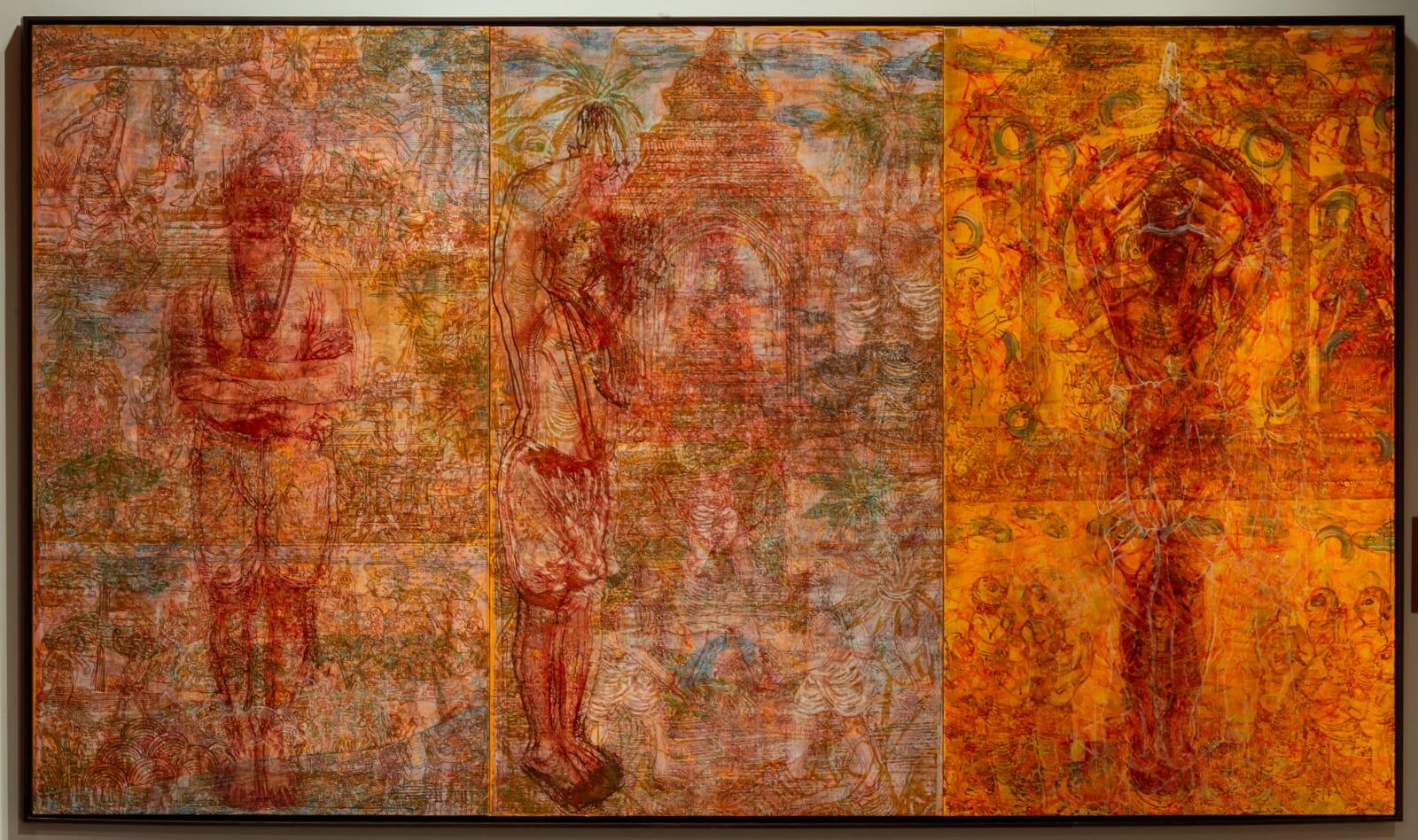
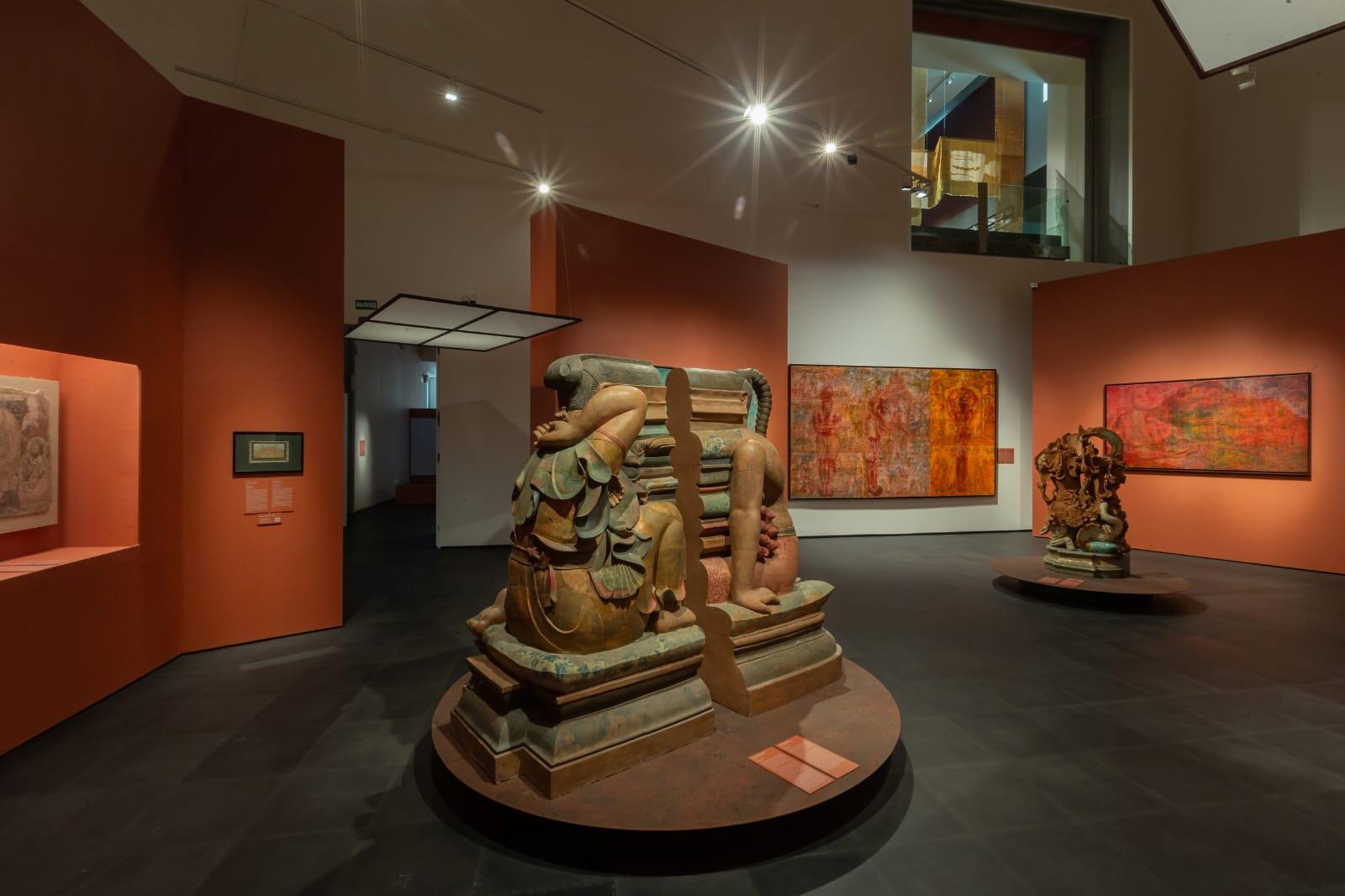
V Ramesh’s Saga
This suite of works, beginning with the cerebral V Ramesh’s Saga of Nandanar, unveils, like sedimented layers of human history, in which each era creates a fossilised imprint on the subcontinent’s cultural consciousness. Ramesh is a contemplative contemporary sage who creates rippled interpretations of a participation of islands of peaceful annotations that run back into the pages of antiquity. More than anything, his canvases limn the depths of the labyrinth of man’s capacious memory that weaves experience into its miasma.
Manjunath Kamath’s epic sojourn
Follow Nandanar with the brilliant sculptural aesthete Manjunath Kamath who uses distinct archival vignettes to create a vista of multiple dimensions and little fragments of human history to create a commentary that resonates into archival arches within the gaze of diversity as well as mythological moorings.Overlapping with South Asian history as well as his own conviction and experiences of the vitality of worship in temples, Manjunath’s instruments of spiritual and associative interpretations create their own islands of both conviction as well as a deeper resonance of pathways and passages of the ethnographic gaze, as it were.Curator/ critic Gargi Gupta, who has written and followed Kamath for more than 20 years, says:“ History, Manjunath Kamath loves to say, is as much his medium as clay. This engagement with history is manifested in his two sculptures on view at the Hermitage, ‘Through Narrow Passage’ and ‘To be Continued’, both of which underscore a heightened ambition in physical scale and critical inquiry in Kamath’s recent practice.
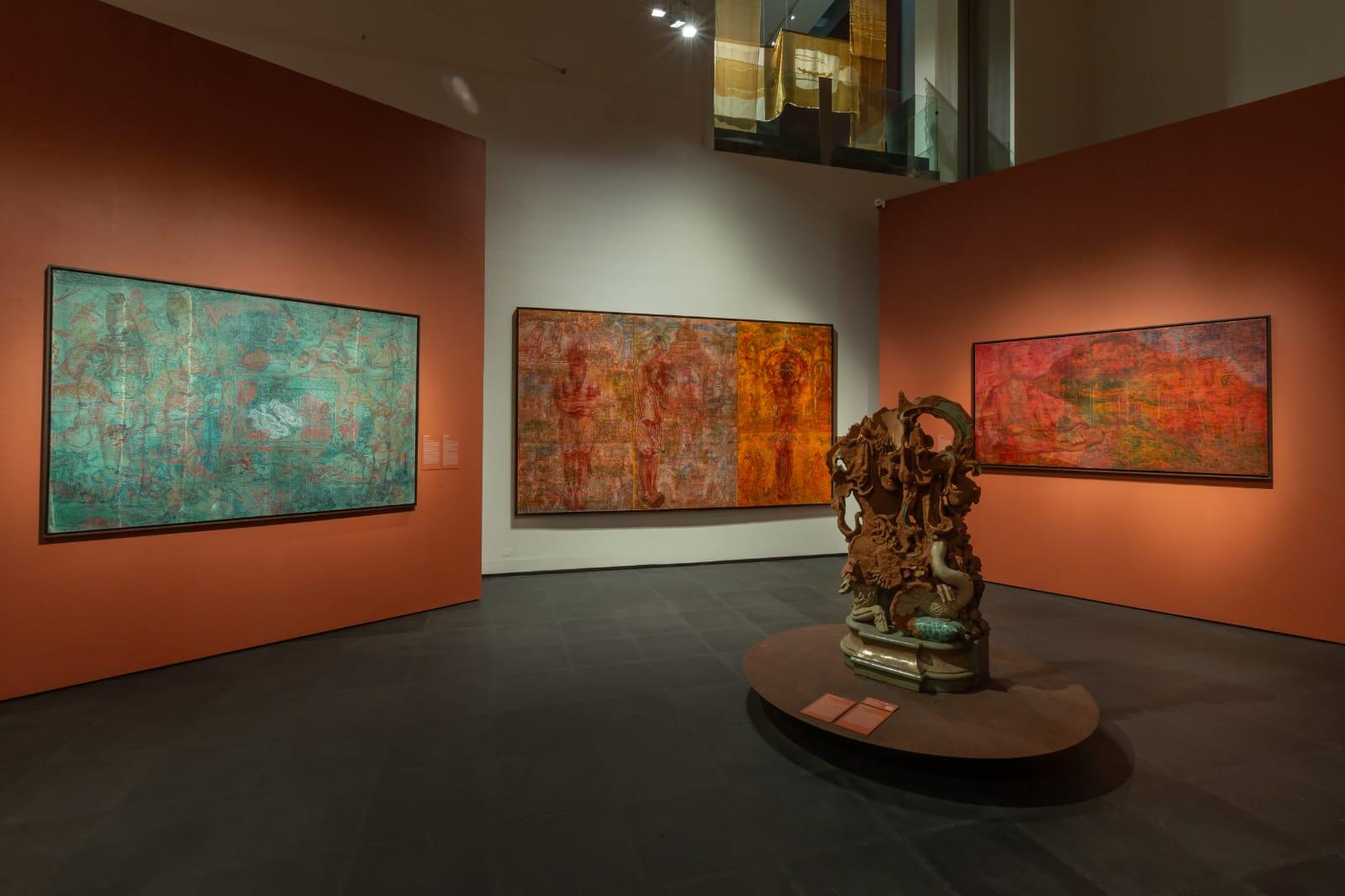
Evoking the iconographic conventions of South Asian statuary, the two seated figures in ‘Through Narrow Passage’ confront one another in near-symmetrical opposition. ‘To be Continued’ invokes the idea of ‘memento mori’ or the inevitability of death and destruction of material culture through the ant-hill-like texture that covers much of the work. But death here is not framed as an end, but as one phase in a larger cycle, a continuum which is the substrate from which new forms, ideas and civilisations will emerge.”
Sumakshi Singh’s Ascent
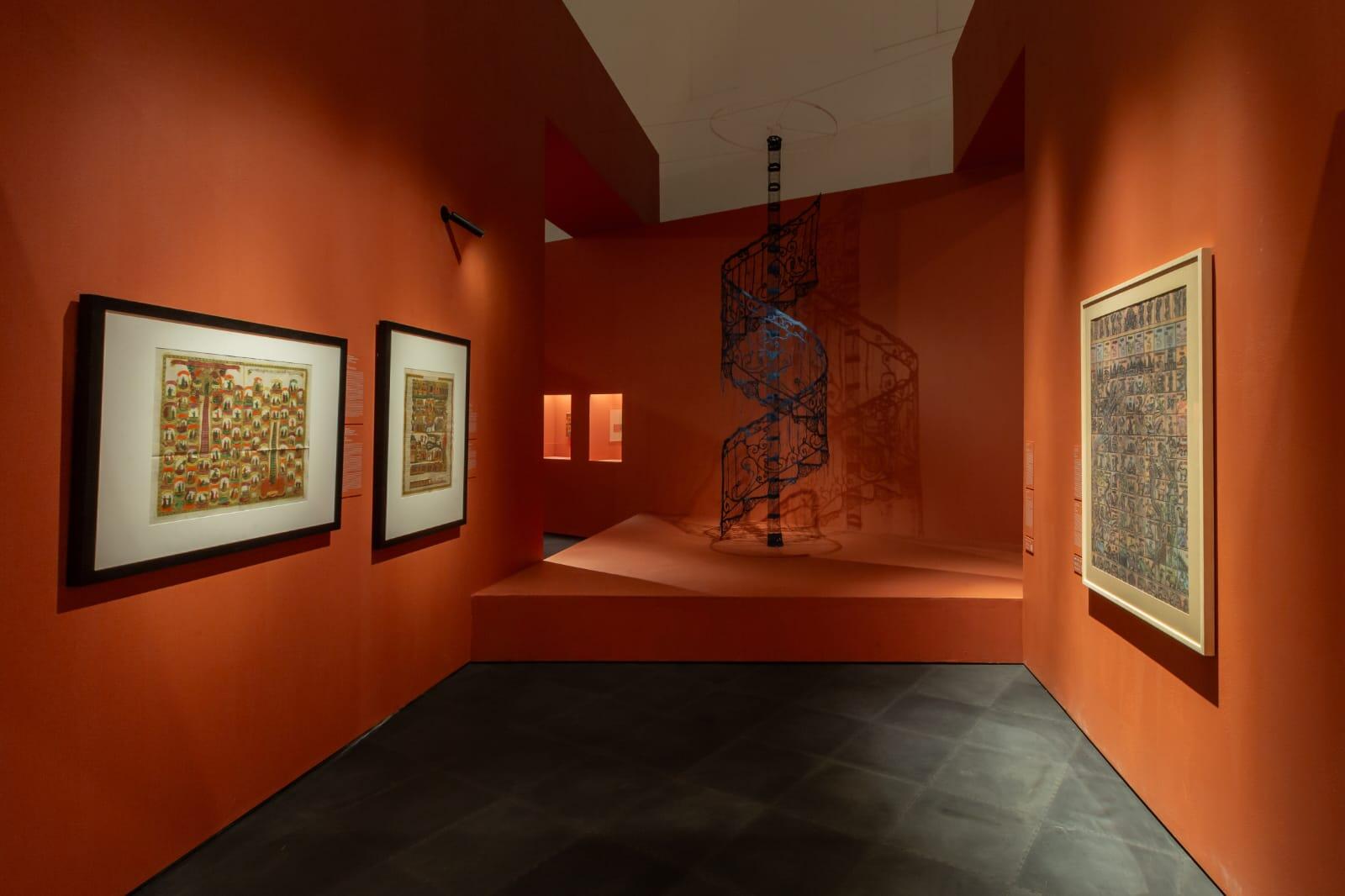
If Manunath’s archival gaze and poise creates its own commentary, then Sumakshi Singh’s painted deep blue spiral staircase is a rudimentary spectacle of colonial residue. Her ability to pull back the pages of personal history and freeze it into a niche of architectural symbolism is what enchants both in form and fervour.Her ability to translate a heavy wrought iron colonial memoir into a delicate, weightless tracing breathes like an inheritance of what is both fragmented as well as suspended into the rewritten passages of present-day memories.The open-ended staircase whispers of questions within and without. Intricate indeed is her understanding of the fragility between memories and familial inquiries. According to curator Chauhan, the demolition yields ‘a passage without destination even as it echoes yogic energies.’
Gargi Raina, To Heal, Repair, Remedy
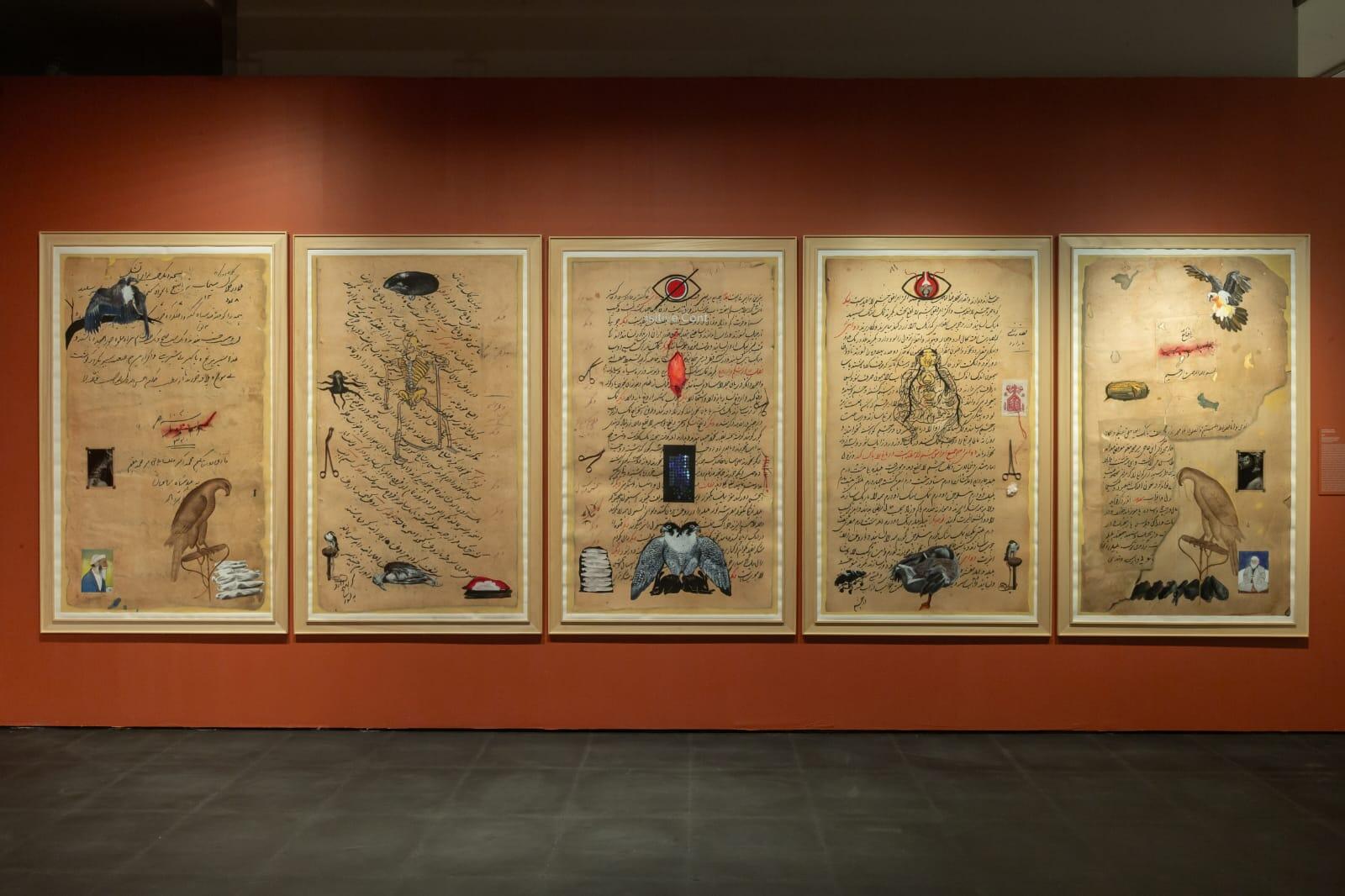
From Sumakshi’s staircase we move to Gargi Raina. She operates as a quiet archivist of delicate disturbance, mapping ancient Silk Road geographies onto fragile layers of dry leaf and paper while using video art to loop memory between Vadodara and St Petersburg.
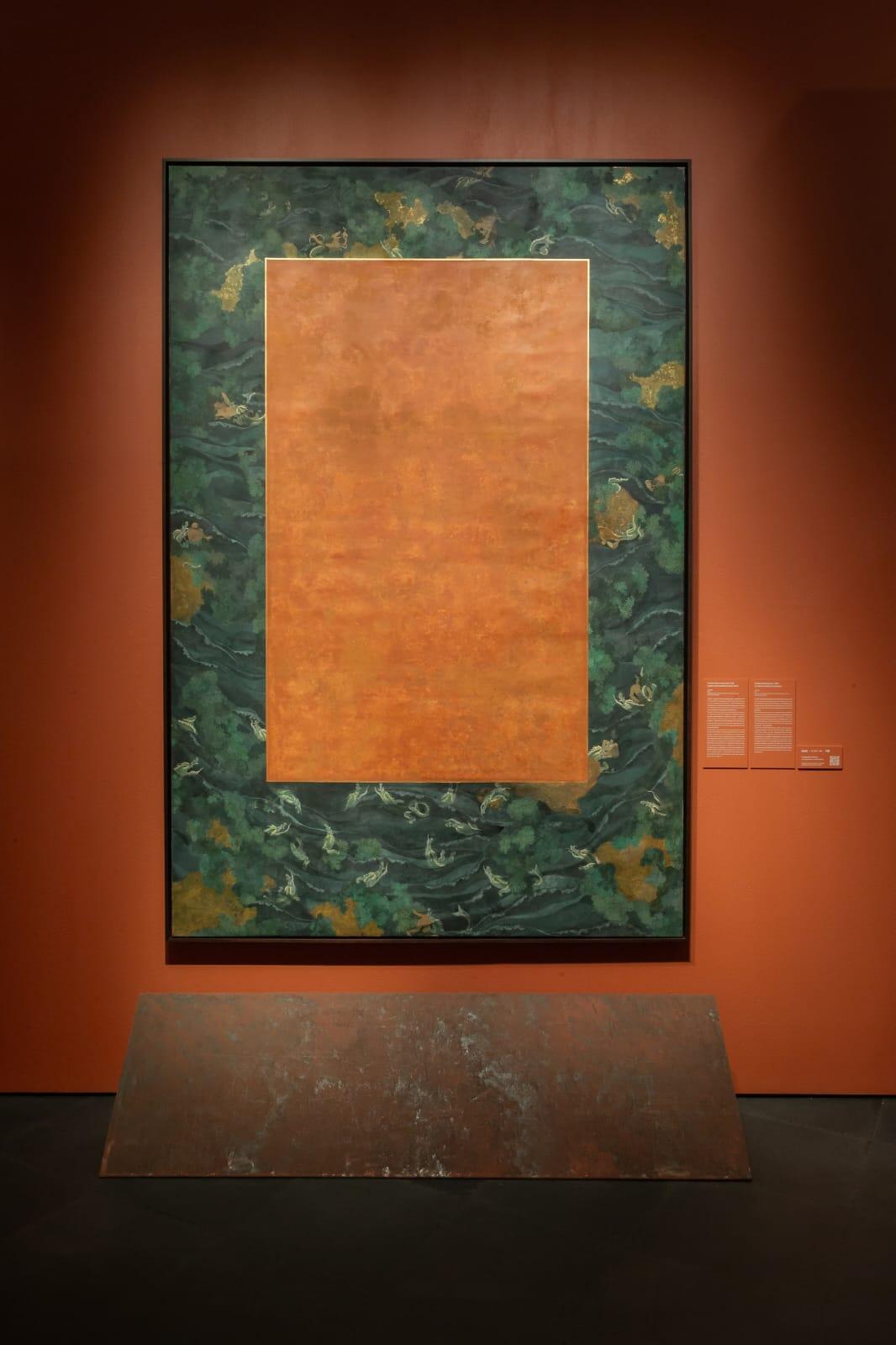
Anindita Bhattacharya’s resonance
Of intrigue and deepened resonance is Anindita Bhattacharya’s meditative sojourn in her canvas. As the Sea Forgets its Shores, a Tagorean reflection of sand and sky and sea and its odysseys of participation in the pages of history that unite and flow into interpretative discourses of life’s leanings.Hers is a distinctive voice as well as a vocabulary of civilisational charisma. She reminds us of the interdependence of man and nature as well as the recurrent ripples of the past and the present. Indeed, it is her work that brings back TS Eliot’s ‘ time present and time past’ as an epoch for eternity.(IMAGES: GALLERY THRESHOLD, INDIA)
Disclaimer: Views expressed above are the author’s own.
