

Historic museum specimens help us learn more about what a species once was like and what it could be like in the future.

In 1829, an Englishman named James Smithson mysteriously left $500,000 in his will to the United States to establish an institution for the “increase and diffusion of knowledge among men.” Baffled, Congress bickered over what to do with the vaguely-allotted funds before eventually founding the Smithsonian Institution on August 10, 1846.
“All we had was the ‘increase and diffusion of knowledge’,” said Pamela Henson, the Smithsonian’s historian. “That could be almost anything.”
Today, the Smithsonian fulfills Smithson’s wishes through nineteen museums across the United States, nine research centers around the world and a national zoo. It houses more than 154 million items in its collections that range from space technology to fine art.
“We really are just an odd organization,” Henson chuckled.
But it all started with birds. American naturalist Spencer Baird was the first scientist at the Smithsonian, and in 1850, he made his personal collection of around 3,700 bird specimens the first collection of what would eventually become the National Museum of Natural History.
“All Baird ever wanted to do was build a great national museum,” said Henson. “He loved his collections. He took in anything he could get his hands on, but he was very systematic and very careful about it.”
Old but far from obsolete
Because of that meticulous attention, some of Baird’s first specimens dating back to the early 1800s are still used by scientists around the world for research today. One such specimen is a California condor collected in the Pacific Northwest in 1835 by American naturalist John Kirk Townsend and given to Baird by ornithologist and painter John James Audobon. The condor was part of the first collection in the museum, and the expertly-preserved specimen has appeared in scientific studies as recently as 2019.
“It is one of the oldest condor specimens in existence,” said Chris Milensky, collections manager for the Division of Birds at the Smithsonian’s National Museum of Natural History. “And being from 1835, it’s one of the oldest specimens in our bird collection.”
One of the oldest California condor specimens in existence and part of the first collection of the Smithsonian Institution Smithsonian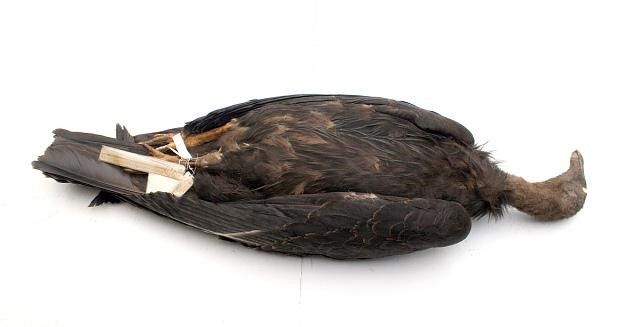
The methods and techniques for preserving and stuffing museum specimens have not changed much in the last 200 years, so the condor looks nearly identical to birds collected in the last few years. But a few things make this condor exceptionally important to researchers: its age and collection location.
California condors used to roam skies from Baja California, Mexico to southern British Columbia, Canada. During the European colonization of North America, however, their numbers began declining to near extinction. By the 1980s, only 22 birds remained — all in captivity. Researchers used 14 of those birds as genetic founders in a captive breeding program in an attempt to save the species. Now, there are less than 300 California condors in the wild, and they inhabit a tiny fraction of their historic habitat.
Understanding the behavior, habitat range and diversity of the birds before the near-extinction event can help scientists protect and reintroduce them to the wild. Historic museum specimens like the one from 1835 provide a chance to learn more about what the species once was like and what it could be like in the future.
John Kirk Townsend preserved the California condor specimen in 1835 while exploring coastal Oregon. Smithsonian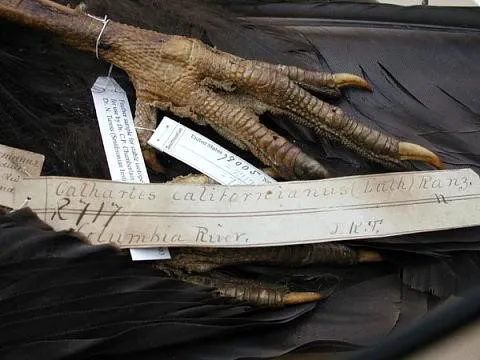
“These older specimens serve as a baseline against which you would contrast a modern population,” said Milensky. “And you’re not going to get any better baseline material for population studies than having a specimen this old.”
Researchers make these comparisons in a few ways, but the newest method involves extracting ancient DNA from a small piece of the preserved tissue and comparing it to DNA from modern condors. In a 2016 study, scientists used ancient DNA to model how the genetic diversity of California condors declined over time.
They also tested whether historic condors from the Pacific Northwest were genetically separate and potentially unique from California populations. The Smithsonian’s specimen helped them determine that condors across the range shared similar genes — a promising result for the prospect of reintroducing captive birds to new areas in the wild.
A portrait of a California condor by John James Audubon in 1838.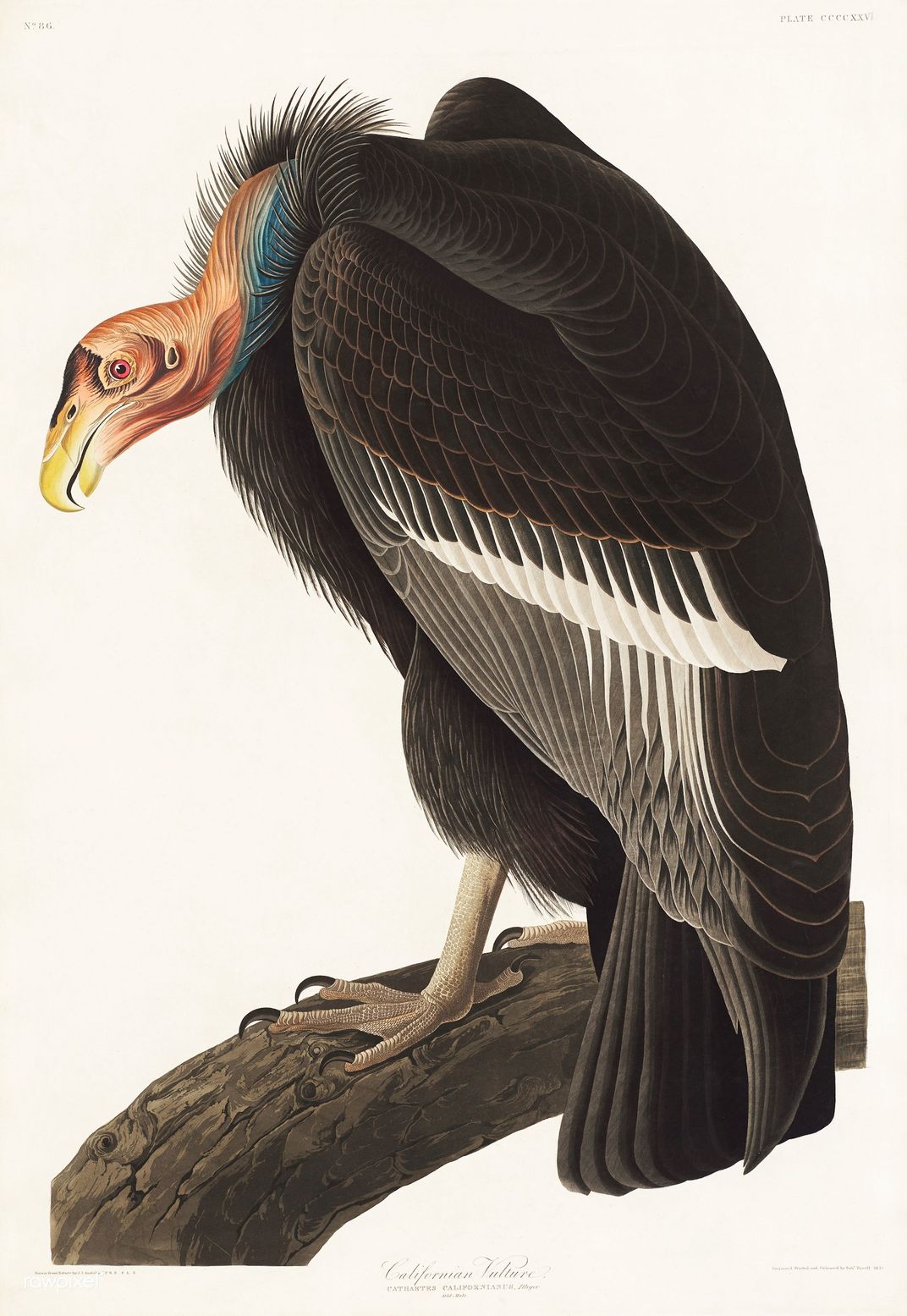
From shelves to stories
Historic specimens provide unique insights into life of the past and future, but they require careful preparation and attention.
“Many of our specimens from that period are no longer in the collections,” said Milensky. “They ended up falling apart or being traded away to other museums.” Townsend’s California condor, however, is particularly well-preserved and has survived building moves, fires and years tucked away in a drawer.
When researchers want to use an old specimen like the condor for research, they can either visit the Smithsonian in Washington, D.C. or have the specimen sent to them. In the case of the division of birds, interested scientists and members of the public can view almost the entire collection in an online database — saving calls and trips to the museum when looking for a specimen.
“That may seem sort of trivial in this modern world, but it’s actually a big deal,” said Milensky. Of the roughly 154 million objects in the Smithsonian’s collections, about 14 million have a digital record. “The fact that the bird division has almost our entire collection online is something we’re proud of.”
As the National Museum of Natural History continues to digitize the museum collections across departments, it will open up new possibilities for using some of the Smithsonian’s oldest collections to study 21st century problems like species conservation.
Related stories:
Digitization Allows Public Access to Smithsonian’s Hidden Collections
New Clean Room Allows Scientists to Study Fragile Ancient DNA
Scientists Describe New Bird Species 10 Years After First Reported Sighting
Are Birds Dinosaurs and Other Questions From Our Readers
Categories
Archive
