

Date and Time: September 20, 2026 (Sun) 10:00–12:00
Venue: Yamaguchi Furusato Heritage Center, 2F Training Room
In the 20th and 21st centuries, Germany experienced a turbulent history of defeat, division between East and West, reconstruction, and reunification. The philosophy of “Collapse and Recovery” (Note 1), which became the origin of documenta when it began in 1955, seems to symbolize this modern German history.
Furthermore, since Harald Szeemann served as artistic director in 1972, documenta has attracted attention as a large-scale international art exhibition adopting a sole-responsibility system, becoming a model for subsequent biennales. The interval between the first and second documenta was five years, and the intervals between the third, fourth, and fifth were four years each, but from the fifth exhibition onwards, a five-year cycle has become established. If we were to use a naming convention matching biennales or triennales, it could be called a “quinquennale,” but there are no other examples besides documenta, and this term has not taken root (Note 2). However, it remains a periodic exhibition held every five years, and in the sense that it became a model for later biennales and triennales established around the world since the 1990s, documenta is an exhibition included in the generic term “biennale.”
In this lecture, I looked back on the history of documenta from 1955 to 2022, mainly using artwork images from the retrospective section of the official website (Note 3). While I have only obtained information retroactively from the official website, magazine articles, and exhibition catalogs for the exhibitions from the first in 1955 to the eighth in 1987, I obtained information contemporaneously for the ninth exhibition in 1992 through a slide lecture held at the Watari Museum of Contemporary Art in September of that year (Note 4). Subsequently, I visited Kassel to see the exhibitions from the tenth in 1997 to the fourteenth in 2017, and for the four exhibitions from the eleventh in 2002 onwards, I provided commentary interspersed with photos I took on-site. For the fifteenth exhibition in 2022, as I had to abandon travel due to the COVID-19 pandemic, I once again looked back based on information obtained from the official website, magazine articles, and the impressions of those who saw the exhibition.
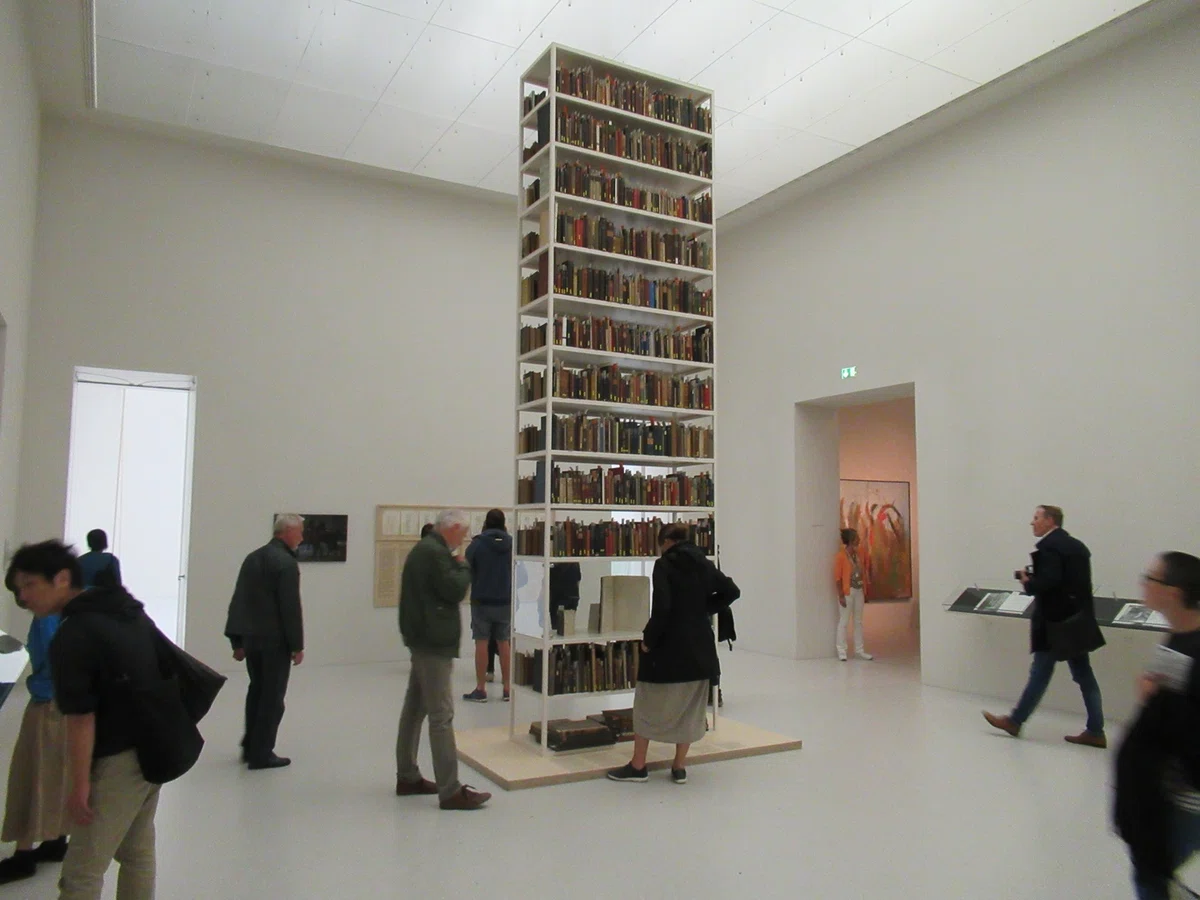
documenta, which began with the goal of postwar German cultural reconstruction and the revival of avant-garde art, actively introduced the latest American trends from the third exhibition in 1964, and it can be said that it also functioned as a place to visualize the progressiveness of the Western cultural sphere during the Cold War. After the reunification of East and West Germany, it led institutional innovation in international exhibitions by reflecting cultural pluralism in artist selection at the ninth exhibition in 1992, appointing a female curator for the tenth in 1997, and an artistic director of African descent for the eleventh in 2002. It can be said that it continues to be a place for sharing cutting-edge social and artistic issues, such as by employing Asian artist collectives and focusing on the creativity of local communities at the fifteenth exhibition in 2022.
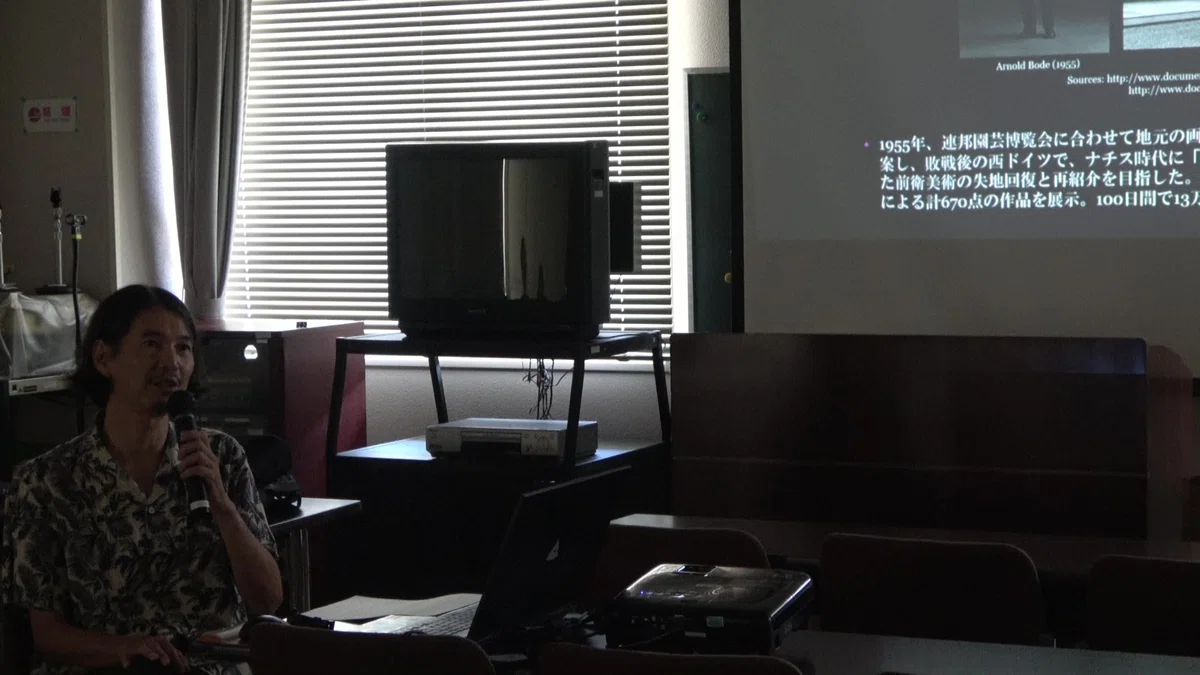
In the exchange of opinions, the main feedback received was, “Through the history of documenta, which is held every five years, I was also able to look back on the flow of postwar contemporary art.”
Also, among the participants were those who had seen the tenth exhibition in 1997 and the twelfth in 2007, and they shared their impressions and opinions while recalling those times. 1997, in particular, was a year when three large-scale international exhibitions overlapped—the biennial Venice Biennale, the quinquennial documenta, and the decennial Skulptur Projekte Münster—and it was even compared to a “planetary alignment.” Amidst this, one participant commented, “I vividly remember Hans Haacke’s ‘Merry-Go-Round’ seen in Münster (a work where a merry-go-round is enclosed by a rough wooden board wall, allowing one to peek inside through gaps), but I have almost no impression left of the works exhibited at documenta X, which had many documentaries and video works.” Additionally, at documenta 12 in 2007, an exhibition was attempted where contemporary art works were inserted into the display of classical paintings, but there was also talk that “it was difficult to find the exhibited works at documenta.”
Furthermore, although they had not seen documenta, one participant cited the Okayama Art Summit held in a neighboring prefecture and expressed the opinion that “art works with strong social messages are difficult to enjoy because one is simply overwhelmed by the weight of the social reality they present.”
A participant who had seen this year’s Busan Biennale commented, “I was interested in documenta’s expansion into the city. The venue was the former Busan Nam High School, and because it had just closed, the atmosphere where high school students had been studying remained, and the exhibition of contemporary art there gave a completely different impression from an exhibition in an art museum.”
Touching again on the “biennale fatigue” that was a topic in the third lecture, there was a question showing interest in the background of why documenta has continued to the present. I expressed the view that the uniqueness of the five-year cycle of documenta may have been further strengthened by the increase in biennales and triennales held on two- or three-year cycles.
Notes
1: From the commentary on the 13th exhibition on the official documenta website. It is explained that documenta has a philosophy of “Collapse and Recovery,” and that this exhibition returned to this origin. documenta / Retrospective / dOCUMENTA(13) <https://documenta.de/en/retrospective/documenta-13> (Accessed 2026/9/21)
2: The Quadriennale held every four years has an example in Rome. Quadriennale di Roma <https://quadriennalediroma.org> (Accessed 2026/9/21)
3: documenta / Retrospective <https://documenta.de/en/retrospective> (Accessed 2026/9/21)
4: A slide lecture held by Mr. Koichi Watari on September 10, 1992. Information on the event was obtained from the following article: “The Olympics of Contemporary Art, documenta IX, is interesting for its dogmatism and prejudice,” Figaro Japon, August 1992 issue, pp. 190-193.
[Future Schedule]
Part 5: November 21 (Sat) Late Orientation
Part 6: December 26 (Sat) documenta (Lecturer: Shuzen Kiyonaga, Professor, Faculty of Arts, Toa University)
Part 7: January 23 (Sat) Busan Biennale or Gwangju Biennale (TBD)
Part 8: February 20 (Sat) Same as above
Part 9: March 13 (Sat) Biennale Forum (Tentative)
The venue is the Yamaguchi Furusato Heritage Center, 2F Training Room.
