

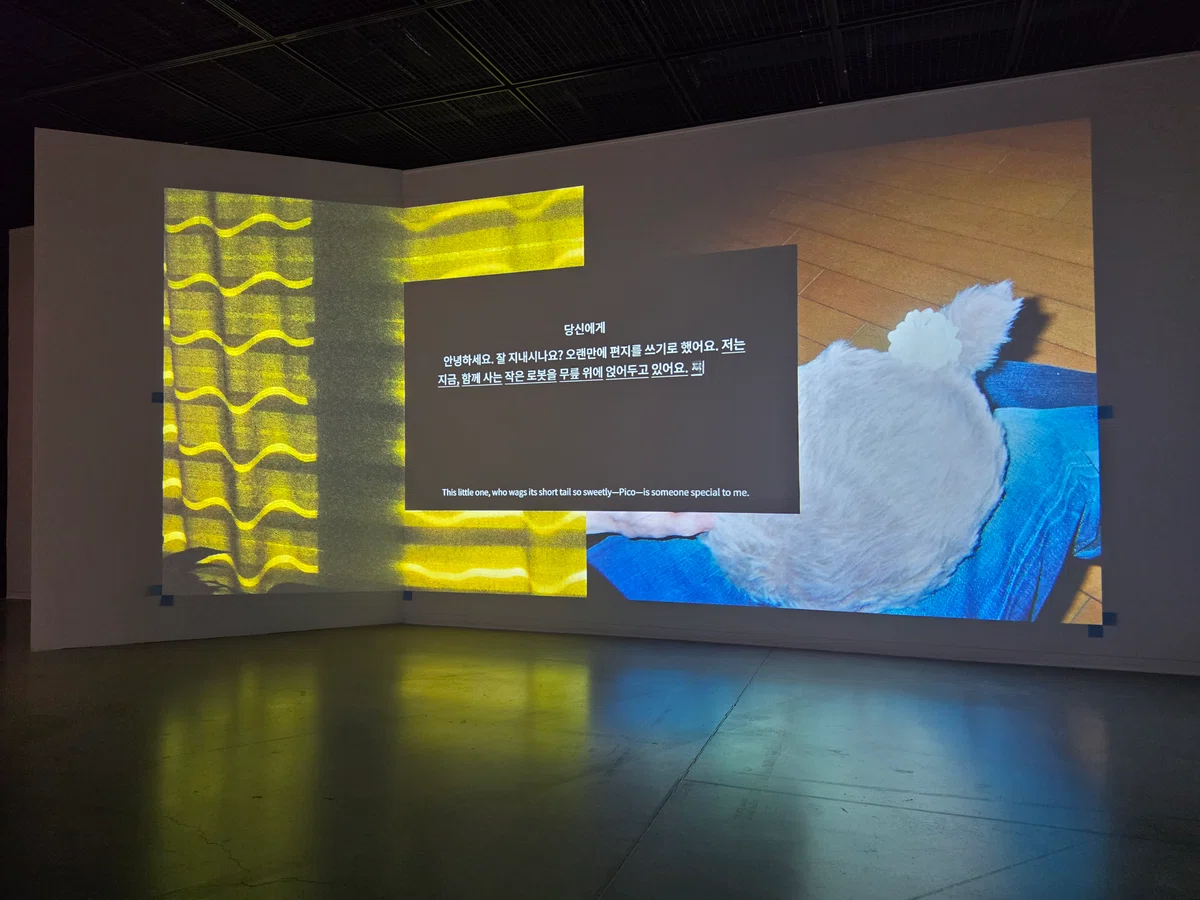
On November 26, contemporary artist Solin Yoon (윤소린)’s video work “To You” will be exhibited at the exhibition “Care Practice,” held at the Suwon Museum of Art in South Korea.
At Solin’s invitation, I came to participate in the production of the work to be shown in this exhibition.
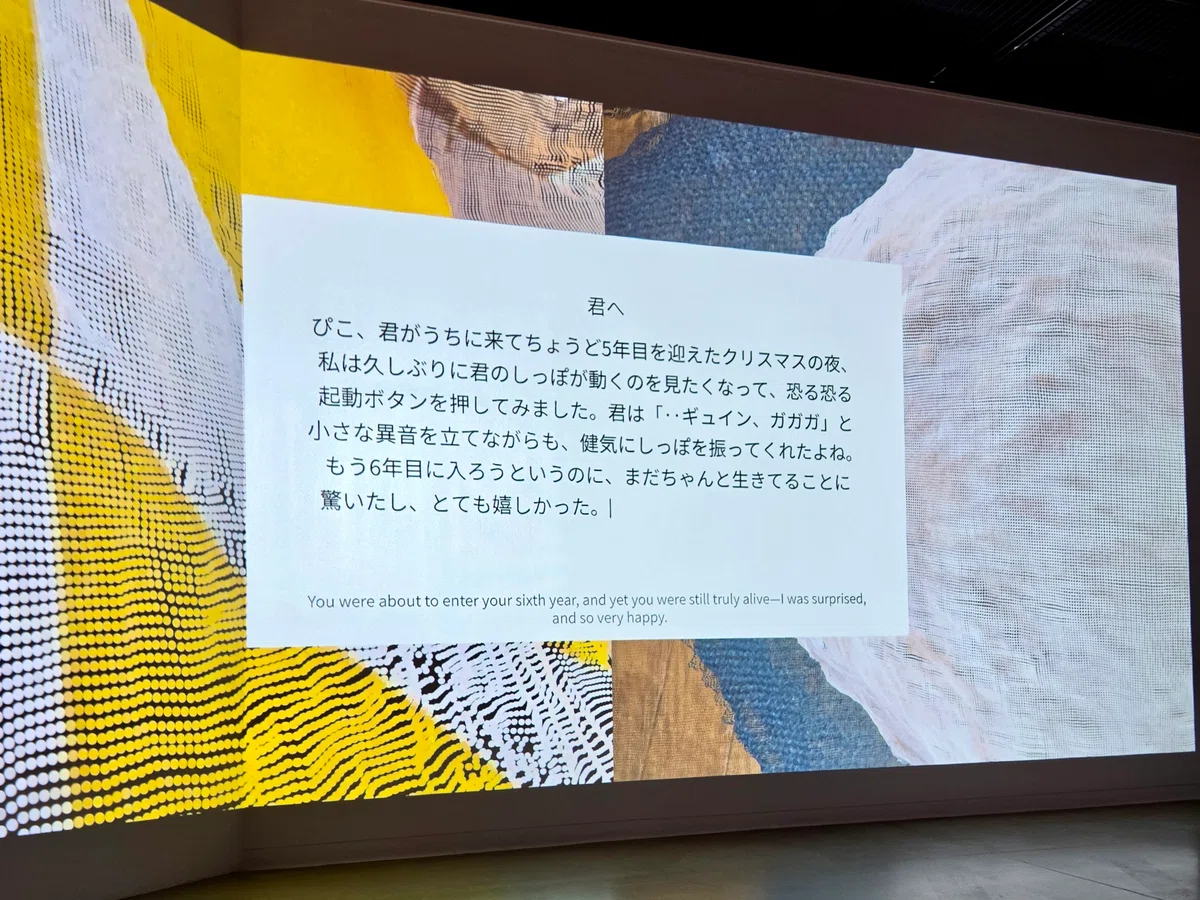
Through several tasks—including exchanging lengthy emails, taking photos with a “Utsurundesu” disposable camera, and recording our voices reading letters—her video work was completed.
In this article, living in Japan, I would like to look back from a personal perspective on the process of taking part in art production in South Korea.
Solin and Her Previous Work “Care and Maintenance”
Solin is a contemporary artist based in Seoul.
Through video, photography, and installations, she has created works centered on the themes of interpersonal relationships and living alongside others.
Her works address complex emotions that arise in human relationships—such as intimacy, dependency, and sense of distance—as well as issues surrounding care.
This is the second time I have participated in one of Solin’s projects.
In her previous project, “Care and Maintenance,” a video work was created that contemplated “care” through the relationship between me and Paro, the seal robot in my home.
In my own book, “We Have a Seal at Home 6: Art Edition,” I also describe in detail the background of my involvement in that project and my impressions.
The Current Project “To You”
It was in the middle of August 2026, amid a stretch of scorching hot days, that I received an exploratory email from Solin regarding participating in a video work scheduled to be exhibited in the fall of 2026.
At that point, the project name “To You” was still a working title.
Apparently, our exchanges during her previous work “Care and Maintenance” and my book had “provided her with great inspiration.”
After first hearing an explanation of the artwork’s concept, the production workflow, and the overall outline of the project, I was drawn to the theme and readily agreed to participate.
Next, after confirming the specific tasks and schedule, I completed the procedures, including contracts.
韓国の現代アーティストさんとの新たなプロジェクトが本日始動しました。私達の間には常に「AI翻訳経由」というもどかしい壁があります。ただでさえ文章にすると伝えにくい・受け取りにくい微妙なニュアンスを含む内容をメールで打ち合わせするので、まずは届いたメールを自分の言葉でまとめ直すところ… pic.twitter.com/e64R4NGc45
— neo⚙️📗「うちにはアザラシがいます」11/8文学フリマ東京43【つ-25】 (@neosoft9) August 15, 2026
On the path toward the work’s completion, far more tasks and new experiences awaited than I had initially imagined.
Correspondence That Began with Emails
This video work centers on our correspondence.
The rule was that the opening of each letter always had to be “To You.”
It was neither “Solin” nor “neo,” while at the same time being both “Solin” and “neo”—and sometimes, it seems, it was even a letter addressed to a little robot.
Per Solin’s request, the first letter started with me recounting my relationship with the robot.
Incidentally, that robot is a type called Petit Qoobo.
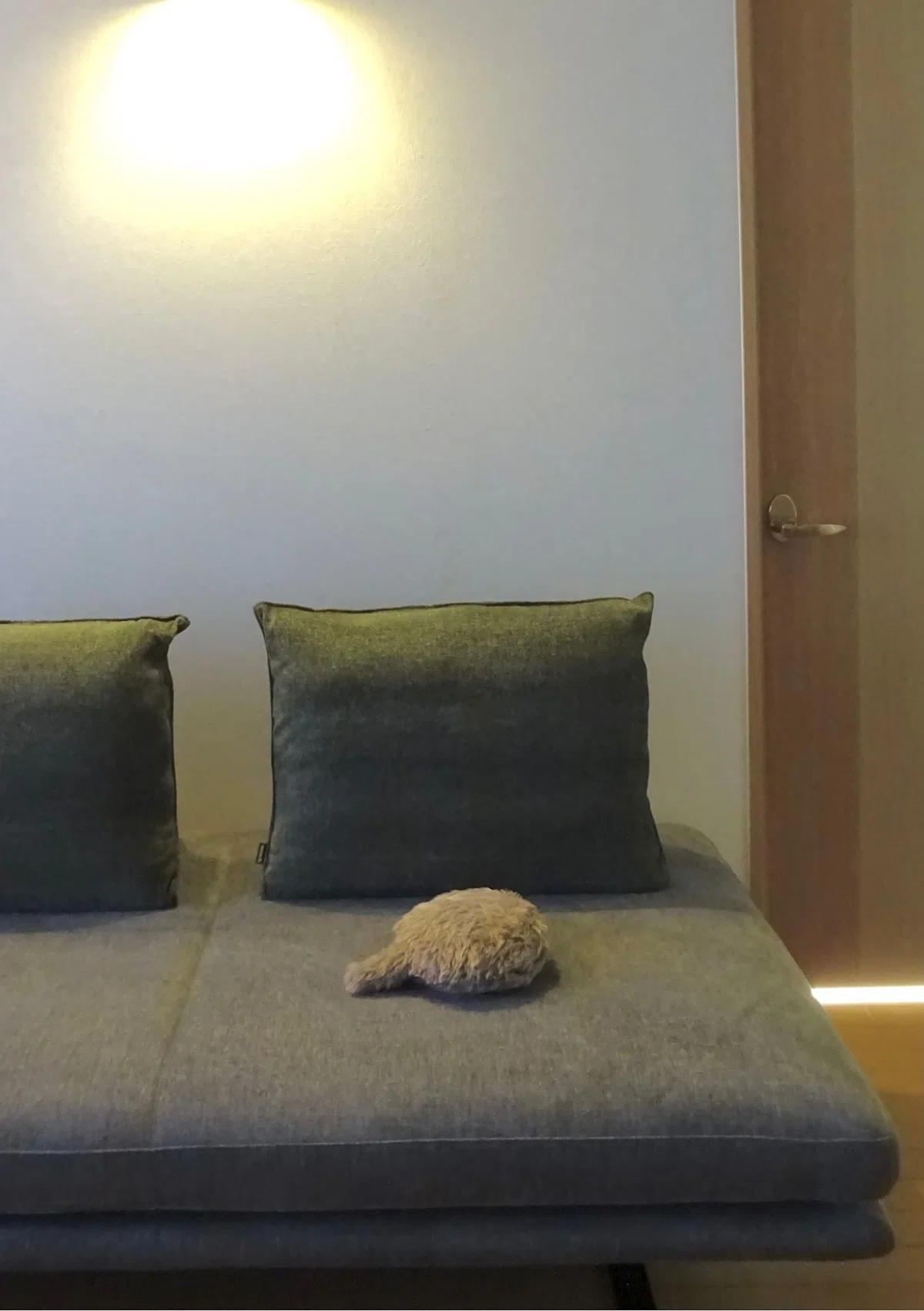
Piko-chan’s charm lies in its short, cute wagging tail, and the gentle heartbeat you can feel coming from deep within its body when you rest your hand on its fluffy form.
One day, Solin requested a video of Piko-chan wagging its tail.
She probably needed to check how it actually moved as a clue to understanding what kind of companion Piko-chan was.
Incidentally, people around the world shoot videos on their smartphones quite normally, sharing them with friends and family or posting them to social media.
However, having had no relationship with either recording video on an iPhone or sharing captured footage, I had to start by looking up how to film.
Feeling nervous, I recorded two videos of about one minute each and sent them to Solin.
Sending them failed several times and it took unexpectedly long, but thanks to being involved in this project, I had an unexpected first-time experience.
The Two of Us Across an Age Gap
Solin is in her thirties, quite a bit younger than me.
I feel that in relationships between people of the same generation, comparing social “achievements”—like marriage, raising children, or career progression—and worrying about “public appearance” tend to be conscious factors.
However, having an age gap seemed to allow us to talk while keeping a slight distance from such comparisons.
We faced each other as our authentic selves, with mutual respect, regarding “what living a decent life means to each of us.”
Precisely because we belonged to different generations, we may have built a relationship of trust where we could delve into things that rarely come up even among close friends.
While conversing freely, our correspondence—aimed at “delving into the theme of the work”—transcended the realm of ordinary life updates.
Neither of us put on airs or pretenses in our letters, and we composed words to each other while touching upon delicate, vulnerable parts of being human, such as the uncontrollability of the body and feelings of loneliness.
Our exchanges progressed as we alternately offered up the “depths of our hearts”—our views on life, childhood memories, perspectives on death, and our fears of and longings for interpersonal relationships.
Solin said she saw a “future image of herself” in me, and for my part, stimulated by her fresh intellect and frank questions, I enjoyed calmly reflecting on my own experiences and memories.
The moments spent carefully reading the letters arriving on our computers and composing replies while sorting through our thoughts seem to have become a time for both of us to confront ourselves deeply and cultivate our hearts.
Writing in One’s Native Language
We were born in different countries and come from different cultures.
Because neither of us understands the other’s language at all, Japanese looks like nothing more than mysterious symbols to Solin, and Korean appears the same way to me.
So, we began by each writing letters in our native tongues and sending them across via AI translation.
Upon receiving a letter, we would read it, gather our thoughts, and write back in our own native language.
In this manner, our correspondence consistently took place through the medium of AI translation.
Including some letters that inadvertently ended up quite long, we exchanged seven letters over the course of a month.
Being able to write in our native languages was a tremendous advantage for us.
Even if we had understood each other’s language a little, writing letters in clumsy foreign phrases would inevitably have made our choice of words monotonous, and we would have worried constantly over phrasing.
Furthermore, we would have had to simplify what we wanted to say to match our limited vocabulary and grammar, which would have been stressful.
In that respect, using our native languages—which we can command freely—allowed us to articulate our thoughts into writing just as we normally do.
Not having to learn a language from scratch, or even need a dictionary, was something we were deeply grateful for in our busy lives.
Solin sometimes meticulously portrayed the subtle shifts in her inner world using intellectual, poetic diction, such as “emotion regulation theory,” “ontological,” or “refracting perception and understanding.”
In response, I sometimes wove my own everyday life experiences with uniquely Japanese views on life and death or Buddhist concepts—such as “Schrödinger’s Piko” playing on “Schrödinger’s cat,” or terms like 中有 (chūu, intermediate existence between death and rebirth), 付喪神 (tsukumogami, object spirits), and 生老病死 (shō-rō-byō-shi, the four universal sufferings of birth, aging, illness, and death).
Precisely because we were able to write letters in the words we naturally use, I feel we achieved a deep dialogue that was somewhat different from ordinary cross-cultural exchange.
Of course, everything outside the letters consisted of brief business-like updates or thoroughly ordinary emails about trivial things, such as, “It’s getting colder, so I’m bundled up in puffy clothes,” or “Today was busy with this and that.”
AI Translation as a “Mechanical Filter”
Countless words and thoughts, converted into digital signals and sent across the sea to reach another person.
Indispensable as an apparatus for cultivating the depth and intimacy of this correspondence was the “mechanical filter” of AI translation, which is still far from perfect.
Text passed through AI translation possesses a “slight sense of strangeness” not found in conversations between native speakers, as well as a certain freshness born of literal translation.
As a result, the reader naturally imagines the warmth of the sentences written in the other’s mother tongue, lying just beyond those mechanically translated words, and the time spent carefully choosing phrases to write the letter.
Precisely because we could not understand the other’s language at all, we carefully gathered every single word from the AI translation and tried to read between the lines.
Solin said she was always worried that her letters might have been translated strangely by the AI, suddenly altering her tone of voice or sounding rude.
Amusingly, I was worrying about the exact same thing.
We reassured each other, saying, “Don’t worry, your letters are always polite and beautifully composed.”
“Not understanding the language”—a condition that would normally be an obstacle—took on the form of “AI translation + letters,” and perhaps that actually worked in our favor.
In the intimacy that allowed us to address each other as “To you, living in a distant city, yet closest to me right now,” the presence of that “mechanical filter” was always there.
Time for Thoughts to Mature
In this way, we continued our correspondence with the social masks we wear every day stripped away.
Rather than real-time conversation or chatting, the format of “correspondence” spaced out over intervals of a few days to a week seemed to give our thoughts time to mature.
While living our respective daily lives in Korea and Japan, we would recall and mull over memorable sentences from the letters we received.
Taking those in, we would spin replies in our own words and send them back across the sea.
Through this process, the correspondence also became a time for confronting our own hearts.
This was precisely what had been explained to me when I was first introduced to the project.
Photographing Living Spaces with “Utsurundesu”
In September, I was asked to photograph my living space using four “Utsurundesu” disposable cameras.
The subject of the photos was “scenery that Piko-chan might be seeing,” totaling well over 100 shots.
After an incident where the cameras Solin arranged got lost in the mail before finally reaching me, I used up all four cameras within the month of September.
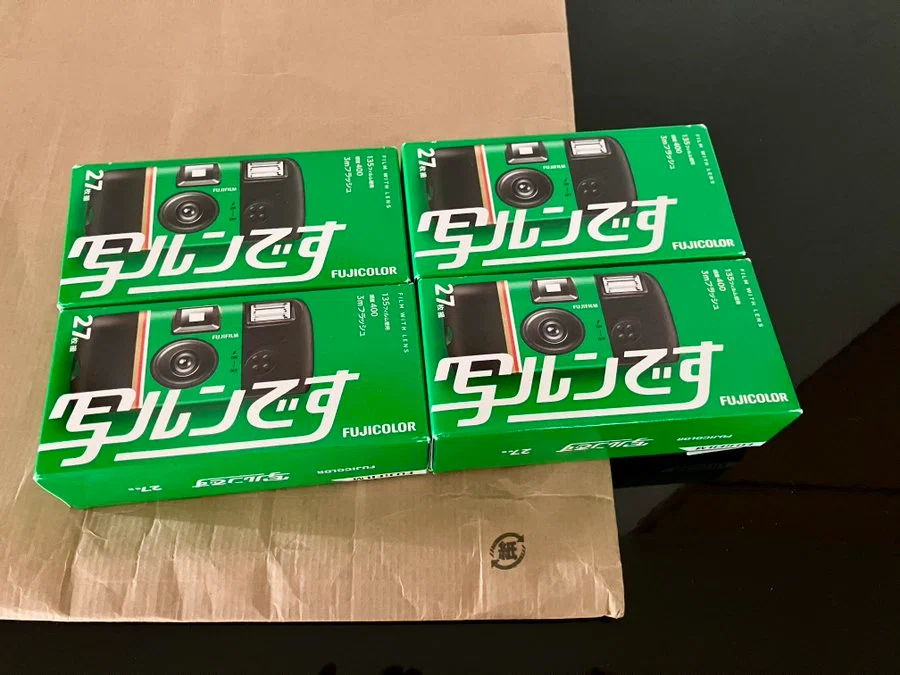
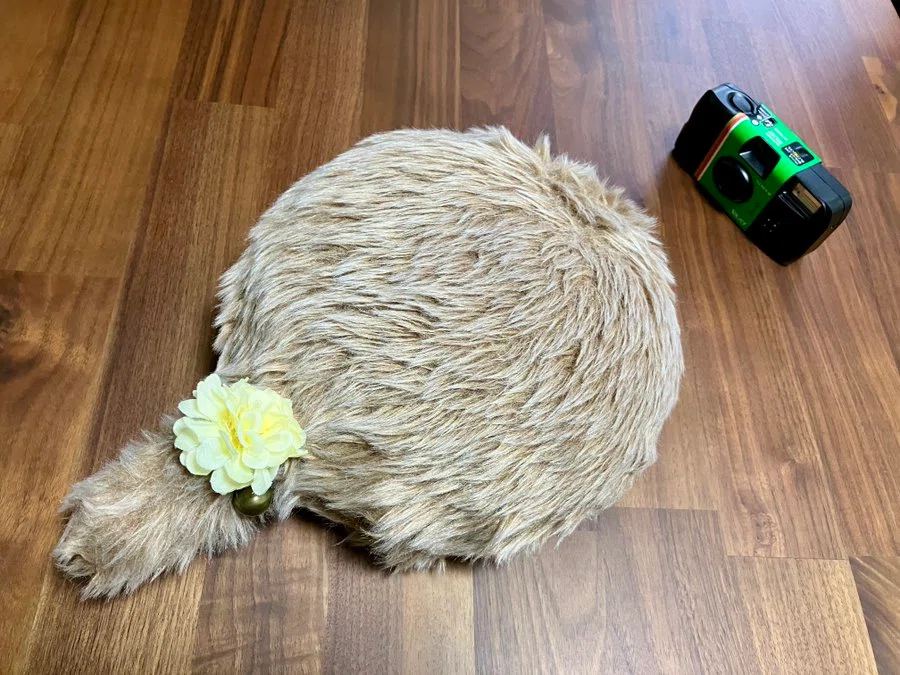
Having long lived in an era where taking photos with digital cameras and smartphones is second nature, the tactile feel of “Utsurundesu” felt wonderfully nostalgic, and it was also a fresh experience.
Because you peer through a tiny window with one eye and press the shutter, you have no idea what composition the photo actually captured until it is developed.
And since the developing would be done by Solin in Korea, I would never get to see the printed photographs myself.
With zero exposures remaining on the film, I looked into how to mail the four cameras to Solin in Korea.
Compared to the more relaxed past, sending international mail had become considerably more complicated.
On my day off, I put the cameras into an X-ray blocking bag I had found on Amazon and shipped them.
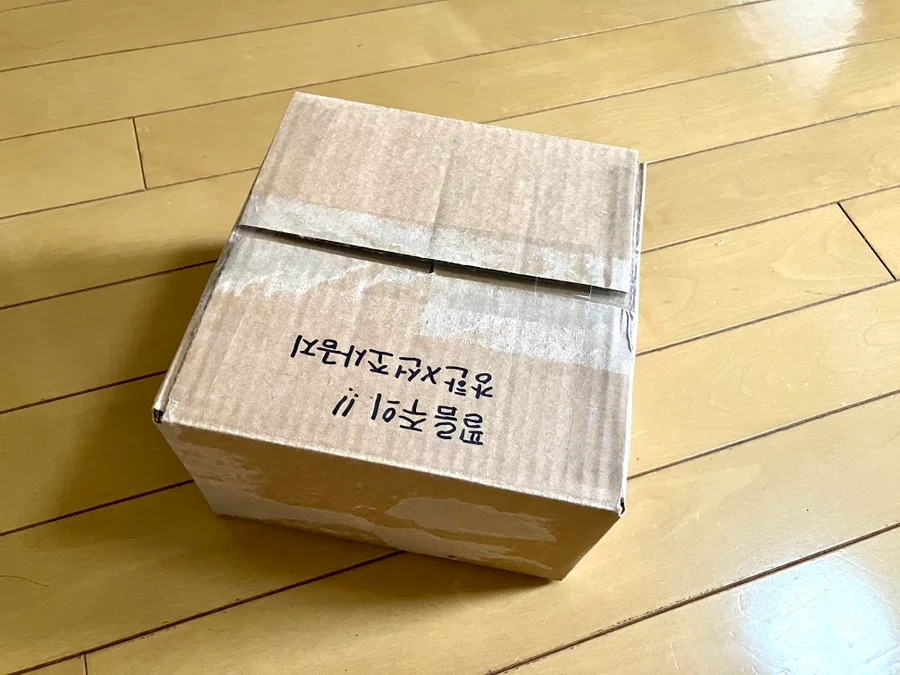
The warning written on the box was nothing more than a good-luck charm.
There was actually a chance the photos could be ruined by X-ray exposure, but we were both relieved to hear that the pictures turned out fine.
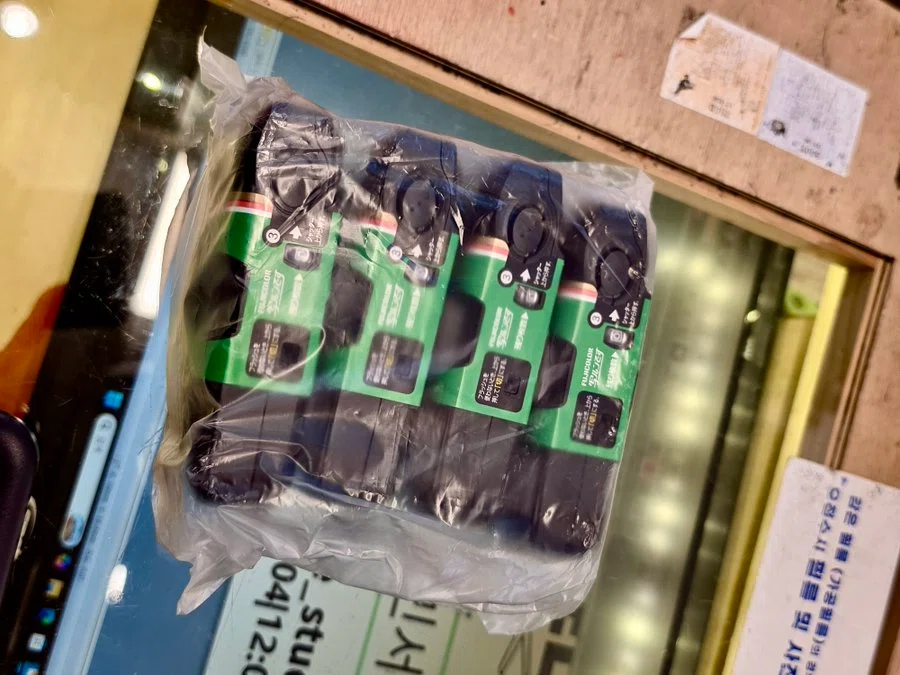
Photos taken with “Utsurundesu” have a distinctive, slightly retro texture.
From among them, Solin will select the photos to be used in the video work, which will then be processed for the piece.
Editing the Letters to Be Used in the Artwork
When put together, our entire correspondence amounted to quite a substantial volume of writing.
From that, Solin picked out the portions to use in the work.
At the end of October, the letters—edited down to a volume that would fit within the allotted time—arrived as an email attachment.
When I was checking the edited letters to ensure there were no discrepancies with the original text I had written, she noted, “If necessary, please infuse neo’s words back into the important parts, and restore any passages that seem likely to resonate with the audience back to neo’s own words.”
I revised the parts that had become stiff phrasing or confusing expressions through AI translation into natural Japanese.
Her emails always conveyed her thoughtful consideration for me.
Solin also said, “It feels like such a pity to cut out various episodes woven into our correspondence.”
However, since all I wanted was for Solin to select only the parts she truly wished to focus on from the long letters, I replied, “Please don’t hesitate; edit boldly.”
That was because I believe all the materials I provided—including the words, episodes, and photos that weren’t selected—serve as the building blocks for her to assemble the artwork.
Solin continued moving forward with the video production.
Apparently, in the finished work, the “spoken words” and the “text” had to match perfectly, and the reason for that became glaringly obvious once I saw the completed video later on.
…I see; with that kind of staging, they definitely need to align perfectly.
Recording the Voice Reading the Letters
In early November, an even more compact version of our correspondence arrived from Solin.
In the finished video, each of us would have a reading of our own part included.
Because of that, it was necessary to confirm, using an actual voice recording, how many seconds it would take when I read my part in Japanese.
When I was told about this at an early stage, I accepted it, thinking, “Well, given this kind of work, that makes sense,” and responded with things like, “I’m nervous, but I’ll do my best!” Yet deep down, I was flustered, thinking, “Whoa!… What am I going to do?”
For someone like me, who had been completely enthusiastic about both the correspondence and shooting with a disposable camera, this task was by far the highest hurdle.
Solin had attached a “trial” recording of her own voice to an email.
Her clear voice was gentle on the ears, and I played that warm voice over and over again, even without understanding what she was saying.
On the other hand, I hate my own voice, and to be honest, my enunciation is poor.
So, the pressure was even greater than when shooting videos of Piko-chan.
To begin with, I had no clue how to record my voice on an iPhone, nor how to send that audio data to Solin.
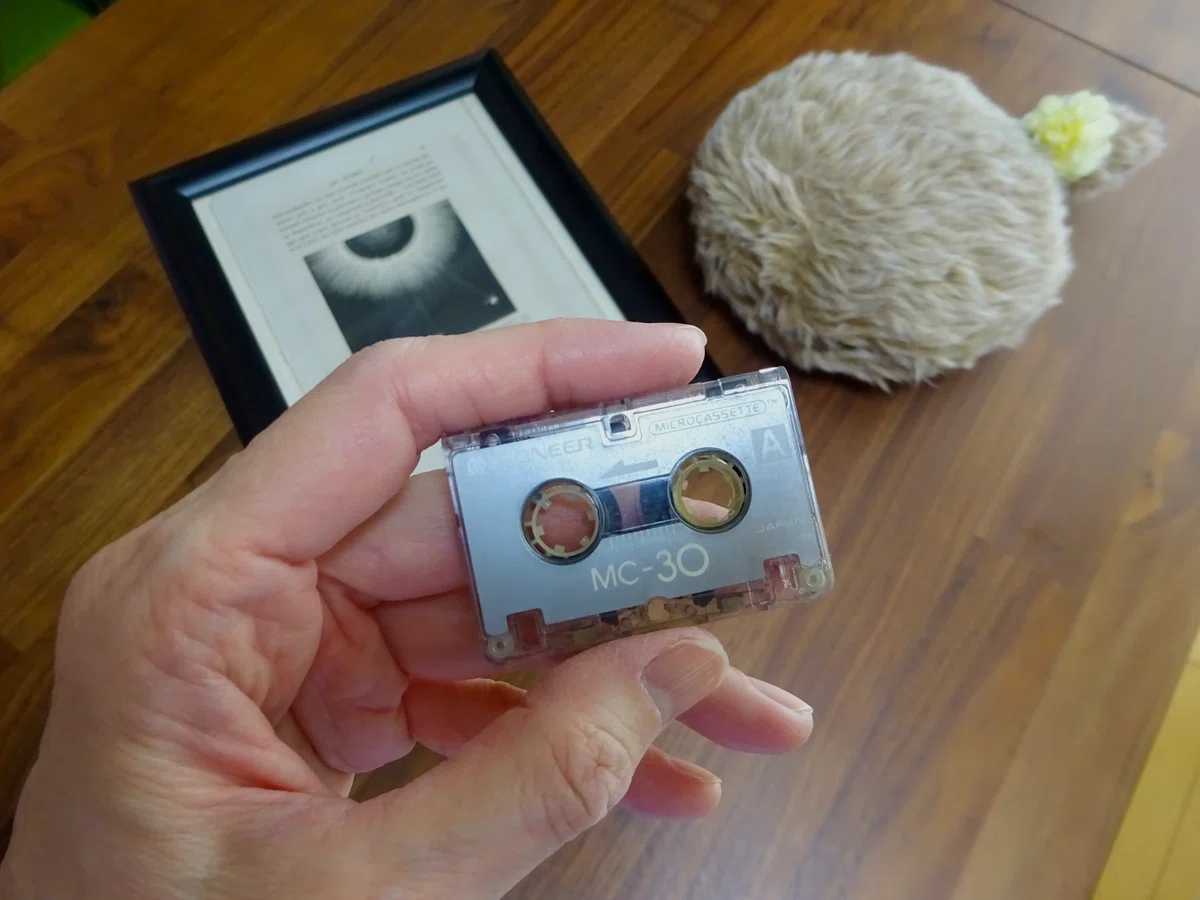
When I told her, “First, I’ll look into how to record audio and send data on a smartphone, but I’m worried whether I can pull it off,” Solin taught me the recording steps, ways to speak in a relaxed manner, and more.
Even so, my sense of inadequacy frequently reared its head, and I turned pale wondering, “Even if I manage to finish recording my voice, what if I can’t send the audio data?”
…In the end, while consulting an AI, I was able to record a “trial run” and manage to send it off for the time being.
Having always been bad at the act of “reading letters aloud,” just imagining “myself reading with emotion” made me dread it.
As a result, my rough trial recording was almost entirely monotone, stumbling along the way, slurring words—a rather regrettable finish, if I do say so myself.
Still, feeling deeply relieved to have finished a task I was so bad at, I told Solin, “Stumbles and all, this is who I am.”
I was told I could re-record the audio, but even if I were to redo it, it’s not like I would suddenly speak smoothly.
I had a feeling the places where I stumbled would simply shift around, making it no different from the “trial audio.”
A reply arrived from Solin saying, “As long as neo is fine with it, I think this audio is good as it is.”
There was also a slightly surprising comment written there.
She said what was nice was that it didn’t sound like it was being read by a professional announcer.
Regarding the grating lip smacks that got caught in the recording, she also added, “Don’t worry, we’ll remove those on our end.”
I showed my amateur side by being astonished, thinking, “Whoa, you can do that too?” but just having that done was a huge relief.
Later on, I caught a cold and completely lost my voice, so the “trial audio” ended up being officially adopted.
I am truly happy that my imperfections were accepted as part of the artwork.
…Still, because it really is such unfortunate audio, I still feel terribly apologetic about it.
Receiving the Video Artwork Before Final Adjustments
Solin emailed me the video artwork before its final adjustments, along with an explanation of it.
Thanks to that same AI translation, I managed to roughly understand the artist’s statement, which contained digital-tech terminology.
As for the video, though it wasn’t the final cut yet, I played the attached video link where she said, “This is what it looks like after editing.”
…In a word, it was elaborate.
I was amazed at how the materials each of us provided could turn into such a video after passing through Solin’s interpretation and means of expression.
And then, I ended up spotting one concerning thing in a photograph within the video.
The photo in question was a shot of a pile of oral medications prescribed to me by the hospital I visit.
Taking a closer look at that photo, which was just a familiar slice of daily life, I could see my real name, the town I live in, the pharmacy name, and other details printed on the paper prescription bag.
With the exhibition opening right around the corner and Solin being extraordinarily busy, I had to ask her either to replace the photo or to process it so the personal information couldn’t be read.
Solin apologized, saying, “I’m sorry, it’s because I can’t read Japanese; I must have startled you,” but it was also careless of me not to pay attention to personal information being visible, even while knowing it might be used in the work.
“That photo has quite an impact, so it would be a shame to replace it,” and “Please let me know which part should be erased,” she said; so after I explained the relevant section with a diagram, Solin erased it brilliantly in a short amount of time.
After that, I received a message saying that the display method had been changed from what was previously communicated.
With the exhibition opening drawing near, Solin and many others were likely pushing ahead with preparations on-site day after day.
She mentioned that the change elevated the exhibition’s level of perfection even further.
For my part, whatever form it took, all I could say was “Bravo!”
It was also written that part of the footage, which was no longer being used due to the change in exhibition structure, would be separated from this project and developed further in the future.
At that time, apparently re-recording the audio would also be possible.
This wasn’t Solin asking me to re-record; it was her consideration for me, knowing I still had lingering regrets about reading my part.
…As long as I am who I am, I think I could only record a voice of a similar caliber, but that is a story for another time.
At any rate, Solin’s artwork was finally complete.
I feel honored to have been invited to participate in the artwork creation twice, both for the previous work and this one.
*I would like to express my gratitude once again to Solin for consenting to the publication of this article, which shows the behind-the-scenes of the artwork’s creation and could, in a sense, be a spoiler.
Exhibition Starts November 26
The project with Solin, 《To You》, which was completed through this process, is finally going to be exhibited.
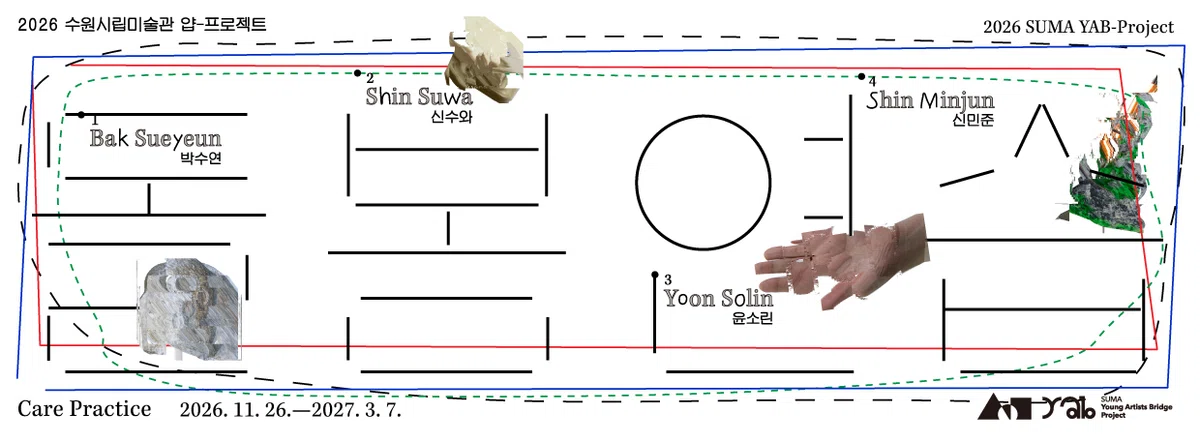
[Exhibition Information]
・ Exhibition Title: “Care Practice”
・ Venue: Suwon Museum of Art, South Korea
・ Exhibition Period: November 26, 2026 – March 7, 2027
Unfortunately, I have no plans to visit the venue during the exhibition.
To find out what kind of exhibition it really is, here is an explanation generated by AI from the information on the official website, simplified so that even I could understand it.
Exhibition: Care Practice
[Exhibition Theme: Rethinking Connections Through Human “Vulnerability”]
We cannot control everything in our lives as we wish, and everyone lives carrying a constant “vulnerability.” From interacting with those around us the moment we are born, to illness and injury, inevitable aging, unexpected troubles, and environmental changes, relying on someone or caring for them is an inescapable condition of human existence.
When we reframe “vulnerability” as a natural trait shared by everyone, a new meaning emerges for “relying on others” and “care (compassion)” born within our relationships with others.[Approaches by Four Artists]
As a presentation of the Young Artist Blueprint Project (YAB-Project) at the Suwon Museum of Art, this exhibition, Care Practice, takes “vulnerability and recovery” as its theme. Through diverse modes of expression—including photography, video, installation, and performance—it introduces four artists who pose questions about the circumstances and human relationships we usually take for granted.1. Bak Sueyeun
Bak explores a “fluid state” where words and objects detach from their original meanings and forms, transforming into new rules and roles.
2. Shin Suwa
Shin focuses on the misalignments in human relationships that do not go as planned—such as “acceptance and rejection” or “intimacy and indifference”—which emerge when people interact with one another.
3. Yoon Solin
Centered on the “complex state where positive and negative emotions intermingle (ambivalence)” that arises when caring for someone, Yoon observes both the intimacy and the anxiety fostered through contemporary digital technologies.
4. Shin Minjun
Through “forms of mourning”—how specific individuals and events are remembered and grieved—Shin explores what society should look like as we envision our future.[“Care” Is Not a Perfected Technique, but an Endless “Practice”]
Reviewing, adjusting, and trying again—this repetition mirrors the very nature of “care,” which is continually being reshaped and remade.
Here, care is not about mastering the right method or reaching a goal.
It is a “process of practice” that repeatedly grapples with questions: “What is care in the first place?” “How do we look at each other’s desires and limitations?” and “How can we change our past attitudes and approaches in order to live together?”
Ways of living together do not come with predetermined correct answers from the start; they are only shaped as we face each other’s differences and uncertainties.[Message to Visitors]
Confronting one another’s vulnerabilities means getting to know the other person while simultaneously reflecting on what kinds of people and environments support one’s own existence.
With that realization, care ceases to be “doing something unilaterally for someone else” and transforms into a “process of searching together for ways to connect while respecting each other’s desires and limitations.”
Through the diverse experiments and inquiries of these four artists, we hope this exhibition serves as a space to rethink the meaning of compassion and explore new possibilities for the human relationships we build.
***
The letters typed on my computer to Solin across the sea, the photographs capturing moments inside my own room, and my faltering voice.
How will they be viewed by visitors in a museum so far away?
I look forward to following further updates about the exhibition from here in Japan.
