

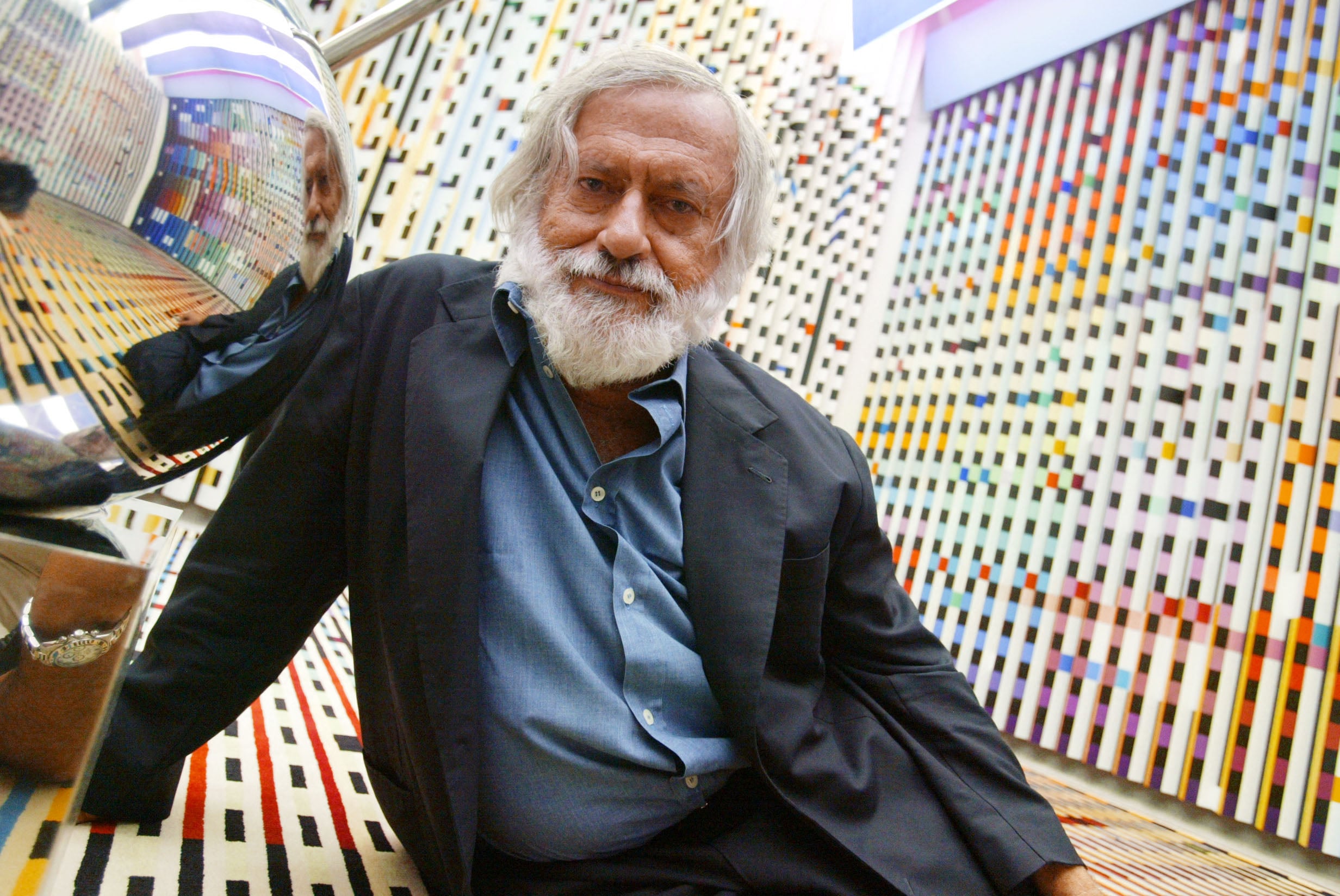
When Farah Pahlavi, empress-consort of Iran, was hosted by French president Georges Pompidou and his wife Claude in Paris at the beginning of the 1970s, she was enchanted by a new art installation the first couple had just commissioned at the Elysee Palace. The antechamber to their private apartments had been completely transformed by Israeli artist Yaacov Agam, a pioneer of kinetic art, into a swirl of colors and geometric shapes.
“The Salon Agam, as it was called, was in their private apartments, so not that many people were able to see it, but [the empress] visited the president a few times. She saw my father’s work and was totally taken,” Ron Agam, Yaacov’s son and himself an artist, recalled.
“My father received a phone call from [the president] saying that an important person wanted to meet with him,” he added. “We organized a presentation of his works in Paris. I was very young at the time, around 18. Her Majesty stayed for about an hour. She looked at many new works, and she acquired a number of them.”
The younger Agam shared the anecdotes in a phone interview with The Times of Israel, revealing the beginning of the story of how, 50 years later, an unknown number of his father’s pieces are still in Iran as part of the collection of the Tehran Museum of Contemporary Art.
The collection was mostly assembled by Pahlavi in the 1970s, when, taking advantage of the soaring oil price, the queen, who was very passionate about art, acquired artwork by the most renowned modern and contemporary artists, including Pablo Picasso, Andy Warhol, Claude Monet, Jackson Pollock, Vincent Van Gogh, and Pierre-Auguste Renoir.
In 2018, the entire collection’s value was estimated at $3 billion, and experts believe it would be worth far more today.
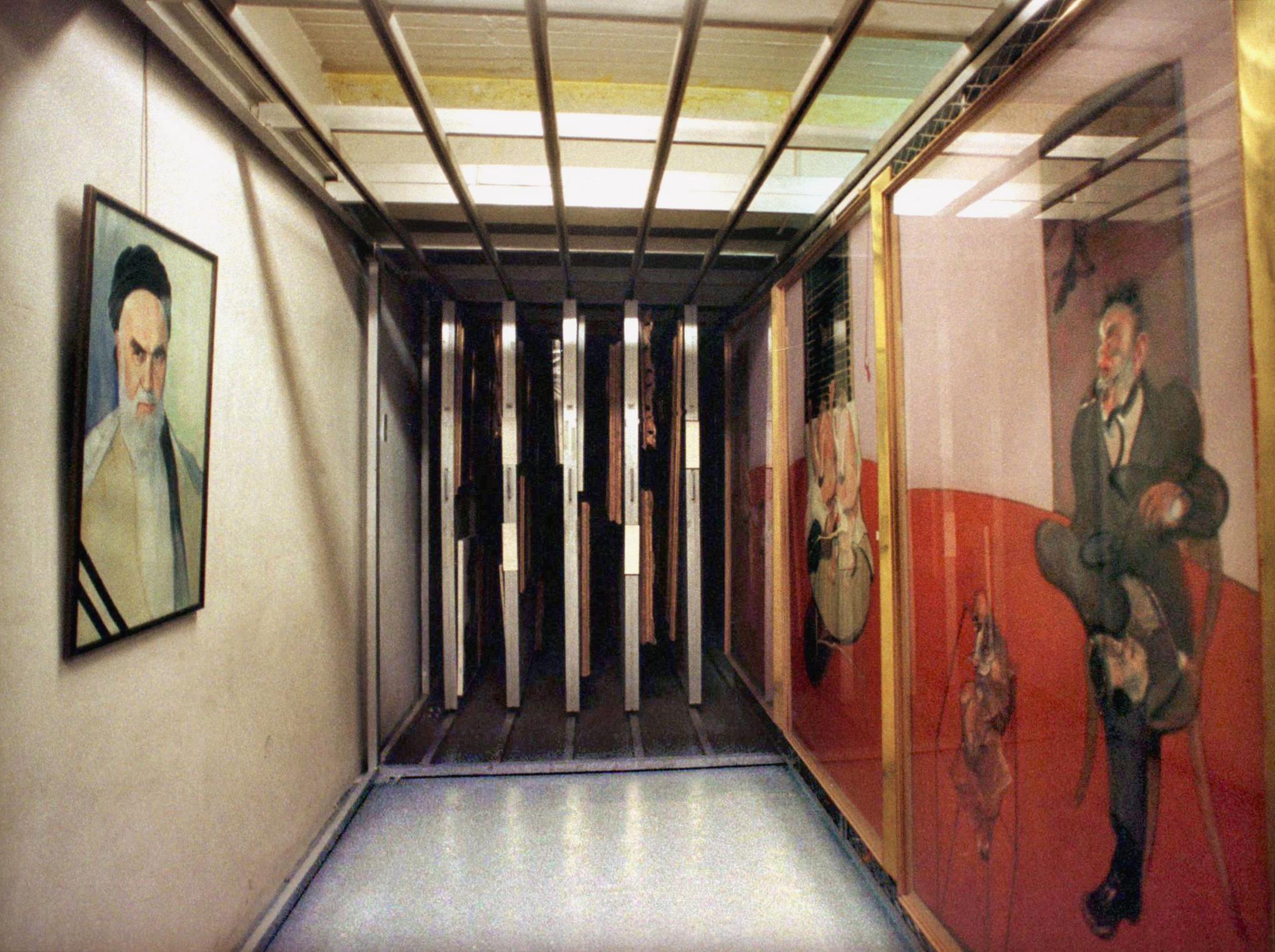
Yet the fate of the Agams remains shrouded in mystery. The museum was inaugurated in 1977, two years before the Islamic Revolution that brought the current regime to power. Only in the late 1990s and early 2000s did the museum begin to display parts of its collection that had been kept locked away in the vaults until then.
Many artworks have been exhibited and tracked through documents, and later, the museum’s website, as well as local and foreign media covering the events.
Over the years, works by Jewish artists have occasionally been on display.
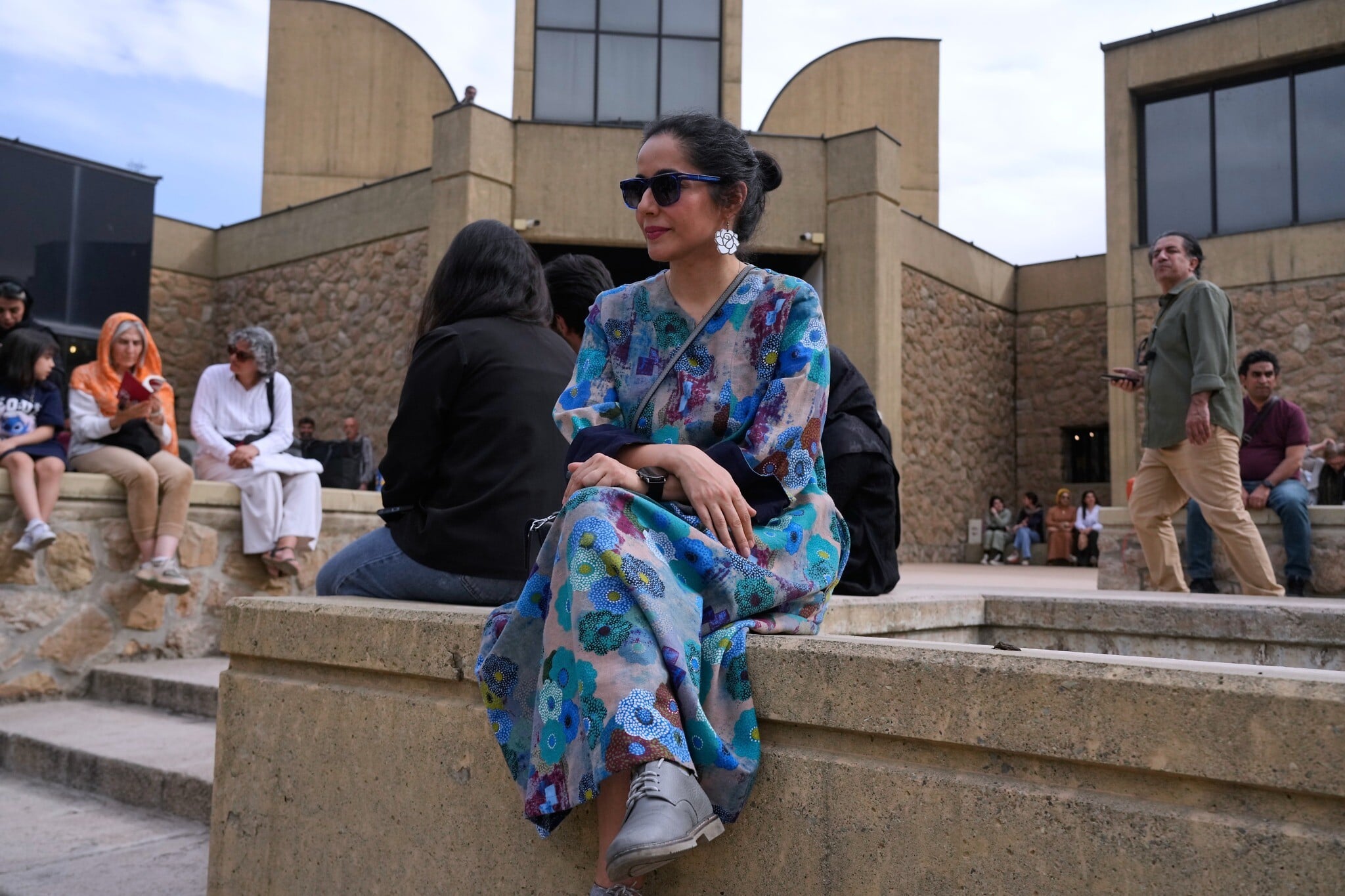
Earlier this month, just weeks after a fragile ceasefire was reached that froze the war between Iran and Israel and the US, the museum inaugurated an exhibition called “Art and War.” One of the main artists featured in the first week of the exhibition was American-Jewish artist Roy Lichtenstein.
However, it is unclear what has happened to the Agams.
Both Ron Agam and Pahlavi herself, responding to a query from The Times of Israel, could not recall how many, or which exact pieces, the queen had secured. A 2016 report on the museum by the Iranian English-language news outlet, “Iran Front Page,” said the collection included “more than 10 works.”
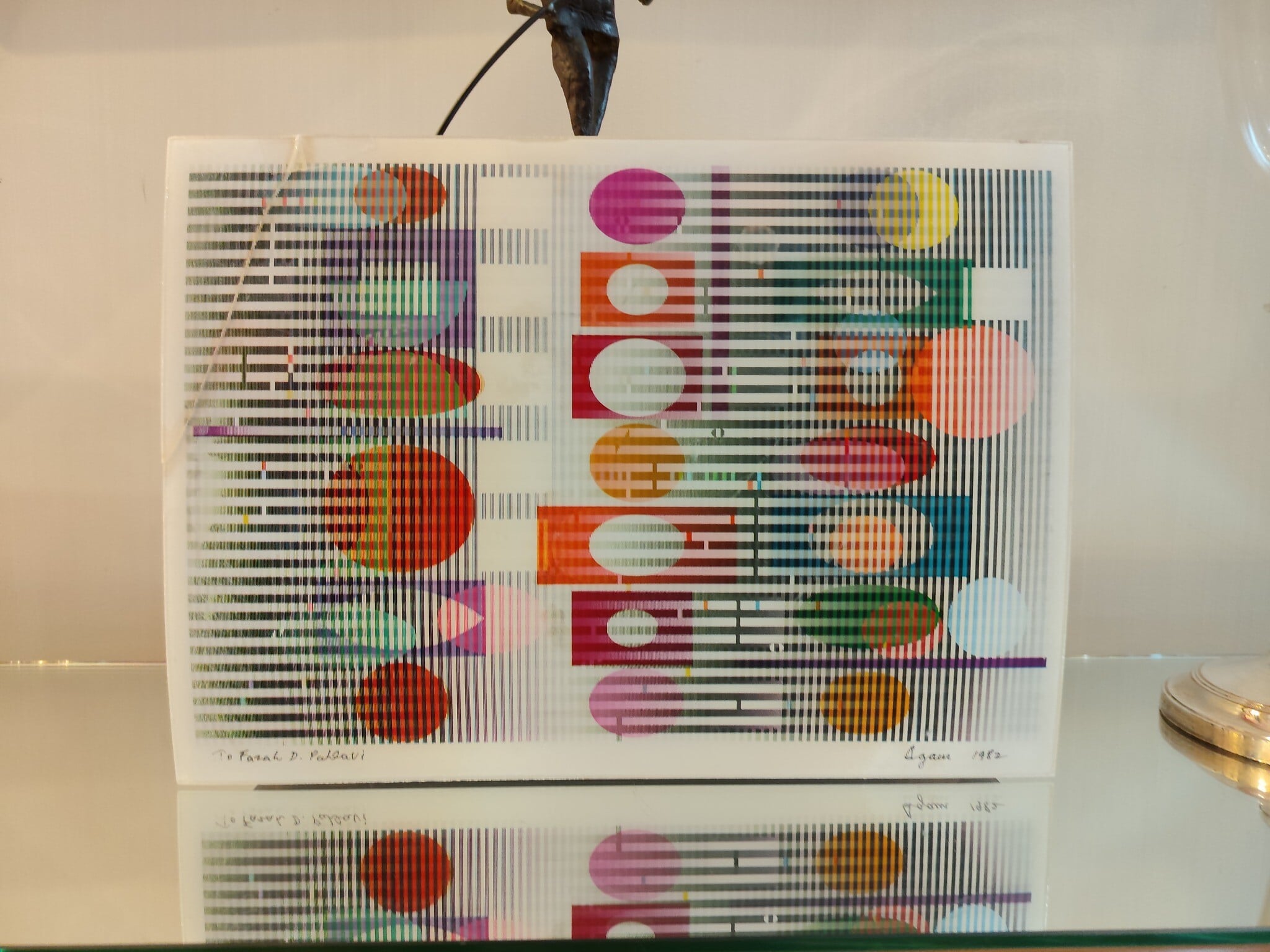
Pahlavi’s personal secretary said in an email that, “to the best of her recollection, she acquired a few pieces of Agam’s work during her acquisitions for the Tehran Museum of Contemporary Art.”
“Mr. Agam also personally gifted Her Majesty his work as depicted in the attachment here below,” he added, referring to the picture of a work carrying the artist’s signature and the year 1982.
The younger Agam also recalled a few warm interactions with the queen, having met her after the revolution.
A Jewish curator behind the scenes
In 2005, the museum published a book in Farsi and in English that served as a catalog of its collection. Los Angeles-based art curator Donna Stein obtained a copy through someone who had visited Iran, as she explained to The Times of Israel in a video call, holding the volume.
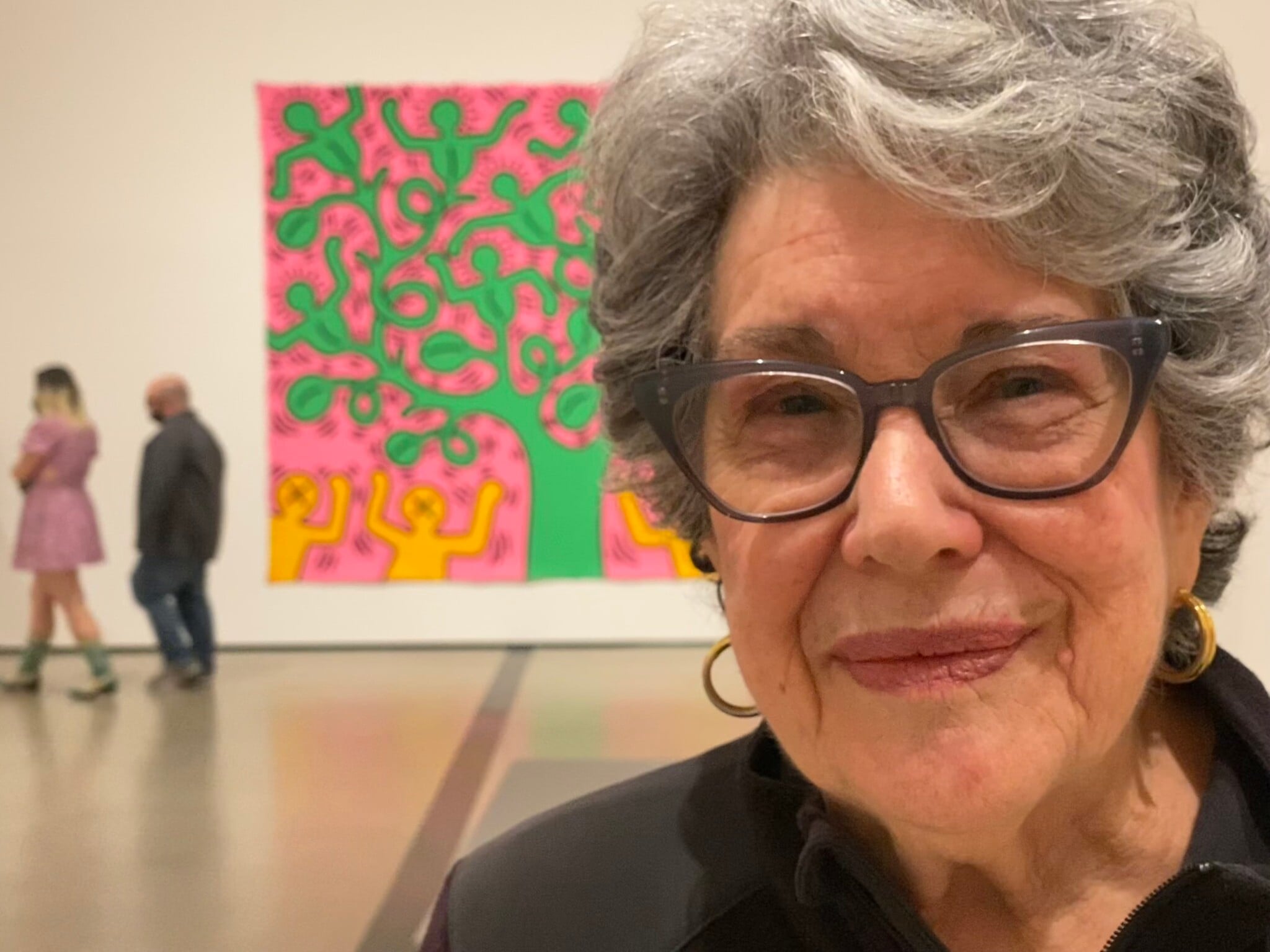
For Stein, who is Jewish, the artwork showcased in the book is, in most cases, intimately familiar, as 50 years ago, she helped select most of it while serving as a behind-the-scenes art consultant for the Queen’s Office, beginning in 1974.
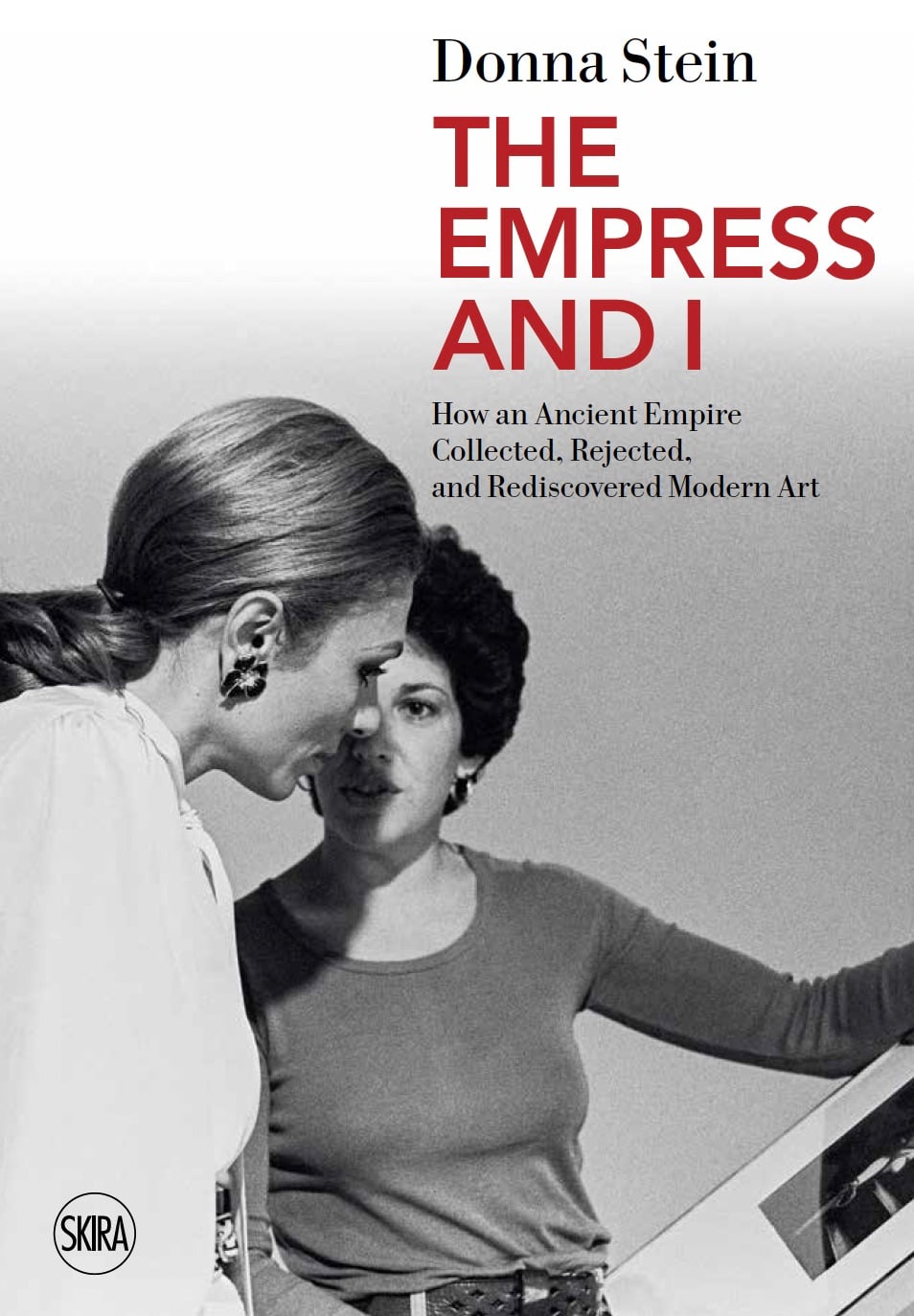
Stein lived in Tehran for some two years between 1975 and 1977. She recounted her experience, both professional and personal, as a woman living in Tehran in the years leading up to the Islamic Revolution in her book, “The Empress and I,” published in 2020 by Skira.
“I was told that there was going to be a museum of modern art,” she said. “The queen wanted [the collection] to start with Impressionism. So I developed a program.”
After Pahlavi’s staff approached Stein about potentially hiring her, they asked her to write an “acquisition report,” detailing which artists and pieces should be purchased.
For some artists, she suggested acquiring several pieces covering the different mediums they used, from painting to sculpture; for others, she thought one or a more limited selection would be enough. The end of Stein’s book features a reproduction of her handwritten “lists of proposed purchases,” including names of the artist, titles of the works, prices, and discounts offered.
Stein explained that the artists’ backgrounds or religious identities were not criteria she considered when suggesting purchases.
“The only thing I was concerned about, at least partially, was that [the subject] would not be a nude,” Stein said.
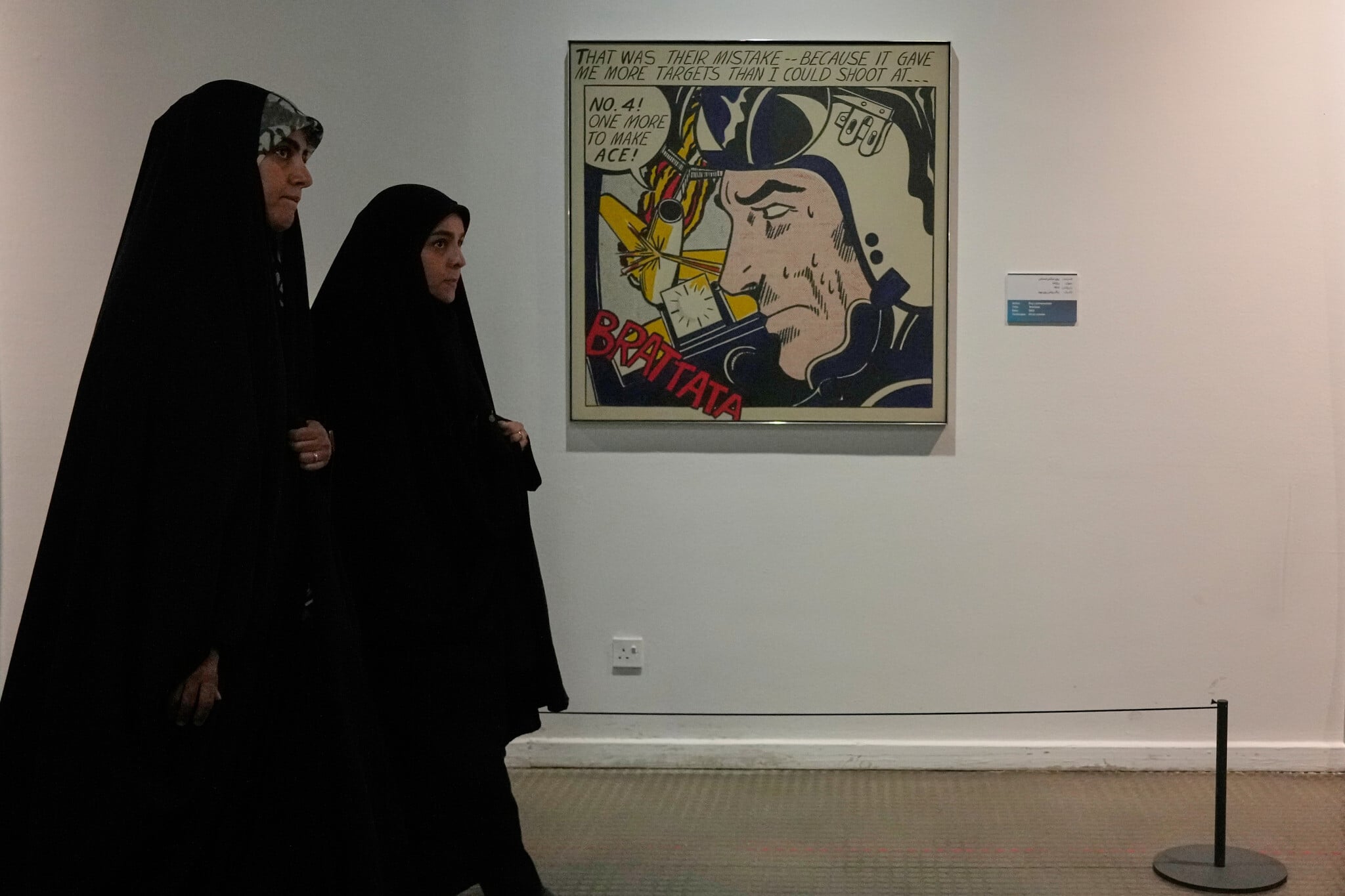
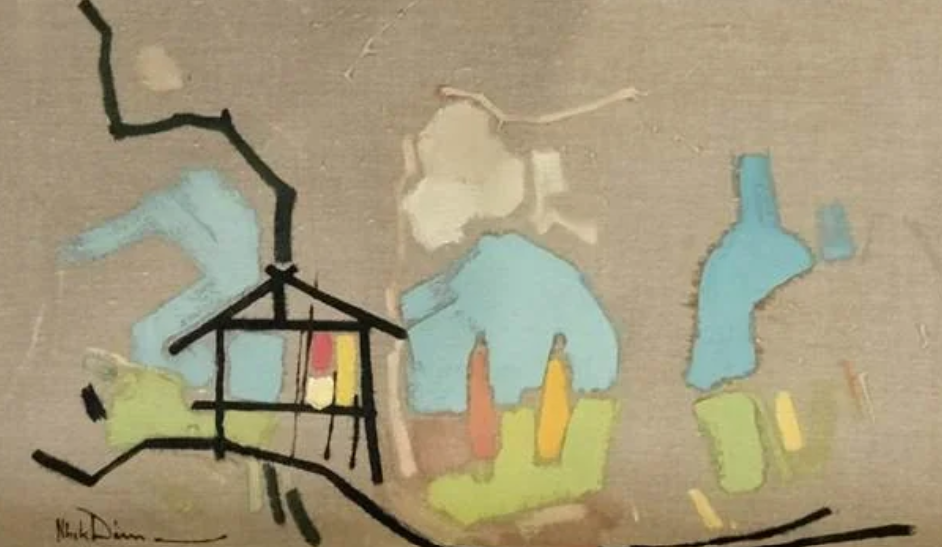
Checking back, many artists whose works were acquired after her recommendation came from a Jewish background, such as Lichtenstein, Jim Dine, Larry Rivers, Man Ray, Gisèle Freund, Laszlo Moholy-Nagy, Camille Pissarro, and Jules Pascin.
However, Stein was not involved in the acquisition of the Agams.
“It was a personal connection of the empress, and she chose works by him,” Stein said, explaining that something similar happened with prominent Jewish artist Marc Chagall.
According to Stein, the empress acquired the Agams and placed them in various parts of her palaces as part of her private art collection, distinct from the museum’s collection.
After the revolution, Stein’s understanding is that the artwork from the shah’s personal palaces was brought to the museum and its vaults. Checking the 2005 museum catalog, however, reveals that Agam was not mentioned.
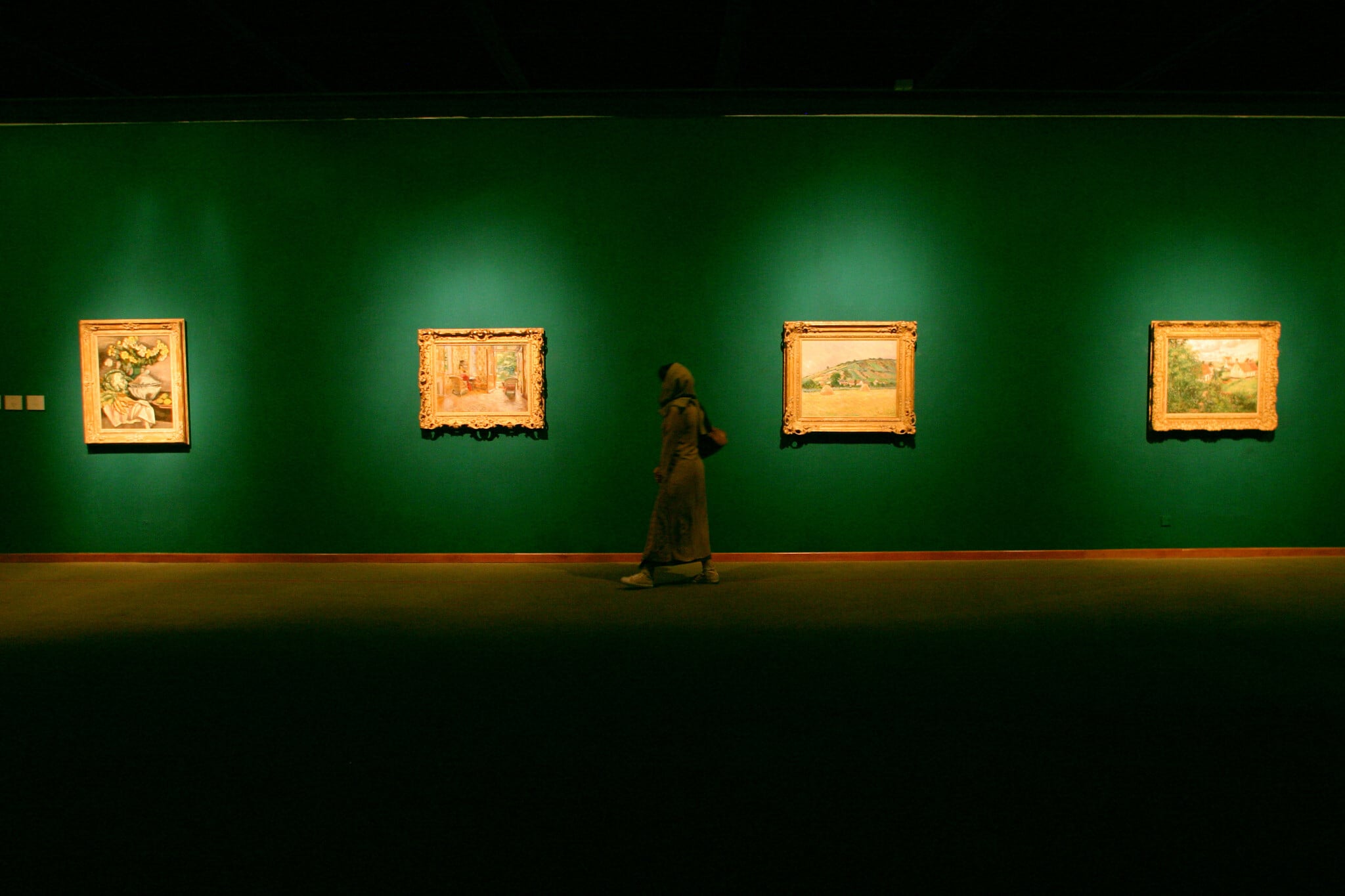
Yet, The Times of Israel learned that at least one piece by Agam was indeed exhibited in the museum in recent years: In 2015, a Jewish professional from California decided to visit Iran on an organized tour and found herself before an Agam at the Tehran Museum of Contemporary Art.
“I had a special birthday coming up, my 65th, and I felt like I had to do something crazy,” Bethany, who asked not to be identified with her real name, told The Times of Israel over a video interview.
According to Bethany, several other Jewish professionals joined the trip, which took them to cities and locations across the country, led by a guide that she described as “highly educated and a wonderful person.”
“He knew some of us were Jewish, and he would always include information [on Jewish history] and even directed us to a synagogue in Isfahan,” she recalled.
In Tehran, the itinerary included a visit to the contemporary art museum.
“I was there, and I suddenly saw the work and told myself, this looks like an Agam,” she said.
“I don’t remember the name of the artwork, but I’m pretty sure that the sign said the artist came from Jerusalem, rather than from Israel,” she added.
The hope for a better future
During the US-Israel war against Iran, most museums in Tehran remained closed, according to the recent report by The Associated Press covering the new “Art and War” exhibit. The Museum of Contemporary Art’s website, like many others in Iran, remains down, possibly due to the internet disruptions in the country.
Stein said that, over the years, she has been in touch with the museum’s staff, and many have been happy to help her with her research or provide the materials she needed for her book.
Recently, though, she has not heard from anyone.
“There is a complete blackout, and I would not reach out to anybody, because I don’t want to [cause] harm,” she said.
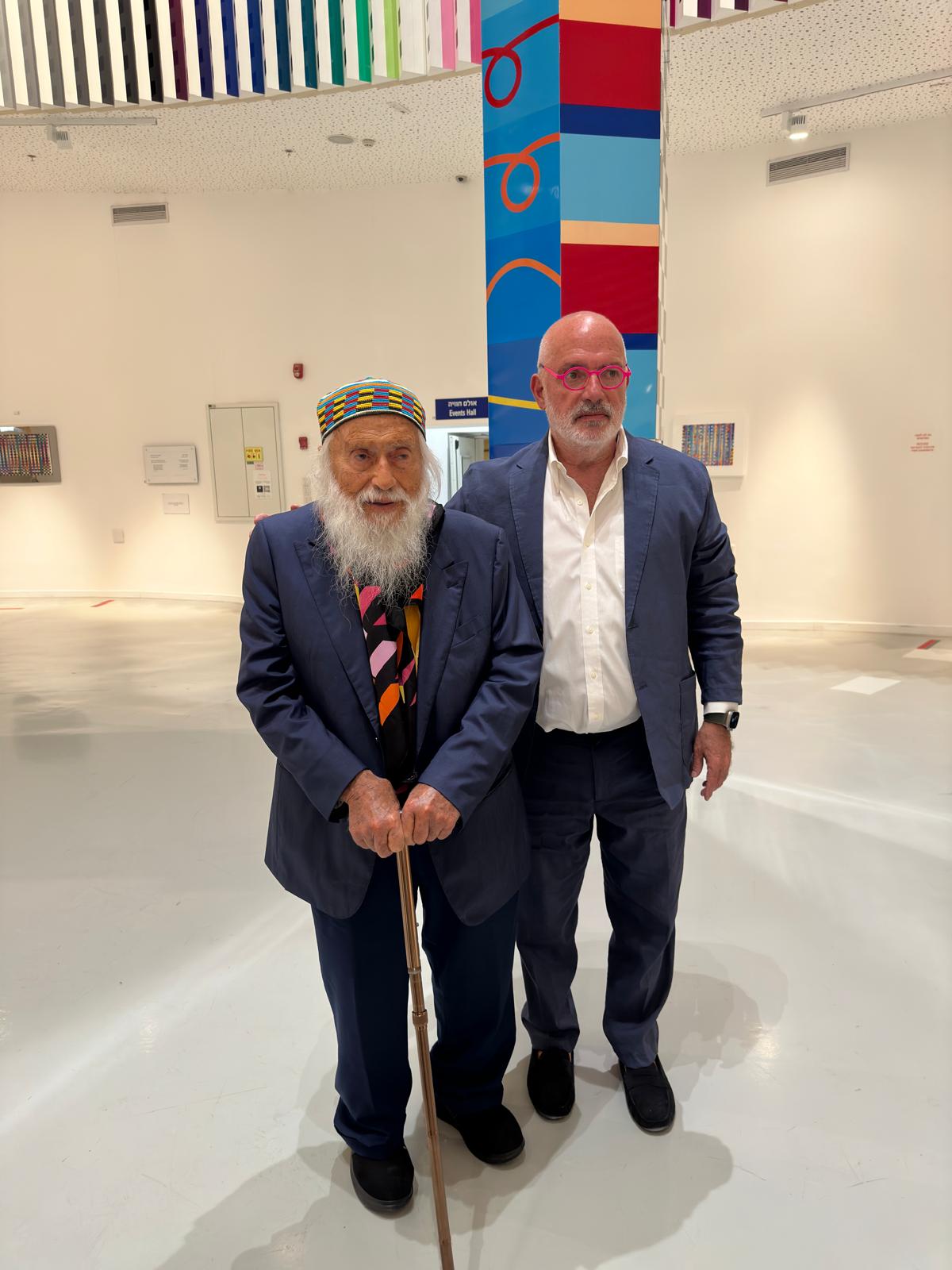
Ron Agam, who spent a month in Iran with his father in 1977 and was fascinated by the country’s history and culture, still hopes that a day will come when he can return and check Yaacov’s art.
“My dream is one day to visit Iran and to see these artworks again,” he said. “It would be something incredible. And I hope Her Majesty will still be alive, and can come too.”