Close Menu
celebritymediamanagement.com
    What's Hot

    All the Celebrity Weddings That Have Gone Down in 2026 (So Far, Anyway)

    March 3, 2026

    8 Reasons Luxury Cruises Are Worth The Splurge

    March 3, 2026

    New MFA Galleries Review: Bringing Modern Art to the Forefront | Arts

    March 3, 2026
    Facebook X (Twitter) Instagram
    Trending
    • All the Celebrity Weddings That Have Gone Down in 2026 (So Far, Anyway)
    • 8 Reasons Luxury Cruises Are Worth The Splurge
    • New MFA Galleries Review: Bringing Modern Art to the Forefront | Arts
    • Pink sends pointed message while hosting Kelly Clarkson Show
    • Hollywood’s Power Couple Tom Holland & Zendaya Are Married Now, Confirms Zendaya’s Stylist
    • My Clients Love Booking These Winter Travel Destinations
    • Art evolves and so should we: Why modern art matters | Opinions
    • Rihanna and A$AP Rocky coordinate leather outfits for date night
    Facebook X (Twitter) Instagram
    celebritymediamanagement.com
    Tuesday, March 3
    • Home
    • Celebrity Events
    • Scandals & Confessions
    • Trending Celebrity News
    • Beauty Gone Wrong
    • Celebrity Marriages & Divorce
    • Luxury Celebrity Homes
    • More
      • Celebrity Cars & Collections
      • Priceless Art Collections
      • Hollywood Movie Rumors
      • Vacation Hotspots For The Rich
    celebritymediamanagement.com
    Home»Art Collections»Where Would Contemporary Art Be Without Plastic?
    Art Collections

    Where Would Contemporary Art Be Without Plastic?

    CelebrityMediaManagementBy CelebrityMediaManagementFebruary 10, 2026No Comments4 Mins Read0 Views
    Facebook Twitter Pinterest LinkedIn Telegram Tumblr Email
    Where Would Contemporary Art Be Without Plastic?
    Share
    Facebook Twitter LinkedIn Pinterest Email

    Book Review

    A new anthology on plastics in art reveals the philosophical conundrums and contradictions at the heart of a material the world relies on.

    Louis Bury

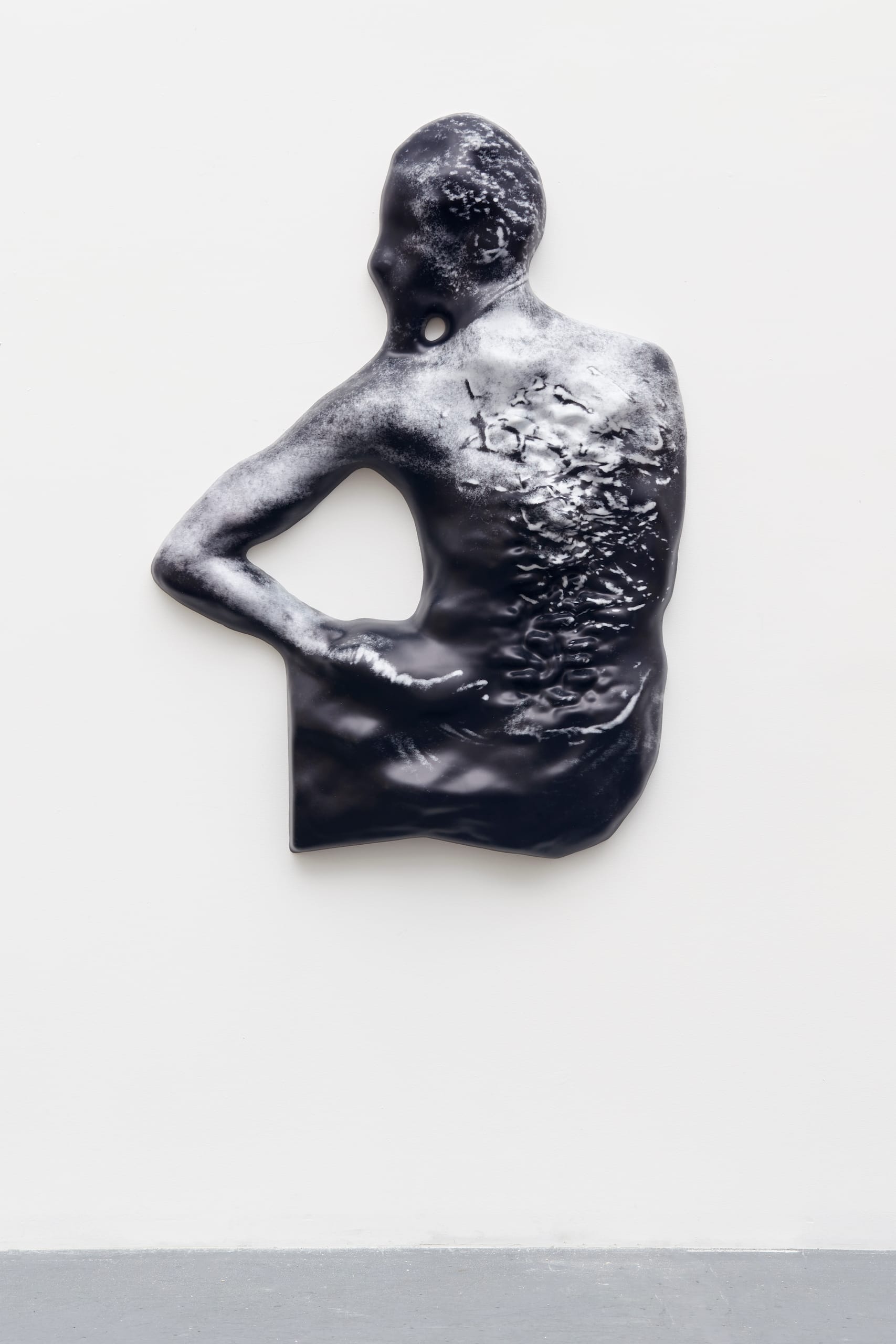
    Arthur Jafa, “Ex-Slave Gordon” (2017), vacuum-formed plastic (© Arthur Jafa; image courtesy the artist)

    The motivating query behind Plastics, an art conservation anthology by Anne Gunnison and David Joselit, is simple: “What do we learn about plastics when seen through the lens of art?” The answers to that question, posed by co-editor Caroline Fowler in her introduction, prove complex, given that its artistic uses are as malleable as plastic itself. The book considers plastic through a variety of academic case studies, which cumulatively suggest that humans remain largely oblivious to our uncomfortable intimacy with the material.

    In the longest and sharpest chapter, art historian Joselit argues that plastic doesn’t conform to a “medium-based account” of aesthetic progress. Instead, he draws on theorists such as Catherine Malabou and Zakiyyah Iman Jackson, as well as artists including Marcel Broodthaers and Arthur Jafa, to define its character by its capacity for “giving, receiving, and destroying form.” Later in the chapter, Joselit cites ecological theorist Thomas Princen’s concept of “distancing,” which refers to the geographical and psychological gaps between resource extraction and downstream cultural uses of that resource; this minor point unwittingly illuminates how the anthology functions as a whole — Plastics’s case study structure seeks to lessen those distances by highlighting the material’s pervasiveness in art and beyond. 
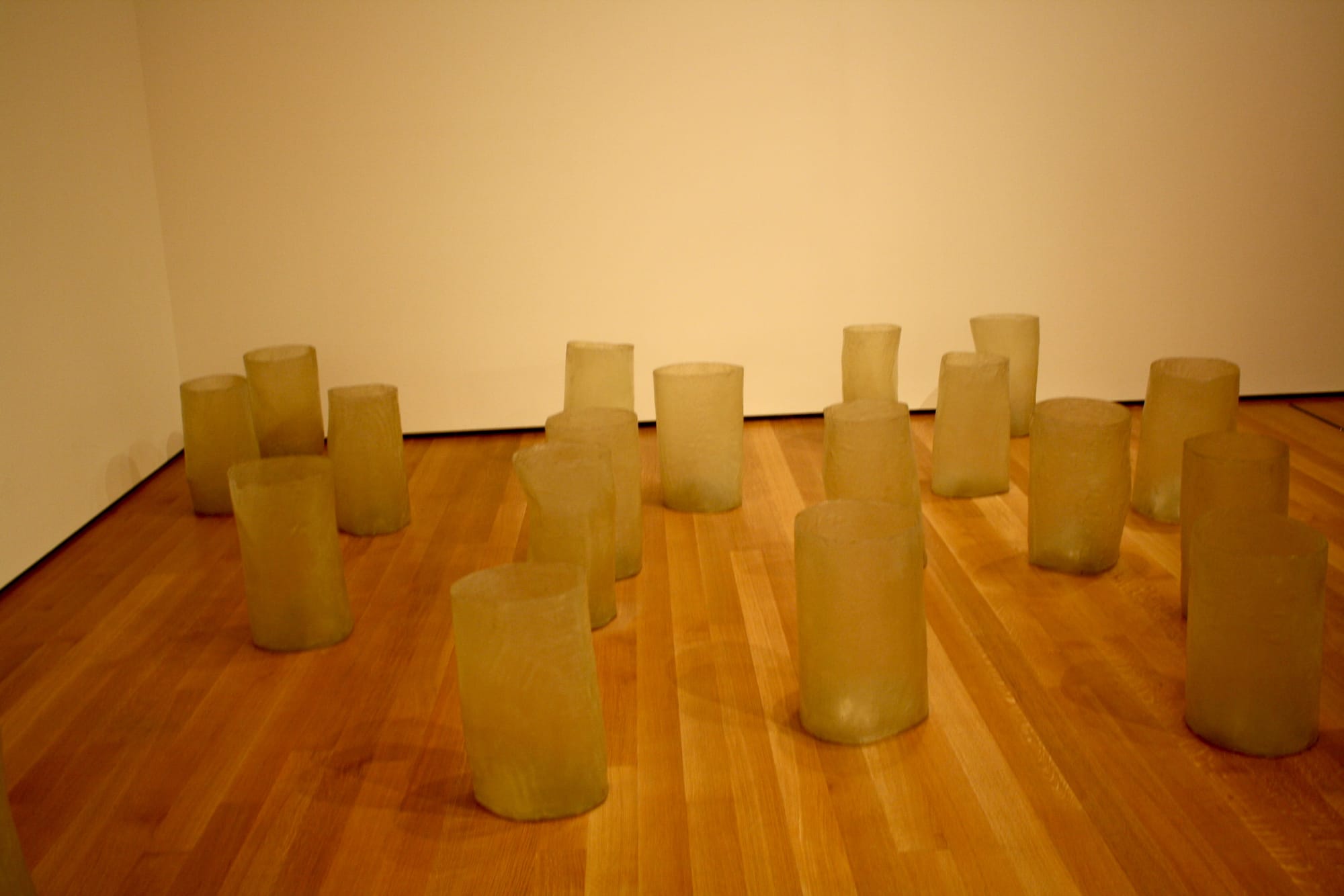
    Eva Hesse, “Repetition Nineteen III” (1968), fiberglass and polyester resin, nineteen units; Museum of Modern Art, New York (photo Danielle Scott via Flickr)

    The conservation chapters adopt a forensic tone, as when Elena Torok describes using a nondestructive “X-ray fluorescence spectrometer” to learn more about the plastic in a delicate Naum Gabo sculpture, “Constructed Head No.2” (1923–24), which, the Princeton University Art Museum conservator explains, “exhibits some yellowing and discoloration,” “along with some warping and planar deformation.” Design studies scholar Bess Williamson’s chapter on a child’s orthotic ankle brace housed in the Smithsonian’s National Museum of American History examines the “outsized relationship to plastic” in the lives of many people with disabilities through “devices worn daily, on, in, or close to their bodies.”

    Numerous other contributors echo Williamson’s point that plastic can be a double-edged sword: Even as its overproduction harms the environment, it has the capacity to help humans in vital ways. Susan Heald and Kelly McHugh, both conservators at the National Museum of the American Indian, note “the tension between caring for a material whose production causes harm to the communities we serve.” Sociologist Jennifer Gabrys identifies plastic’s sustainability paradox: “numerous researchers argue that a transition to more sustainable environmental practices is not possible without plastics.” Joselit puts it more directly: “plastic mitigates the very risk that its toxicity exacerbates.”
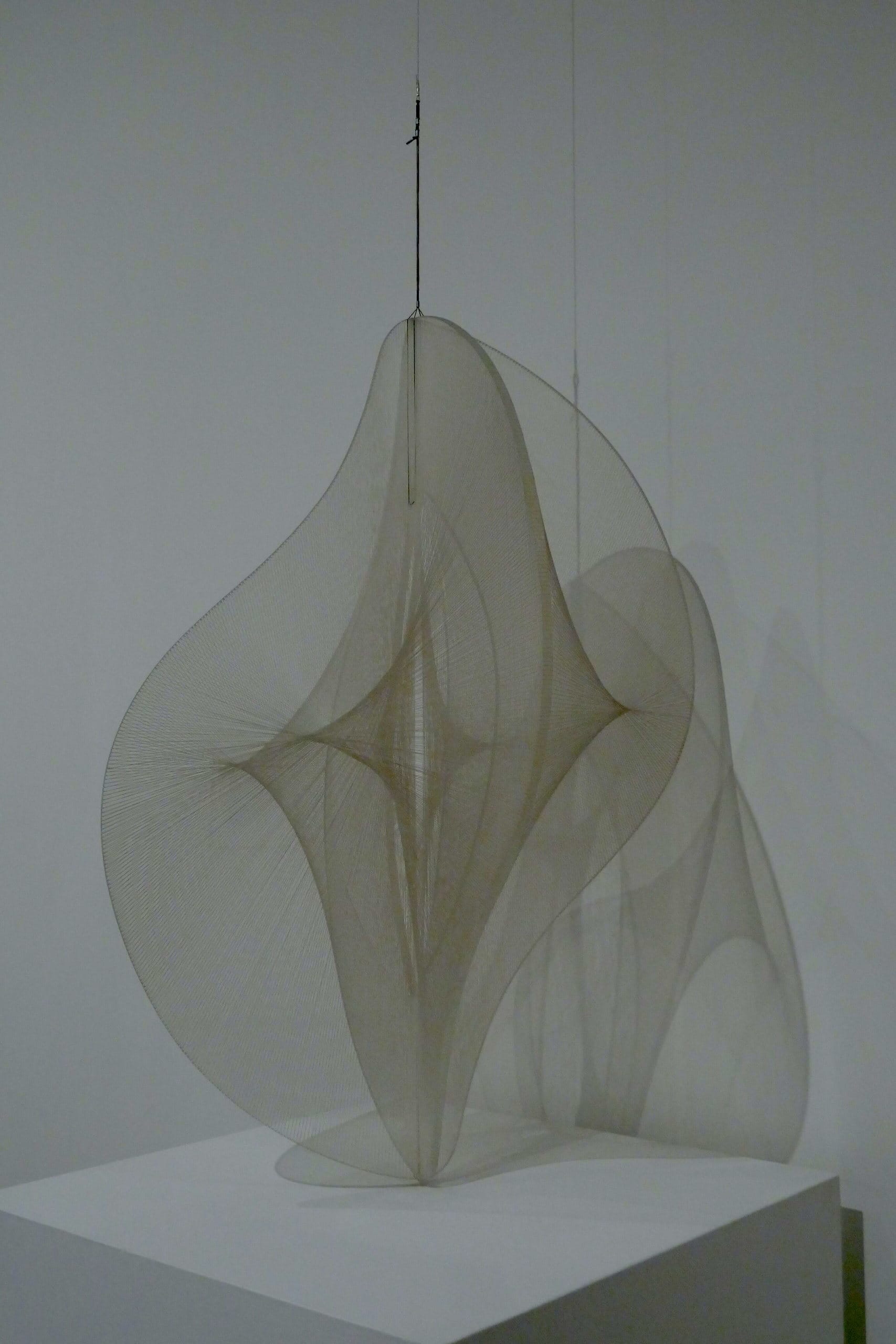
    Naum Gabo, “Linear Construction No 2” (1970–71), plastic and nylon threads; Tate Modern, London (image public domain via Flickr)

    Perhaps because of its pliancy, plastic creates the kind of philosophical conundrums that academic theorists relish, similar to the pleasure that extreme sports enthusiasts find in challenging themselves with improbable athletic maneuvers. Indeed, you could map an art-inflected plastic studies canon from the repeat citations found throughout the book, from Roland Barthes’s essay on the material in his classic 1957 collection Mythologies to the work of present-day scholars such as Heather Davis, Max Liboiron, and Amanda Boetzkes. Gabrys’s chapter on “particle ecologies” does a particularly effective job synthesizing recent scholarship, as when she paraphrases geologist Jan Zalasiewicz’s fascinating 2016 insight that plastics “do not create a legible material signature” in the geological record, due to the fact that microplastics can travel deep into the earth, making them difficult to detect in sediment samples.

    Yet theory tends toward abstraction, even when based on concrete evidence, so it was a smart move to conclude Plastics with a chapter by artist Kevin Beasley, whose trademark sculptures cast found textiles into colorful resin assemblages. His essay not only recounts the many types of plastic he utilizes, but also includes one of the anthology’s more pleasantly surprising passages: “There are [plastic] buckets everywhere in my studio. I use and reuse them a lot … they are some of the most important items in my studio.” The sentiment stands out for its willingness to be prosaic, for its simple observation about the use-value of an overlooked tool. It’s a nice reminder of how artists put theory into practice as they explore all that plastics do, for better or worse.

    Plastics by Anne Gunnison and David Joselit (2025) is published by Princeton University Press and is available online and in bookstores.

    Art Contemporary Plastic
    Share. Facebook Twitter Pinterest LinkedIn Tumblr Email
    CelebrityMediaManagement
    • Website

    Related Posts

    New MFA Galleries Review: Bringing Modern Art to the Forefront | Arts

    March 3, 2026

    Art evolves and so should we: Why modern art matters | Opinions

    March 3, 2026

    Saudi Arabia’s Diriyah Contemporary Art Biennale 2026 shows kingdom’s cultural ambitions

    March 2, 2026

    The Florida Prize in Contemporary Art, a showcase for emerging Floridian artists, returns to Orlando for an 11th year

    March 2, 2026

    Key Insights From Younger Art Collectors

    February 28, 2026

    Baghdad Modern Art Group On View In America For First Time

    February 28, 2026
    Leave A Reply Cancel Reply

    Don't Miss

    All the Celebrity Weddings That Have Gone Down in 2026 (So Far, Anyway)

    March 3, 2026

    “Hearst Magazines and Yahoo may earn commission or revenue on some items through these links.”Last…

    8 Reasons Luxury Cruises Are Worth The Splurge

    March 3, 2026

    New MFA Galleries Review: Bringing Modern Art to the Forefront | Arts

    March 3, 2026

    Pink sends pointed message while hosting Kelly Clarkson Show

    March 3, 2026
    Stay In Touch
    • Facebook
    • Twitter
    • Pinterest
    • Instagram
    • YouTube
    • Vimeo
    Latest Reviews
    About Us

    Welcome to Celebrity Media Management — your ultimate backstage pass to the glamorous, scandalous, and jaw-dropping world of celebrity culture.

    From red carpet events and exclusive Hollywood parties to the juiciest confessions and outrageous plastic surgery rumors, we cover it all — raw, real, and unapologetically entertaining. Our team of pop culture enthusiasts, insiders, and trend-watchers work around the clock to bring you the most talked-about celebrity stories from around the globe.

    Our Picks

    All the Celebrity Weddings That Have Gone Down in 2026 (So Far, Anyway)

    March 3, 2026

    8 Reasons Luxury Cruises Are Worth The Splurge

    March 3, 2026

    New MFA Galleries Review: Bringing Modern Art to the Forefront | Arts

    March 3, 2026
    OUR CATEGOIRES
    • Celebrity Events
    • Scandals & Confessions
    • Trending Celebrity News
    • Beauty Gone Wrong
    • Celebrity Marriages & Divorce
    • Celebrity Cars & Collections
    • Luxury Celebrity Homes
    • Priceless Art Collections
    • Hollywood Movie Rumors
    • Vacation Hotspots For The Rich
    • Terms and Conditions
    • Privacy Policy
    • Contact Us
    • About Us
    Copyright © 2025. CelebrityMediaManagement.All Right Reserved.

    Type above and press Enter to search. Press Esc to cancel.